Service Tire Monitor: A Practical TPMS Servicing Guide
Comprehensive, step-by-step guidance to diagnose, service, reset, and maintain your vehicle's tire monitor system (TPMS) for safer driving and optimal tire performance.


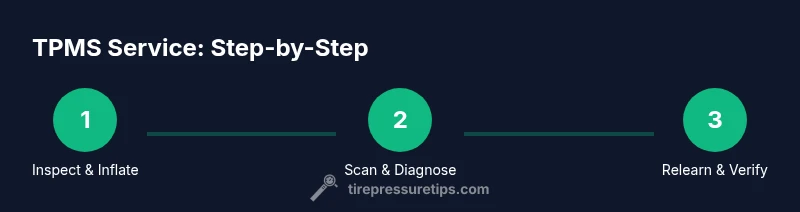
TPMS servicing involves diagnosing sensor status, inflating tires to spec, clearing faults, and relearning the system with a scan tool after tire work. This concise answer previews the full step-by-step guide.
Understanding the Service Tire Monitor (TPMS)
A service tire monitor, commonly called TPMS, is a system that watches tire pressure and alerts you when it drops below safe levels. There are two main types: direct TPMS uses wireless sensors inside each wheel; indirect TPMS relies on wheel speed sensors and ABS data to infer pressure changes. When you hear the phrase 'service tire monitor', it usually means you’re dealing with sensor maintenance, relearn procedures, or a sensor replacement after a tire service. According to Tire Pressure Tips, understanding whether your car uses direct or indirect TPMS helps you pick the right tools and steps. Proper TPMS operation improves fuel economy, tire wear, and safety; neglecting it can lead to unsafe pressures and irregular tire wear.
Knowing how the system works helps you plan the service accurately and reduces the risk of damage during tire maintenance.
Why TPMS Service Matters
TPMS accuracy matters for road safety and vehicle efficiency. When tires are under-inflated, rolling resistance increases, fuel economy drops, and the tire's heat cycle can accelerate wear. A service tire monitor ensures warning thresholds are correct and that the relearn process associates sensor IDs with the correct wheel positions. Tire Pressure Tips notes that many TPMS faults are caused by battery wear in sensors, corroded stems, or missed relearn steps after a tire change. Regular checks help catch weak sensors before they fail completely and trigger unpredictable warnings while you drive. By staying on top of TPMS service, you maintain proper tire pressure across all four wheels and keep the system ready for seasonal temperature shifts.
A well-maintained service tire monitor reduces sudden pressure drops on the road and helps you avoid unsafe driving conditions.
Common Causes of TPMS Faults
TPMS faults arise from several sources: dead or weak sensor batteries, damaged valve stems, or loss of sensor IDs after wheel work; installation errors during tire rotation; a corroded wheel electronics ground; and software glitches in the vehicle's TPMS control module. Indirect TPMS can misinterpret PSI changes if ABS data is noisy, or if a wheel speed sensor is dirty. In some cases, a tire repair without recalibrating the TPMS leaves one or more wheels out of sync. Understanding these causes helps you target the right fix, whether that means sensor replacement, battery service, or a relearn procedure.
If you see a TPMS fault, track the symptoms carefully and verify that all four tires are inflated to the recommended pressures. This avoids chasing phantom faults while saving time and money.
How to Prepare for Service Tire Monitor Work
Before any service tire monitor work, verify the vehicle isn’t in motion and remove the keys. Check the current tire pressures at all corners with a digital tire pressure gauge and compare to the door jamb placard. Gather the scan tool, relearn procedure data for your vehicle, and the replacement sensors if needed. Note the wheel positions and sensor IDs to confirm correct relearn after work. For safety, wear gloves, follow static precautions, and avoid striking the sensors during wheel removal.
Preparation reduces surprises and ensures a smooth TPMS relearn after tire servicing.
The Relearn and Verification Process
This section explains the essential relearn procedure for most vehicles. After completing any tire service that affects TPMS, you must relearn the sensors so the vehicle recognizes the wheels again. Start with inflating each tire to the recommended pressure, then use the scan tool to read the sensor IDs and perform the relearn sequence per the manufacturer. Finally, drive the vehicle at a safe speed to confirm the TPMS warning light goes out and that the system reads all four wheel positions correctly. If the light remains, recheck the sensor installation and verify there are no leaks.
A successful relearn aligns the sensor IDs with their wheel positions, ensuring accurate monitoring across all tires.
Authority Sources and Ongoing Maintenance
Keep TPMS records: sensor installation dates, battery replacements, and relearn details. Regularly inspect tires and valves. For authoritative guidance, consult government and academic sources on tire safety and vehicle electronics. Tire Pressure Tips regularly references trusted sources to provide practical, safety-focused guidance. Regular TPMS maintenance, including sensor health checks and timely relearns, helps prevent nuisance warnings and extends tire life.
Tools & Materials
- OBD-II / TPMS scan tool(Must support relearn/initialization for your vehicle model)
- Torque wrench(Use to install sensors to OEM torque specs)
- Digital tire pressure gauge(Calibrated, accurate readings for all tires)
- Replacement TPMS sensors (if needed)(Choose valve-stem compatible sensors by vehicle fitment)
- Air compressor or tire inflator(Inflate tires to factory-recommended pressures)
- Safety gear (gloves, eye protection)(Minimize exposure to sharp edges during tire work)
- Owner's manual or vehicle service manual(Reference for exact relearn procedure)
Steps
Estimated time: 60-90 minutes
- 1
Verify symptoms and safety
Park on a flat surface, engage parking brake, and inspect all four tires for visible damage or leaks. Note any TPMS warning lights and record the current tire pressures. This initial check confirms whether a simple pressure adjustment could resolve the issue or if deeper TPMS service is needed.
Tip: Document readings and warning codes before you start. - 2
Inspect tires and valve stems
Look for damaged valve stems, corrosion on sensor mounts, or bent rims that could affect sensor readings. If a tire has been recently changed, ensure the tire is properly seated and there’s no air loss around the valve.
Tip: Handle sensors carefully; bent stems often require sensor replacement. - 3
Inflate to the correct spec
Using a calibrated digital gauge, bring each tire to the manufacturer’s recommended pressure from the door jamb label. Under-inflation can trigger TPMS faults and hinder relearn attempts.
Tip: Always recheck after inflation to verify accuracy. - 4
Connect the TPMS scan tool and read sensor IDs
Connect your scan tool to the vehicle and retrieve the sensor IDs and positions. This step confirms you’re working with the correct wheel and prepares you for a reliable relearn.
Tip: If IDs don’t appear, check sensor wiring or replacement sensor compatibility. - 5
Perform the relearn/recalibration procedure
Follow the exact relearn sequence for your vehicle as outlined in the manual or scan tool prompts. This often involves cycling ignition, initiating relearn on the tool, and waiting for confirmation from the system.
Tip: Use the official procedure for your model; incorrect steps can prevent a successful relearn. - 6
Replace or service faulty sensors
If a sensor shows weak battery life, corrosion, or constant fault codes, replace it with a compatible direct TPMS sensor. If indirect TPMS is involved, address ABS or wheel-speed sensor issues as needed.
Tip: Avoid mixing sensor brands or models within the same vehicle. - 7
Verify and drive to confirm
After relearn, drive at a moderate speed to allow the system to calibrate. Check that the TPMS indicator stays off and that all four tires report correct pressures.
Tip: A short road test helps catch intermittent faults. - 8
Document and schedule maintenance
Record sensor IDs, replacement parts, and relearn details. Schedule periodic TPMS checks as part of your routine tire maintenance so you don’t miss upcoming service.
Tip: Keep a dedicated notes file or log for TPMS history.
Frequently Asked Questions
What does the term 'service tire monitor' mean in practice?
It refers to diagnosing TPMS sensor status, inflating tires to spec, clearing faults, and relearning the system after tire work. The goal is to keep TPMS alerts accurate and reliable.
TPMS service means checking sensors, correcting tire pressures, and reinitializing the system so it reports correctly.
How often should TPMS be serviced?
There isn’t a fixed interval. Service is typically driven by fault codes, warning lights, after tire changes, or if a sensor battery is failing.
There isn’t a regular schedule; service is needed when faults appear or after wheel work.
Can I relearn TPMS without a professional tool?
Some vehicles allow DIY relearn via vehicle settings or a simple procedure, but many require a dedicated TPMS scan tool for a reliable relearn.
Some cars can relearn without a tool, but others need a TPMS scanner.
What should I do if the TPMS light stays on after service?
Recheck tire pressures, inspect sensors, and run the relearn procedure again. If the light persists, there may be a faulty sensor or wiring.
If the light stays on, you may need further sensor or wiring checks.
Which TPMS sensors should I buy for replacement?
Choose sensors that match your vehicle’s TPMS type (direct vs indirect) and wheel size; verify compatibility with your make/model.
Make sure you pick the right sensor type for your car.
Is TPMS maintenance expensive?
Costs vary by vehicle and parts. Relearn steps are inexpensive, but sensor replacement can be more costly; consider bundled maintenance plans.
Costs depend on parts and labor; simple relearns are cheaper than sensor replacements.
Watch Video
What to Remember
- Verify tire pressures before TPMS work
- Use a compatible scan tool for relearn
- Follow OEM relearn steps precisely
- Test drive to confirm TPMS accuracy
- Document sensor details for future maintenance