TPMS Kia Rio: A Practical Guide to Monitoring and Maintaining Tire Pressure
Learn how to check, reset, and maintain TPMS on your Kia Rio. Practical steps, common faults, and pro tips from Tire Pressure Tips to keep tires safe and efficient.


Learn how to check, diagnose, and maintain the TPMS on a Kia Rio. This quick guide covers warning light meanings, sensor basics, battery considerations, and why proper tire pressure matters for safety and fuel economy. Follow the step-by-step approach to verify pressure, reset the system, and handle common TPMS faults confidently.
What is TPMS and why it matters for Kia Rio
TPMS stands for Tire Pressure Monitoring System. For the Kia Rio, TPMS helps you detect underinflated tires before they cause safety risks, poor fuel economy, or accelerated tire wear. According to Tire Pressure Tips, keeping tires within the manufacturer-recommended pressure is one of the simplest and most effective ways to improve handling and prolong tire life. TPMS alerts you when a tire drops below spec, often before you notice a soft ride or uneven wear. This is especially important for safey on highways and during adverse weather. The Kia Rio relies on sensors to monitor pressure and communicate with the vehicle’s control modules, so a healthy TPMS is part of your car’s overall maintenance rhythm. Regular checks with a trusted gauge, as well as periodic relearns after tire work, help keep the system accurate and reliable.
format
Tools & Materials
- Digital tire pressure gauge(Calibrated to read psi; use on cold tires for accuracy)
- Kia Rio owner's manual(Model-specific TPMS relearn steps and warnings)
- Vehicle service manual or official Kia portal access(Optional for advanced relearn procedures)
- TPMS relearn tool or scan tool (as applicable)(Some trims require dealer tools for relearn)
- Notebook or digital log(Record pressures, relearn events, and sensor notes)
- Soapy water and rag(Detect leaks in valve stems and sensor seals)
Steps
Estimated time: 60-90 minutes
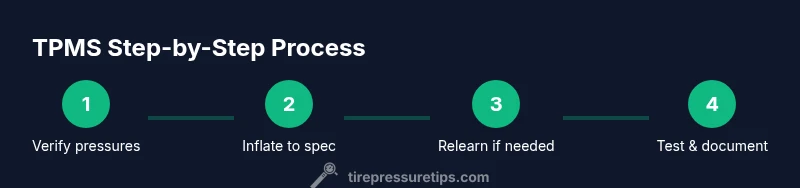
- 1
Verify cold tire pressures
Park on a level surface and let the tires sit for at least 3 hours if possible, ensuring they’re cold for an accurate reading. Find the recommended pressure on the driver’s door placard or owner’s manual. Use your digital gauge to measure each tire’s current pressure and note any significant deviations.
Tip: Use the same gauge for all five tires to avoid measurement variation. - 2
Inflate to recommended pressures
If any tire is below the recommended pressure, top it up with the car parked and off. Check all tires, including the spare if your model uses a full-size spare. Do not exceed the maximum inflation pressure listed on the tire sidewall or placard.
Tip: Start with the tire that is closest to the recommended range and move outward to each tire. - 3
Inspect sensors and valve stems for leaks
Look for cracked valve stems, corroded sensor housings, or obvious damage around the wheel spokes and rim edges. For direct TPMS, damaged sensors or seals can cause slow leaks or false readings. Use soapy water to surface-detect slow leaks around valve stems and sensor caps.
Tip: If you see bubbles, mark the tire and plan for service or sensor replacement. - 4
Trigger TPMS relearn if readings are off
If the system still reports a fault after inflating, follow the Kia Rio relearn procedure as described in the manual or via dealer tools. If your vehicle uses a scan tool, connect it and follow the prompts to relearn the sensors. Keep records of which tire shows incorrect readings for reference.
Tip: If no relearn procedure is published for your model, contact a Kia service center. - 5
Test the system after relearn
Drive the car at city speeds for about 10–15 minutes to allow the TPMS module to complete the relearn cycle. Check the instrument cluster to ensure the TPMS warning light remains off. If the light comes back on, recheck tire pressures and sensor integrity.
Tip: Take a short drive on varied roads to confirm stable readings. - 6
Document results and plan next steps
Record the final pressures, the date, and any notes about sensor condition or leaks. Schedule future checks, especially after tire rotation, mounting, or sensor work. Keeping a maintenance log helps you spot trends and avoid repeated warnings.
Tip: Set calendar reminders for quarterly TPMS checks.
Frequently Asked Questions
What does a TPMS warning light mean on a Kia Rio?
A TPMS warning usually signals at least one tire is underinflated or there is a sensor fault. Check tire pressures first, inspect for leaks, and consult the owner’s manual if the light persists.
A TPMS warning typically means your tire pressure is too low or a sensor problem. Check pressures and inspect for leaks, then refer to the manual if it stays on.
Do TPMS sensors require replacement after tire changes?
Not always. TPMS sensors can last many years, but damage from impacts or battery failure may necessitate replacement. Always verify sensor condition during service.
Sensors often last many years, but damage or battery failure can require replacement. Check sensor health during tire service.
Can I drive with a TPMS fault?
If the fault is sensor-related rather than underinflation, you can usually drive, but you should have the vehicle inspected soon to prevent tire damage or unsafe conditions.
You can usually drive with a TPMS fault, but get it checked soon to avoid unsafe tire conditions.
How long does a TPMS relearn take?
A relearn can take a few minutes when done via the instrument cluster or a scan tool. Complex cases may require dealer assistance.
A relearn usually takes just a few minutes, but some cases need professional help.
Is TPMS the same as a tire pressure gauge?
No. TPMS monitors tire pressure and alerts you, while a gauge measures the actual air pressure in each tire.
TPMS monitors pressure and notifies you, while a gauge actually measures pressure.
Should I reset TPMS after tire rotation?
Yes. After rotating tires, recheck pressures and perform a relearn if your Kia Rio requires it to keep readings accurate.
Yes, rotate, recheck pressures, and relearn if needed after a rotation.
Watch Video
What to Remember
- Verify all tires when cold for accuracy.
- Know direct vs indirect TPMS basics for your Kia Rio.
- Relearn TPMS after tire work or sensor replacement.
- Use a gauge and record results to avoid future warnings.