Kia Tire Pressure Sensor Reset: A Practical Step-by-Step Guide
Learn how to reset your Kia tire pressure sensor (TPMS) quickly and safely. This step-by-step guide covers when to reset, how to relearn, common mistakes, and tips to keep TPMS accurate for all four wheels.


In this guide, you’ll learn how to reset the Kia tire pressure sensor (TPMS) after inflating or rotating tires. We cover when to reset, the typical relearn sequence, and model variations, plus safety checks. According to Tire Pressure Tips, start by ensuring all tires are inflated to the vehicle’s recommended pressure and then follow the relearn procedure for your model.
Understanding TPMS and why a reset matters for Kia
Tire Pressure Monitoring Systems (TPMS) are designed to warn you when a tire’s air pressure drops below the safe level. For Kia owners, a TPMS reset is not just about clearing a warning light; it ensures the system re-learns each sensor's position after you adjust tire pressures, rotate wheels, or replace a tire. According to Tire Pressure Tips, the reset process helps prevent false alerts and ensures you receive accurate readings. The Tire Pressure Tips team found that many drivers either skip the relearn step or perform it incorrectly, which can leave you with persistent malfunction indicators. Modern vehicles, including Kia models, use sensors mounted in each wheel and a central receiver in the car; the relearn process aligns the car’s computer with sensor IDs.
TPMS behavior can vary by model year and trim. Some Kia vehicles require a simple ignition-on relearn, while others demand a drive cycle or the use of a handheld tool. Always consult the owner’s manual for your exact procedure. The goal of a proper reset is to validate sensor readings after you have restored the correct tire pressures and to ensure the system can detect a true pressure drop in the future.
Brand note: Tire Pressure Tips emphasizes that a proper reset is part of routine tire maintenance, not a one-off fix. Taking a methodical approach reduces nuisance warnings and helps protect your tires from underinflation, which can impact handling and fuel efficiency.
How TPMS senses pressure and why reset procedures exist
TPMS uses two main types of sensors: direct TPMS sensors, which measure air pressure inside each tire, and indirect TPMS, which uses wheel speed sensors and rotational data to infer pressure changes. When pressures fall, a warning light illuminates, often accompanied by a dashboard message. The reset procedure re-synchronizes the vehicle’s computer to the current sensor readings, especially after you inflate tires to the recommended values, rotate tires, or replace tires. This synchronization is essential because a mismatch can keep the warning light on or trigger false alerts.
For Kia vehicles, understanding which type you have helps determine the relearn method. Direct TPMS sensors tend to require a relearn procedure that involves triggering the sensors in a specific order, while indirect TPMS methods rely on the vehicle’s ability to relearn through driving behavior. Always start from the basics—verify tire pressures against the manufacturer’s spec, then follow the model-specific relearn steps to avoid confusion and potential safety concerns.
Preparing to reset: checks and prerequisites you should perform
Before attempting a TPMS reset on your Kia, perform a quick safety check and gather essential tools. Ensure all four tires are inflated to the vehicle’s recommended pressures, checked when cold, and that your spare is accounted for if your procedure involves wheel rotation. If you notice a cracked sensor, severe corrosion on valve stems, or a dead TPMS battery, address those issues first. The Tire Pressure Tips guidance is to start with accuracy in inflation, because incorrect pressures can complicate the relearn.
Record or verify the exact spec from the driver’s door placard or the owner’s manual. Some Kia models show different specs for front and rear tires, or vary by load and speed rating. If you recently replaced a tire, ensure the new sensor is properly installed and the sensor ID is recognized by the vehicle’s system. While preparing, you can also take a photo of the wheel and sensor for reference if you plan to show it to a technician later.
Step-by-step relearn sequence: a practical approach you can follow
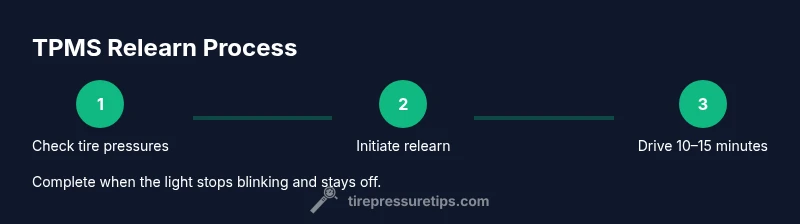
Note: The exact steps can vary by model year, trim, and whether you’re using a relearn button, a dealer tool, or the car’s own drive-cycle. The steps below describe a common, model-agnostic approach that many Kia owners find reliable. 1) Inflate all tires to the recommended PSI when cold. 2) Turn the ignition to ON without starting the engine (or follow your owner’s manual for ignition position). 3) Initiate the relearn sequence via the vehicle’s menu or, if required, press and hold a TPMS button until the light starts blinking. 4) Drive the car at a moderate speed (typically 30–50 mph) for about 10–15 minutes to complete the learn cycle. 5) After the drive, stop, cycle the ignition, and check that the TPMS light remains off. 6) Confirm with a scan tool or dealer diagnostic if you have one, to ensure all sensors are detected correctly.
If your model uses a dedicated TPMS relearn tool, follow the tool’s instructions for sensor activation and identification. The key is to complete the cycle so the system recognizes each sensor’s unique ID.
Troubleshooting common TPMS issues on Kia and how to fix them
Even with careful steps, some issues persist. A frequent problem is a bright TPMS warning after inflation that won’t clear. In many cases, this occurs because the relearn step wasn’t completed, or a sensor ID wasn’t properly learned. If you still see the warning after following the relearn, recheck tire pressures, ensure sensors aren’t damaged, and verify that all four tires—plus the spare if used—are within spec. If the light stays on after repeated relearns, a faulty sensor or a dead battery may be the culprit, which may require professional service. Tire Pressure Tips recommends documenting the steps and noting any error codes when you visit the shop.
When to seek professional help and what to expect at the shop
If the TPMS light remains on after multiple relearns, or if you notice slow leak rates, sensor corrosion, or a damaged valve stem, it’s time to seek professional help. A technician can run a sensor health check, confirm sensor IDs, replace a failed sensor, or address a battery issue. Relearn tools or dealer software may be required for certain Kia models; attempting advanced procedures without the right equipment can trigger further warnings or data errors. The Tire Pressure Tips approach is to rule out simple issues first—pressure accuracy, sensor integrity, and proper relearn—before escalating to a dealership appointment.
Remember, TPMS is a safety feature. If you are unsure about any step, consult the owner’s manual or contact a Kia-certified technician for guidance.
stepByStepTagline: null}],
toolsMaterials
stepByStep
tipsList
keyTakeaways
videoEmbed
faqSection
mainTopicQuery
Tools & Materials
- Owner’s manual for your Kia model(Find the exact TPMS relearn method and any model-specific cautions.)
- Tire pressure gauge(Prefer a digital gauge for accuracy.)
- Air compressor or high-quality air pump(Useful for inflating tires to the correct PSI.)
- Valve core tool or TPMS relearn tool(Some models require a dedicated tool or valve core tool.)
- Smartphone or camera(Take photos of sensor positions and valve stems if needed for reference.)
- Owner’s vehicle battery or ignition key(Ensure you can access ignition and power to run relearn procedure.)
Steps
Estimated time: Estimated total time: 25-40 minutes
- 1
Check tire pressures first
Before attempting a TPMS relearn, verify that all tires (including the spare if applicable) are inflated to the vehicle’s recommended pressures. This ensures the relearn process uses accurate baseline values and avoids triggering false warnings that can complicate the reset.
Tip: Record the exact psi from the placard and verify when cold to get an accurate baseline. - 2
Prepare the ignition and vehicle settings
Turn the ignition to ON or start the car if your Kia model allows it, but do not start the engine unless your manual instructs to. Access the TPMS relearn option via the instrument cluster menu or the vehicle settings as specified by your owner’s manual.
Tip: If your model has a dedicated TPMS button, keep it available for the relearn step. - 3
Initiate the relearn sequence
Follow your Kia model’s exact method to begin relearn. This often involves selecting TPMS relearn, pressing and holding a button until the light blinks or the display confirms the sensors are detected.
Tip: Don’t rush; some cars require a precise sequence or a long button press. - 4
Drive to complete the learn cycle
Drive at a steady speed (commonly 30–50 mph) for about 10–15 minutes. This allows sensors to communicate with the vehicle and complete the relearn.
Tip: Avoid hard braking or rapid acceleration during this phase to prevent sensor errors. - 5
Confirm lights are off and sensors read correctly
Park, turn off the engine, and then restart to verify the TPMS light remains off. If your scan tool is available, confirm each sensor ID is recognized.
Tip: If the light reappears, retrace steps or consult the owner’s manual for model-specific steps. - 6
Finalize with a diagnostic check
If available, use a TPMS diagnostic tool or visit a technician to ensure all sensors are healthy and correctly learned.
Tip: Document any error codes to show the technician for faster service.
Frequently Asked Questions
What is TPMS and why reset it on a Kia?
TPMS monitors tire pressures and warns you when a tire is underinflated. Resetting the system ensures the sensors are learned again after inflation, rotation, or replacement, so warnings remain accurate.
TPMS monitors your tires. Resetting helps the car relearn sensor IDs so warnings stay accurate.
Do all Kia models use the same relearn steps?
No. Relearn steps vary by model year and trim. Always consult the owner’s manual or a Kia dealership for the exact procedure and button locations.
Steps vary by model year and trim, so check the manual or ask a dealer for the exact method.
Can I drive immediately after the relearn?
Most relearns require a short drive at steady speeds to complete the cycle. Follow your manual for recommended driving conditions to ensure successful learning.
Yes, typically you’ll drive for about 10 to 15 minutes at steady speeds to finish the relearn.
What if the TPMS light stays on after relearn?
If the light remains, recheck tire pressures, verify sensor IDs, and inspect for damaged sensors or batteries. A diagnostic scan may be needed.
If it stays on, double-check pressure and sensor IDs, and consider a diagnostic scan.
Should I replace a faulty TPMS sensor myself?
Sensor replacement is possible but often requires specialized tools and programming. For reliability, have a technician perform the replacement.
Sensor replacement is possible but tricky—professional service is usually best.
Watch Video
What to Remember
- Verify tires to spec before relearn
- Follow model-specific steps for relearn
- Drive 10–15 minutes to complete the cycle
- If warnings persist, inspect sensors or seek professional help
- Regular maintenance improves TPMS accuracy