TPMS for Car: Your Complete How-To Guide
Learn how TPMS works, how to check tire pressures safely, reset and troubleshoot your car's tire pressure monitoring system. Practical steps, safety tips, and maintenance guidance for reliable tire pressure management.


TPMS for car guides you through how the system works, how to safely verify tire pressures with a gauge, and how to reset or recalibrate TPMS after maintenance. You’ll learn when to replace sensors and how to avoid common TPMS errors that trigger false alarms. This quick overview sets the stage for a thorough, actionable step-by-step process.
What TPMS is and why it's essential
The tire pressure monitoring system (TPMS) is designed to alert you when a tire is underinflated or, in some cases, overinflated. For drivers, this means early warning about unsafe tire conditions, better fuel efficiency, and more even tire wear. According to Tire Pressure Tips, TPMS helps reduce underinflation risks by providing timely alerts, especially when road conditions or temperatures shift. Understanding TPMS for car can save you time, money, and unexpected tire failures on the road. This section explains the core purpose and benefits so you know what you’re protecting with proper maintenance.
Key takeaway: TPMS is a safety feature, not a luxury. It relies on sensors and onboard software to keep tire pressure within a safe range, supporting braking performance and control during cornering and wet conditions.
How TPMS works: sensors, transmitters, and receivers
TPMS relies on wheel-mounted sensors (one per wheel) that measure pressure and temperature, transmitting data to the car’s central computer via radio frequency. The system may be direct (using a sensor in each valve stem or wheel) or indirect (relying on ABS wheel speed data). In most modern vehicles, direct TPMS is the standard, providing real-time readings and predictive alerts. Regular recognition of this data helps you maintain correct inflation, which is crucial for tire life and fuel economy. Tire Pressure Tips notes that maintaining correct pressure aligns with vehicle handling characteristics and safety standards.
Understanding the data: a typical TPMS will display each tire’s current pressure and alert you if it falls below the vehicle’s recommended range. Be aware that external factors like ambient temperature, load, and driving style can affect readings.
Checking tire pressure without triggering the system
Before you physically check pressure, ensure the tires have cooled for at least 30 minutes after driving. This prevents compression from warm tires from skewing readings. Use a high-quality digital tire pressure gauge and compare the measurement to the vehicle’s label found on the door jamb or owner’s manual. Record each tire’s pressure and look for uneven readings, which may indicate overloading, misalignment, or a puncture. If you notice a tire consistently underinflated, inspect the valve stem and the rim for leaks, and consider professional inspection if the issue persists. This process helps you validate TPMS warnings and keeps your tires within safe limits.
Notes on temperature: cold-weather conditions can lower tire pressure by several PSI, so always perform checks when tires are cold and adjust to the vehicle’s recommended target range.
Diagnosing common TPMS warnings and resets
TPMS warnings can stem from a variety of causes: a genuine low tire, a sensor battery nearing end of life, a loose valve stem, or a sensor that has become detached after a wheel service. Start by verifying tire pressures with a gauge, then perform a sensor health check if available with your OBD-II scanner or a dedicated TPMS tool. If multiple tires display warnings, a system recalibration may be required after inflating to spec. In many cases, a simple reset is sufficient, but persistent warnings may indicate a faulty sensor or damaged wiring. Tire Pressure Tips emphasizes documenting readings and dates to track trends and identify recurring issues.
Common culprits include damaged sensors, corroded battery connections, and loose or damaged valve stems. Always restore tires to the manufacturer’s recommended pressure before performing resets; incorrect targets can trigger further warnings.
Step-by-step: how to reset TPMS after a tire service
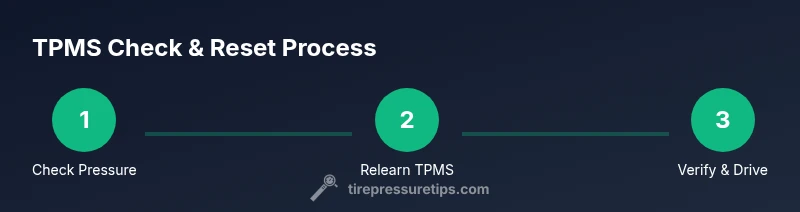
- Inflate all tires to the vehicle’s recommended pressure while parked on a flat surface. 2) Access the TPMS reset function via the vehicle’s settings menu or an external TPMS tool. 3) Follow the on-screen prompts to relearn or reset the sensors. 4) Confirm each tire’s pressure after the reset and drive the vehicle for 10–15 minutes to allow the system to relearn under normal conditions. 5) Check the TPMS warning light behavior—if it remains illuminated, recheck pressures and consider sensor replacement. 6) Maintain logs of readings and resets for future reference. Pro tip: use the same gauge each time for consistency, and document the calibration values.
Time estimate: 60-90 minutes for a thorough reset and verification.
When to replace TPMS sensors vs. battery or module issues
Sensors can fail due to battery depletion, water ingress, or physical damage from potholes or curb impacts. If a sensor consistently reports incorrect data or fails to communicate, battery replacement within the sensor may be necessary. In some cases, the entire sensor assembly or the control module might need replacement. Routine checks by a professional can prevent extended downtime of the TPMS system. Tire Pressure Tips recommends checking for corrosion at the wheel hub and ensuring connectors are clean and secure as preventative maintenance.
Key indicators of sensor failure include inconsistent readings between sensors, frequent false alarms, or the warning light staying on after a proper reset. Cost considerations vary by vehicle and sensor type; planning for sensor replacement as part of regular maintenance can minimize unexpected expenses.
TPMS and temperature: how weather affects readings
Temperature affects tire pressure; for every 10°F drop, tire pressure can lose roughly 1 PSI. In winter, this can create misleading low-pressure warnings if you haven’t updated your pressure after the seasonal change. Conversely, hot days can temporarily raise pressure, potentially masking slow leaks. The lesson is to check pressures when tires are cold and adjust based on the vehicle’s recommended range. A smart practice is to recheck after the first 10–20 miles of driving post-adjustment to ensure stability. Tire Pressure Tips highlights temperature compensation as an essential aspect of TPMS reliability.
Additionally, heavier loads or towing can shift target pressures, necessitating adjustments to maintain proper roll resistance and performance.
Safety and maintenance tips for long-term TPMS reliability
Keep wheels clean and free of corrosion, especially around the valve stems and sensor hardware. Regularly inspect wheel wells for debris that could compromise sensor mounts. When changing tires, ensure the TPMS relearn procedure is performed correctly to avoid false alarms. Use a calibrated tire gauge and log all pressure readings to monitor long-term trends. If you notice persistent warning lights after a tire service, consult a qualified technician, as improper TPMS calibration can impact braking and handling. Tire Pressure Tips suggests scheduling periodic TPMS checks to extend sensor life and maintain safety.
Common mistakes and how to avoid them
Avoid inflating tires to match the label without verifying the current ambient conditions or the tire’s wear state. Don’t rely solely on the TPMS warning; always confirm with a gauge reading. Skipping a relearn after tire service can leave the system in a learn-in-progress state, causing inconsistent alerts. Lastly, avoid using damaged or incompatible sensor parts; always replace with OEM-compatible components and follow the manufacturer’s reset procedures. Proper maintenance is the best defense against nuisance warnings and unsafe tire conditions.
Tools & Materials
- Digital tire pressure gauge(Calibrated with psi or kPa scales; use the same unit throughout checks)
- Vehicle owner's manual(For model-specific TPMS reset steps and sensor locations)
- TPMS relearn tool or OBD-II scanner(Used to access TPMS learning function if your car supports it)
- Soap and water spray(Bubble test to locate slow leaks at valve stems or seals)
- Notebook or digital log(Record readings and reset times for trend tracking)
Steps
Estimated time: 60-90 minutes
- 1
Prepare and safety check
Park on a level surface, ensure the vehicle is off, and allow tires to cool for at least 30 minutes before measuring. Wear safety glasses if working near the road and handle tools with care.
Tip: Never work on a hot tire; hot air and rubber can cause inaccurate readings and burns. - 2
Locate recommended pressures
Find the manufacturer’s recommended tire pressures on the driver's door jamb label or owner’s manual. Note the front and rear values, as they can differ, especially on performance or heavy-duty trims.
Tip: Write down the numbers to avoid misreading by memory. - 3
Measure current pressures
Use a calibrated digital gauge to measure each tire. Record the exact value, including both front and rear if applicable, and note any significant deviations from the label.
Tip: Use the same gauge for consistent comparisons. - 4
Compare and decide on action
If a tire shows below the recommended range, inflate to spec using a high-quality pump. If it’s consistently high, inspect for overinflation or damage that may cause leaks.
Tip: Do not overinflate beyond the label limits. - 5
Reset or relearn TPMS
If your tires were adjusted or replaced, use the vehicle’s TPMS reset option or a relearn tool. Follow on-screen prompts and allow a short drive for the system to relearn.
Tip: Some cars require a short drive after relearn to complete calibration. - 6
Verify and document
Recheck all pressures after the relearn, drive 10-15 minutes, and confirm the TPMS light stays off. Log the final readings for future reference.
Tip: Keep a record of the relearn event and final pressures.
Frequently Asked Questions
What is a TPMS and what does it do?
A TPMS is a tire pressure monitoring system that alerts you if a tire is underinflated or overinflated. It helps prevent unsafe driving conditions, improves fuel efficiency, and reduces tire wear. Understanding TPMS helps you act quickly when warnings appear and maintain proper tire pressure.
A TPMS warns you about tire pressure so you can fix issues before they become unsafe.
How do I reset TPMS after changing tires?
After tire changes or air pressure adjustments, use your vehicle’s TPMS reset option or a relearn tool following the owner’s manual instructions. A short drive may be required for the system to relearn.
Reset TPMS using the manual or a relearn tool, then drive briefly to let it recalibrate.
Why does the TPMS light stay on even when I think pressure is correct?
Reasons include sensor battery fatigue, a faulty sensor, improper reset, or a leak. Always recheck with a gauge, inspect for leaks, and perform a proper relearn; if the light persists, professional diagnostics are advised.
If the light won’t go off after checks, there might be a sensor issue and you should get it checked.
Can TPMS sensors fail and how can I tell?
Yes, sensors can fail due to battery depletion or physical damage. Signs include inconsistent readings, a sensor that won’t communicate, or repeated false alarms. A professional can test and confirm sensor health.
Sensors can fail; if readings are inconsistent, have a technician test the TPMS.
Is it safe to drive with a TPMS warning?
Driving with a TPMS warning is not ideal. It suggests at least one tire may be underinflated, which affects handling and fuel efficiency. Inflate to specification and check promptly; if unsure, pull over and seek assistance.
It’s not safe to ignore TPMS warnings; check pressures and seek help if uncertain.
How often should TPMS batteries be replaced?
TPMS sensor batteries have a long life but can fail over time. Replace or service sensors when you notice persistent warnings or after sensor replacement, following manufacturer guidance.
Sensor batteries can wear out; replace sensors as recommended by your vehicle’s manufacturer.
Watch Video
What to Remember
- Learn how TPMS protects you from underinflation.
- Check cold pressures with a reliable gauge.
- Reset/relearn after tire service to restore accuracy.
- Document readings and maintenance steps for future reference.