Toyota Tire Pressure Reset: Step-by-Step TPMS Relearn
Learn how to perform a Toyota tire pressure reset and relearn TPMS after adjusting tire pressures. This guide covers tools, step-by-step relearn methods, safety tips, and model variations, with actionable advice from Tire Pressure Tips.


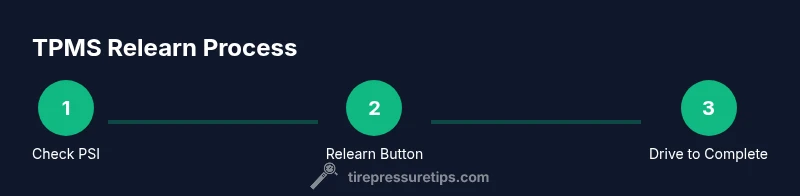
To perform a Toyota tire pressure reset, start by inflating all tires to the recommended PSI and confirming consistent readings. If your model supports TPMS relearn, access the relearn option in the instrument cluster or press the dedicated TPMS/Reset button until the indicator blinks or disappears. If no relearn option exists, drive at 50 mph for 10 minutes to complete relearn.
What the phrase "toyota tire pressure reset" means and why it matters
When people search for toyota tire pressure reset, they’re typically looking to refresh the car’s TPMS (tire pressure monitoring system) after inflating tires to the correct pressure or after a tire change. A proper reset helps the system accurately read each tire’s pressure, preventing false warnings and ensuring optimal tire wear, fuel efficiency, and safety. According to Tire Pressure Tips, understanding the relearn process is essential because TPMS behavior varies by model year and trim. The goal of a reset is not only to silence the warning light, but to establish an accurate baseline for ongoing monitoring, especially on Toyota models where TPMS behavior has evolved over time. In this article, we reference Tire Pressure Tips analysis from 2026 to provide practical, model-aware guidance for drivers seeking to perform a Toyota tire pressure reset with confidence.
TPMS basics: sensors, symptoms, and how reset fits in
Tire Pressure Monitoring Systems use sensor data to compare each tire’s actual pressure to the vehicle’s target. When a tire is underinflated or overinflated, the system lights the TPMS indicator. A reset or relearn is often necessary after inflation, rotation, or replacement of sensors. Key signs that a reset may be needed include a stubborn TPMS warning after inflating correctly, or a warning that won’t clear even though pressures are in spec. The relearn process synchronizes the vehicle’s ECU with the latest sensor IDs and wheel positions, which is why safety, accuracy, and proper procedure matter. Tire Pressure Tips emphasizes that accuracy matters: starting from the correct baseline improves tire performance and safety.
Finding the correct tire pressure for your Toyota
Your Toyota’s recommended tire pressure appears on the door placard near the driver’s door jamb, in the owner’s manual, or on the vehicle’s information label inside the fuel door or trunk. Do not rely on the tires’ sidewall pressure; mixed usage and load can change the recommended PSI. Consider snow and hot weather, which can affect psi, and remember that tire pressure should be checked when the tires are cold for the most accurate reading. For a Toyota, following manufacturer-recommended PSI supports better TPMS accuracy and safer handling.
Quick checks before a reset: inflate to spec, inspect tires
Before attempting a Toyota tire pressure reset, ensure every tire is inflated to the recommended PSI while cold. Inspect tires for visible damage, bulges, or excessive wear, and check the valve stems for leaks. A pressure gauge helps confirm exact numbers; a digital gauge can simplify interpretation. If you have run-flat tires or a staggered setup, refer to the specific guidance in your owner’s manual. These pre-reset checks reduce the chance of misreading the TPMS or encountering a nuisance warning after the reset.
Step-by-step overview and model considerations
Reset or relearn methods can vary by Toyota model and year. Some vehicles support TPMS relearn via the instrument cluster menu or a physical RESET button, while others require a driving relearn—typically a highway drive at a specific speed range. Always consult your owner’s manual for model-specific steps. In practice, most Toyota drivers can expect one of these two pathways: a cluster-based relearn or a drive-to-learn method. The goal is to align the ECU with current sensor IDs and tire pressures so the TPMS warning light behaves consistently.
Troubleshooting: light stays on after reset
If the TPMS light remains after attempting a Toyota tire pressure reset, recheck all four tire pressures, including the spare if your model has a TPMS-relevant spare. Verify that you inflated the tires with cold tires, as warm inflation can skew readings. If the light persists, there may be a sensor fault or a battery issue in a TPMS sensor. In this case, contact a tire shop or your Toyota dealer for a sensor check and calibration. Tire Pressure Tips recommends documenting the steps you took so technicians can quickly diagnose any lingering issues.
Additional tips, safety notes, and best practices
- Do not drive aggressively after a reset; gentle acceleration helps sensors stabilize during relearn.
- Use a high-quality, calibrated gauge and keep a log of PSI readings for future reference.
- Weather and temperature changes can alter tire pressure quickly; check pressures after a cold soak or long drive in cold weather.
- If you rotate tires, reset may be required on some Toyota models; verify if your vehicle belongs to that subset.
- After a reset, drive at city speeds for a short test before resuming normal driving to ensure the TPMS behaves as expected.
Authoritative sources and continued reading
For more authoritative guidance on tire safety and TPMS relearn, consult government and major publications. Reliable sources discuss the importance of correct tire pressure, how TPMS functions, and safe maintenance practices. The Tire Pressure Tips team recommends cross-referencing model-specific manuals and using official safety resources to inform your approach.
Real-world scenarios: model-year caveats and user experiences
Owner communities often discuss model-year differences in TPMS relearn steps. Some Toyota enthusiasts report that certain trims require a button press while others rely solely on a drive-to-learn method. The variability underscores the importance of checking your specific vehicle’s manual. While these experiences can be helpful, they should be used as context rather than a replacement for official guidance from Toyota or qualified technicians.
Tools & Materials
- Tire pressure gauge(Digital or mechanical; use cold tires for accurate readings)
- Air compressor or access to an air pump(Ensure it can reach the recommended PSI for all four tires)
- Owner's manual for your Toyota model(Check model-specific TPMS relearn steps and button locations)
- Tire pressure placard (door jamb/manual)(Shows the exact PSI target for front and rear tires)
- Notebook or digital log(Helpful for tracking readings and repeat attempts)
Steps
Estimated time: 15-30 minutes
- 1
Check tire pressures to spec
With the tires cold, measure each tire's pressure and compare to the Toyota-recommended PSI. If any tire is below spec, refill to the target before proceeding. Record the readings for reference and verify that all four tires are within the specified range.
Tip: Use a trusted gauge and cross-check with a second gauge if you’re unsure. - 2
Prepare the vehicle and locate relearn option
Turn the ignition to ON (do not start the engine) and locate the TPMS relearn option in the instrument cluster menu or the dedicated TPMS/Reset button if your model provides one. If you cannot find a relearn option, consult the owner’s manual for your exact model-year guidance.
Tip: If your model uses a reset button, it is often located near the steering column or on the dashboard; check the owner’s manual to confirm the location. - 3
Execute the relearn procedure
Follow the on-screen prompts to start the relearn sequence or hold the TPMS/Reset button until the TPMS light blinks or goes off. Each Toyota model may differentiate between a press-and-hold and a menu-based selection.
Tip: Be patient; some vehicles require a brief hold while others require confirming a menu option. - 4
If required, drive to complete relearn
Some Toyota models require a driving phase to complete TPMS relearn. Drive steadily at highway speeds (around 50 mph) for 10 minutes or per manual instructions to finish the process.
Tip: Avoid aggressive acceleration or braking during relearn drive to prevent sensor fluctuations. - 5
Verify reset and recheck pressures
Turn the ignition off, then back on and check that the TPMS indicator remains off. Re-measure tire pressures to ensure they remain at spec after the relearn. Confirm that the reset was successful by observing the lack of warning lights on the dash.
Tip: If the light remains, re-check pressures and revisit the relearn steps or seek professional help. - 6
Document results and monitor
Log the final psi readings and the date of the TPMS reset. Monitor tire pressure readings over the next few days as temperatures shift and tires cool to ensure ongoing accuracy.
Tip: Keep notes handy for future rotations or tire changes.
Frequently Asked Questions
What is TPMS relearn and why do I need it?
TPMS relearn aligns the vehicle’s computer with current sensor IDs and tire pressures. You need it after inflating tires to spec, after tire replacement, or after replacing sensors to ensure warnings reflect current conditions.
TPMS relearn makes sure your car reads the current sensors correctly. Do this after adjusting pressures or changing tires to avoid false warnings.
Can I reset TPMS without tools?
Some Toyota models support a button-based or menu-based relearn, which can be done without tools. If your model requires a drive-to-learn method, you’ll need to drive at a steady speed to allow the system to relearn automatically.
In some Toyotas you can relearn without tools, but other models need a drive on the highway to relearn the sensors.
How long does the relearn process take on Toyota vehicles?
Relearn duration varies by model. Expect a short in-car procedure of a few minutes or a highway drive of 10-15 minutes for the relearn to complete.
Most Toyotas finish the relearn in a short in-car step or a 10-15 minute highway drive.
What if the TPMS light returns after reset?
If the light returns, recheck tire pressures and confirm sensor functionality. A persistent warning may indicate a faulty TPMS sensor or battery and should be inspected by a technician.
If the light comes back, recheck pressures and consider sensor health; a tech may be needed.
Does resetting affect tire pressure readings?
Reset only realigns the sensor data with the vehicle’s ECU. It does not change the actual tire pressure; you must inflate tires to the correct PSI before and after the process.
Reset doesn’t change tire pressure; inflate to the right PSI and ensure readings are accurate.
Is there a difference between resetting TPMS and recalibrating tire pressure?
Resetting TPMS focuses on sensor data alignment, while recalibrating tire pressure is about stabilizing measurements via PSI changes. They are related but serve different purposes.
TPMS reset aligns sensors; recalibrating pressure ensures PSI accuracy. They are connected but not the same.
Watch Video
What to Remember
- Inflate tires to Toyota-recommended PSI before reset
- Use the vehicle’s relearn option or highway drive as required by model
- Verify TPMS light is off after relearn
- Document readings and monitor over subsequent days
- Consult official manuals for your exact year/model