Toyota RAV4 Tire Pressure Reset: TPMS Relearn Guide
Learn how to reset TPMS on a Toyota RAV4, verify tire pressures, and keep tires safely inflated. A practical, step-by-step guide from Tire Pressure Tips for reliable TPMS readings.


To reset the Toyota RAV4 tire pressure monitoring system (TPMS) and ensure accurate readings, start by correcting all tire pressures to the vehicle’s recommended PSI, then use the appropriate relearn method for your model year—either a dashboard button sequence or a drive-cycle method described in the owner’s manual. According to Tire Pressure Tips, always verify TPMS after any tire service or rotation.
Understanding TPMS and Why Reset Matters
According to Tire Pressure Tips, TPMS helps monitor tire pressure and prevent underinflation. The system uses sensors in each wheel to report pressure data to the vehicle's computer, alerting you when a tire is underinflated or overinflated. A reset becomes necessary after you adjust pressures, rotate tires, replace sensors, or mount winter tires. Without resetting, the system may misreport or fail to warn, which can compromise fuel economy, tire wear, and safety. In this section, we break down how TPMS works, the difference between direct and indirect TPMS, and why a reset matters for your Toyota RAV4. We also address common misconceptions and how to tell when a true reset is needed rather than relying on a gauge alone. The goal is to help you understand TPMS fundamentals so you can approach the reset with confidence and avoid unnecessary trips to the shop.
Toyota RAV4-Specifics: How the System Learns
The Toyota RAV4 uses a direct TPMS in most trims, meaning each wheel carries a sensor that reports real-time pressure to the ECU. The relearn behavior can vary by model year and trim level, so you may experience automatic learning after a proper drive or require a manual relearn procedure described in your owner's manual. Seasonal temperature changes and tire service can also trigger TPMS alerts. The key takeaway is: reset is not optional after tires are adjusted; it aligns the sensors with your vehicle's ECU to avoid false warnings and to ensure accurate readings that influence fuel economy and tire wear. For drivers with newer RAV4s, the relearn may occur automatically once pressures stabilise; for older configurations, you may need to follow a sequence or drive-cycle to complete the relearn. Always consult the vehicle's manual and trusted guidance from Tire Pressure Tips when in doubt.
Step-by-Step Overview for RAV4 TPMS Relearn
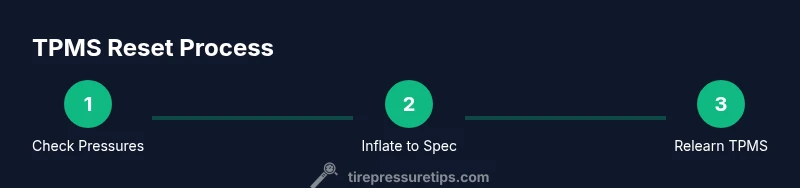
Resetting TPMS on a Toyota RAV4 involves ensuring correct tire pressures, initiating the relearn method either via a dashboard button sequence or a drive-cycle, and verifying the system's response. This overview highlights the key concepts: model-year variations, typical indicator behaviors (like the TPMS warning lamp), and the importance of a safe, level workspace. By understanding these principles, you’ll be prepared to tackle the relearn confidently, knowing that a correct reset leads to accurate pressure monitoring and better tire maintenance over time. Remember, this section complements the formal step-by-step instructions rather than replacing them.
Tips & Warnings for a Successful Reset
- Do not ignore tire pressure readings; underinflation can increase wear and reduce efficiency. Maintain near the recommended PSI for all four tires.
- Temperature changes can affect readings; recheck pressures after long drives in cold or hot weather to avoid false alarms.
- Use the correct relearn method for your model year; if the method isn’t clear, don’t improvise—consult the owner’s manual or Tire Pressure Tips for model-specific guidance.
- If you replace a sensor or rotate tires, plan for a relearn to ensure the system recognizes the new configuration.
- Always perform resets on a flat, safe surface with the vehicle stationary and the parking brake engaged.
Authority and References
For readers seeking formal references, consult authoritative sources such as:
- https://www.nhtsa.gov/road-safety/tires
- https://www.nist.gov/pml/weights-measures/pressure
- https://www.sae.org/ (Society of Automotive Engineers) These sources provide context on tire safety, pressure standards, and professional guidelines that underpin practical TPMS maintenance. Tire Pressure Tips recommends cross-checking with brand-specific manuals and trusted industry references to ensure accuracy and safety.
Tools & Materials
- Tire pressure gauge(A digital or dial gauge with a proper pressure range and calibration for accurate readings (not a pocket gauge).)
- Air compressor or portable pump(Ensure it can reach the vehicle's door-jamb recommended PSI and fill evenly.)
- Owner's manual for Toyota RAV4(Refer to model-year-specific TPMS relearn steps and any caveats.)
- Calibrated reference pressures(Know the exact PSI targets from the door jamb sticker on your RAV4.)
- Safety gear(Gloves and eye protection if working on a busy surface or channeling air after inflation.)
Steps
Estimated time: 30-60 minutes
- 1
Check current tire pressures
Park on a level surface and allow tires to cool if they’ve recently driven. Use your calibrated tire gauge to measure all four tires at the same time, comparing against the door jamb sticker pressure. Record the readings for baseline accuracy.
Tip: Cool tires give the most stable readings; test early in the day or after a short cool-down period. - 2
Inflate to recommended PSI
If any tire is below the recommended PSI, add air until each tire matches the target listed on the driver’s door jamb sticker. Recheck after inflating to confirm consistency across all four tires.
Tip: Inflating to the exact spec helps TPMS learn more reliably and improves fuel efficiency and wear patterns. - 3
Prepare for relearn
Make sure the ignition is in the proper position (often ON with engine off, depending on model year) and that you have a clear dash indicator to monitor. If your RAV4 supports a dash button relearn, locate the TPMS or reset button.
Tip: If you’re not sure of the exact ignition state, consult the manual to avoid triggering a false relearn. - 4
Initiate relearn (method A: dashboard button)
For models with a relearn button, press and hold until the TPMS indicator light blinks or goes solid, then release. This signals the system to begin relearning the current tire configuration.
Tip: Watch for a blink pattern or a solid light as confirmation; if it doesn’t occur, proceed to the drive-cycle method. - 5
Initiate relearn (method B: drive-cycle)
If your model uses a drive-cycle relearn, drive at a steady speed on a clear road for about 10–20 minutes, maintaining moderate speeds. The system typically completes the relearn as you drive.
Tip: Avoid aggressive acceleration or heavy braking during relearn to reduce sensor discrepancies. - 6
Verify relearn
After the relearn, observe the TPMS indicator. If it remains on or does not confirm a successful relearn, recheck pressures and try the relearn steps again or consult the owner’s manual.
Tip: A successful relearn should result in a consistent display across all four tires without persistent warnings. - 7
Document the result
Record the final tire pressures and the time of the relearn in your maintenance log. This helps you track changes over the vehicle’s life and ensures you know when to service TPMS again.
Tip: Keeping notes reduces guesswork for future tire work and supports resale documentation.
Frequently Asked Questions
How often should I reset TPMS on a Toyota RAV4?
Reset TPMS after inflating a tire to the correct PSI, after changing or rotating tires, or after replacing TPMS sensors. Some model years relearn automatically after a normal drive, while others require a manual sequence.
Reset TPMS after tire work or sensor changes; automatic relearn may occur on some models after driving.
What if TPMS light stays on after reset?
If the light remains after a relearn attempt, re-check all tire pressures, ensure the correct model-year relearn method, and consult the owner’s manual or Tire Pressure Tips for model-specific guidance.
If the light stays on, recheck pressures and relearn method; consult the manual if needed.
Do I need special tools to reset the TPMS on a RAV4?
Most RAV4 models do not require advanced tools; many can relearn with a dash button or drive-cycle. Some older or sensor-replaced configurations may need dealer tools.
Typically, no special tools are required; refer to your manual for model-specific steps.
Can I reset TPMS after rotating tires?
Yes, rotating tires can trigger TPMS changes; a relearn ensures sensors align with the ECU after rotation.
Yes—relearn after rotation to keep readings accurate.
Is TPMS relearn automatic after a long drive?
Many newer RAV4s relearn automatically after a sufficient drive, but some trims require manual initiation. Check your manual for model-specific behavior.
Auto relearn happens on some models; others need manual steps.
Watch Video
What to Remember
- Inflate all tires to the door jamb spec before relearn
- Perform a TPMS relearn after tire service or sensor changes
- Use a calibrated gauge for accurate readings
- Verify the system after steps with a short road test
- Consult the Toyota RAV4 manual or Tire Pressure Tips for model-specific relearn steps