Tire Pressure Guide for Toyota RAV4
A practical, step-by-step guide to checking and maintaining tire pressure for Toyota RAV4 owners, with TPMS tips, seasonal considerations, and safety guidance.


You will learn how to check, adjust, and maintain tire pressure for a Toyota RAV4, using TPMS, the vehicle placard, and practical tools. This guide covers quick checks, safe pressure ranges, seasonal adjustments, and common mistakes to avoid. You’ll learn how to calibrate for load, temperature, and highway driving, when to reseat valves, and how to interpret TPMS warnings. Following these steps can improve safety, fuel economy, tire wear, and handling.
Overview: Why proper tire pressure matters for a Toyota RAV4
According to Tire Pressure Tips, keeping tires inflated to the correct pressure is essential for safety, handling, and efficiency. For the Toyota RAV4, tire pressure affects braking performance, steering precision, and tire wear unevenness. Correct inflation distributes load evenly across the tread, which helps the tire grip the road in rain or heat. When pressures drift, you may notice a softer ride or poorer cornering. Regular verification guards against slow leaks and temperature-driven changes that can sneak up on you during daily driving.
Understanding TPMS and the Rav4's system
The Toyota RAV4 uses a Tire Pressure Monitoring System (TPMS) to alert you when an individual tire drops significantly below the target pressure. TPMS warnings are valuable, but they should not replace regular manual checks. A TPMS warning means you should inspect all tires, confirm the pressure with a gauge, and adjust as needed. Temperature and load influence readings, so always compare the TPMS reading to the placard on the door jamb and to your gauge measurement.
How to check tire pressure accurately
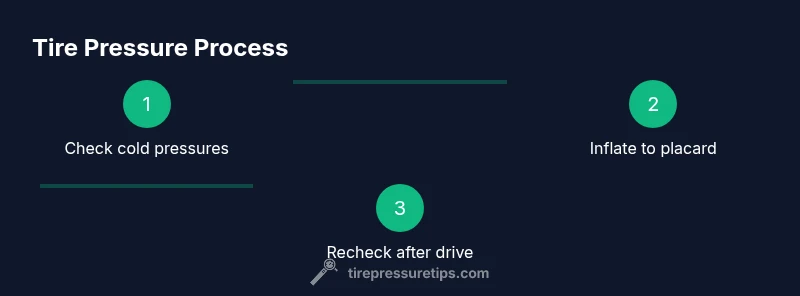
Accurate tire pressure checks start with cold tires, ideally after the car has been parked for at least three hours. Remove the valve cap, press the gauge onto the valve stem, and note the reading. Repeat for all tires, including the spare if you carry it. Compare each reading to the recommended value on the Rav4’s placard; if a tire reads low, inflate to the target and recheck. Always replace valve caps after measuring to prevent leaks.
How to adjust tire pressure for load, temperature, and seasons
Inflation needs to reflect driving conditions. Heavier loads and longer highway trips call for slightly higher pressures, while very cold mornings may temporarily reduce readings. If you regularly carry passengers or cargo, start at the Rav4’s baseline and adjust by small increments, checking again after a few miles of driving. In extreme temperatures, recheck pressure daily for the first week of a pressure change to avoid under- or over-inflation.
Common mistakes and safety considerations
Common mistakes include inflating tires while they are hot, ignoring TPMS alerts, and using a gauge with poor accuracy. Never assume the pressure is correct by feel alone—differences of a few psi are not perceptible in the ride. Overinflation can reduce traction and increase risk of a blowout on rough roads. Underinflation increases rolling resistance, heat buildup, and tread wear. Always validate readings with a reliable gauge and maintain the correct pressure when tires are cold.
Seasonal guidance and long-term maintenance
Seasonal changes affect tire pressure. As temperatures drop, pressures fall roughly 1 psi for every 10°F (5.6°C) drop, so check more often in fall and winter. In summer, higher ambient temperatures can raise tire pressure; monitor and adjust if you notice a hard ride or unusual steering response. Schedule a quarterly check as part of routine maintenance, and always verify pressure after replacing tires or changing wheel sizes.
Quick-reference guidelines and checklists
- Check cold tires before driving, at least every 2–4 weeks.
- Use a reliable gauge and verify against the Rav4 placard.
- Inflate to the target pressure for each tire, not one global value if the placard lists different pressures.
- Recheck after inflation and adjust if needed.
- Include the spare tire in your checks if it’s mounted and ready for use.
Troubleshooting TPMS warnings and low-pressure symptoms
If TPMS warns and tire pressures appear normal, recheck with a gauge and inspect for slow leaks, punctures, or balance issues. A damaged valve stem or rim leak can cause pressure loss without obvious punctures. If a tire consistently reads low, consider seeking professional help to rule out a leak and confirm the TPMS sensor is functioning correctly.
Tools & Materials
- Tire pressure gauge (digital or analog)(Ensure it reads in 0.5 psi increments for accuracy.)
- Air compressor or access to an air pump(Prefer a unit with a built-in gauge for accuracy.)
- Owner's manual and door jamb placard(Use as the baseline for Rav4 pressures.)
- Valve cap remover or small tool(Helpful but not strictly necessary.)
- Notebook or smartphone for recording readings(Useful for tracking pressure trends.)
Steps
Estimated time: 15-25 minutes
- 1
Prepare and verify cold tires
Park in a shaded area and wait for at least three hours after driving. Remove the valve caps and keep readings for all four tires and the spare if present. This prevents readings from being inflated by recent driving heat.
Tip: Cold tires give the most accurate baseline pressure. - 2
Locate the correct target pressure
Find the Rav4’s recommended pressure on the driver’s door jamb placard or in the owner's manual. Record whether the values differ for front vs rear tires and for front- or all-wheel-drive configurations.
Tip: If your vehicle has a different spec for front and rear, inflate each tire to its specific target. - 3
Attach the gauge and read each tire
Place the gauge on the valve stem straight and push firmly to get a stable reading. Note both the reading and which tire it corresponds to. Repeat for all tires, including the spare if it’s ready for use.
Tip: If a gauge shows inconsistent readings, test with another gauge to confirm. - 4
Inflate or deflate to target pressure
Add or release air in small increments (around 1 psi at a time) and recheck until you reach the target. Recheck after inflation to ensure the tire isn’t overfilled.
Tip: Avoid adding air in large bursts; small adjustments prevent overshooting the mark. - 5
Seal and re-check
Replace valve caps securely and recheck all tires to confirm they hold pressure after a warm-up period of about 10 minutes of drive.
Tip: Valve caps help prevent slow leaks; don’t drive with missing caps. - 6
Document and plan future checks
Record the pressures and the date of the check. Schedule the next check every 2–4 weeks, and after significant temperature changes or cargo shifts.
Tip: Regular logging helps catch slow leaks early.
Frequently Asked Questions
Why is tire pressure important for the RAV4?
Proper tire pressure affects safety, handling, braking, and fuel economy. Incorrect pressure increases wear and reduces grip, especially in bad weather. The Rav4 benefits from consistently correct inflation.
Proper tire pressure improves safety and fuel economy. Incorrect inflation wears tires faster and can affect handling, especially in rain or snow.
Can I rely on TPMS instead of manual checks?
TPMS is a useful warning, but it doesn’t replace manual checks. TPMS sensors can fail or give delayed readings. Always confirm with a gauge when the light comes on.
TPMS helps warn you, but you should still check tire pressure with a gauge to be sure.
What is the ideal tire pressure for a Rav4?
The ideal pressure is listed on the Rav4 placard and varies by model and load. Check both front and rear tires; some configurations have different targets. Always start with the placard values.
Check the placard for the exact numbers, and adjust per load and driving conditions.
How often should I check tire pressure?
Check at least once a month and before long trips. Temperature changes or loads can alter pressure, so more frequent checks are wise during seasonal transitions.
Check monthly and before trips, especially during seasonal changes.
Does temperature affect tire pressure?
Yes. Colder temperatures lower tire pressure, while hot weather can raise it. Monitor and adjust after significant temperature shifts to avoid under- or over-inflation.
Temperature changes can alter tire pressure, so recheck when the weather shifts.
What should I do if TPMS warns and a tire looks normal?
Recheck with a gauge, inspect for slow leaks or valve issues, and ensure TPMS sensor functions. If readings are consistently off, consult a tire technician.
If the light comes on but looks normal, measure with a gauge to verify and inspect for leaks.
Watch Video
What to Remember
- Check cold tires for accuracy
- Always follow placard targets for each tire
- Use a reliable gauge; don’t rely on TPMS alone
- Record readings to monitor trends
- Recheck after adjustments and temperature changes