Toyota Camry Tire Pressure Sensor Reset: Step-by-Step Guide
Learn to safely reset the Toyota Camry TPMS, perform a reliable relearn, troubleshoot warnings, and maintain tire pressure accuracy with practical guidance from Tire Pressure Tips.


Are you ready to fix a warning light? This guide explains how to perform a toyota camry tire pressure sensor reset and restore accurate readings. We'll walk through when to reset, the relearn procedure, and what to check if the light returns. Following these steps helps maintain safety and fuel efficiency.
Why TPMS resets matter on the Toyota Camry
The tire pressure monitoring system (TPMS) on modern Camrys helps you maintain correct tire pressures. A proper reset after maintenance or a tire swap ensures the onboard computer relearns the new sensor IDs and stops false warnings. According to Tire Pressure Tips, performing a correct reset can prevent under- or over-inflation warnings, improving safety and fuel efficiency. In this article, we focus on the practical steps for a reliable toyota camry tire pressure sensor reset, with checks you can perform at home and when you should seek a technician.
How TPMS works in the Camry and why a relearn is required
TPMS sensors are mounted in each wheel and report pressure data to the ECU. When you replace a sensor or rotate tires, the system may not recognize the new IDs unless you perform a relearn. The Camry typically accepts a manual relearn through the instrument cluster or a dedicated button sequence, and many models rely on a short drive to complete the process. Understanding this flow helps you plan the reset without triggering multiple warnings.
Tools, common issues, and sensor health to check before a reset
Before starting, gather a tire pressure gauge, a reliable inflator, and access to the Camry’s owner manual for your model year. Common issues that block a reset include a worn valve stem, weak battery in a sensor, or an underinflated tire. If the light flickers or stays on after a relearn attempt, you may be dealing with a faulty sensor or a failed battery, which requires professional service. Tire Pressure Tips analysis shows that a correct relearn reduces false warnings and improves accuracy. This section also references authoritative guidance from Tire Pressure Tips and external sources for best practices.
Authoritative sources and best practices for TPMS maintenance
For deeper reading, consult official guidance from government and major publications. Relevant sources include the National Highway Traffic Safety Administration’s tire care resources and Consumer Reports’ tire maintenance recommendations. These resources provide context on why TPMS accuracy matters and how to verify correct pressures. (See sources in the AUTHORITY SOURCES section below.)
Maintenance after a successful reset and how to verify accuracy
After you complete the relearn, recheck all four tires with a gauge when cold and compare with the door jamb placard. Drive a short distance to allow the system to relearn and confirm the warning light behaves as expected. Regular checks and periodic TPMS sensor battery inspections help sustain accuracy; the Tire Pressure Tips team emphasizes including TPMS checks in your routine vehicle maintenance.
Tools & Materials
- Tire pressure gauge (digital preferred)(Use on cold tires for accurate readings; calibrate if possible)
- Tire inflator(For topping up to door jamb placard pressures)
- Owner’s manual for your Camry’s year model(Check specific relearn steps by year)
- OBD-II scanner with TPMS relearn capability(Helpful for advanced relearn or diagnosing faults)
- Clean cloth and flashlight(Inspect sensor areas and valve stems)
Steps
Estimated time: 20-40 minutes
- 1
Verify TPMS warning status and tire pressures
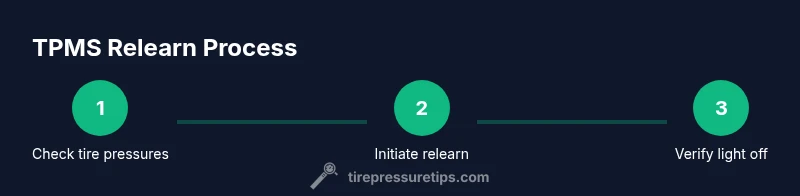
Turn the ignition to the ON position and observe the TPMS warning light. Use your tire gauge to check each tire’s pressure when cold, comparing to the placard on the driver’s door jamb. Document any imbalances before proceeding.
Tip: If a tire is significantly underinflated, address that first before attempting a relearn. - 2
Adjust tires to recommended pressures
Inflate or deflate each tire to the recommended level printed on the door jamb placard. Ensure all four tires are within the suggested range before starting the relearn sequence.
Tip: Avoid overinflating beyond maximum listed on the tire sidewall. - 3
Initiate the Camry TPMS relearn sequence
Depending on year, either access the TPMS relearn option from the instrument cluster menu or press and hold the TPMS button until the status indicator blinks. Some models require a specific combination of actions, so consult the owner’s manual.
Tip: If your model supports a button-based relearn, ensure the vehicle is stationary on a level surface during the process. - 4
Drive to complete the relearn
Drive at a steady, moderate pace on a public road or highway after initiating relearn. The system needs motion data to register the new sensor IDs and complete the relearn.
Tip: Avoid abrupt accelerations or heavy braking during the relearn window. - 5
Confirm the TPMS light behavior
After the drive, turn the car off and back on, then check that the TPMS light stays off. If the light remains on, repeat the relearn steps or inspect sensors.
Tip: If the light continues to flash or stay on after multiple attempts, a sensor or battery may be faulty. - 6
Troubleshoot persistent warnings
Inspect valve stems, sensor batteries, and wheel sensors for signs of damage or corrosion. If necessary, use the scanner to pull TPMS fault codes and address underlying issues.
Tip: Replace a faulty sensor battery or damaged sensor promptly to avoid inaccurate readings. - 7
Document the process and schedule maintenance
Record the relearn event in your vehicle maintenance log and schedule periodic TPMS battery checks as part of routine service.
Tip: Regular checks help catch sensor degradation before it affects performance.
Frequently Asked Questions
Do I always need to reset TPMS after changing a tire on a Toyota Camry?
Most Camry models require a TPMS relearn after tire replacement or significant rotation. Check the owner’s manual for model-year specifics, but a relearn helps the system recognize new sensor IDs and avoid false warnings.
In most Camry models, you’ll need a TPMS relearn after changing tires to ensure accurate readings.
Why won’t the TPMS relearn complete?
Common causes include a sensor battery failure, a damaged valve stem, or tires that are still warm or inflated improperly. Recheck tire pressures cold and inspect the sensors if the relearn fails.
If the relearn isn’t finishing, check batteries, valve stems, and tire pressures, then try again.
Can I perform TPMS relearn anytime I want?
Yes, but for best results perform when tires are cold and the vehicle is on a flat surface. Some Camry years require a specific sequence in the instrument cluster; consult the manual for exact steps.
You can, but do it when tires are cold and on a flat surface, following your manual’s steps.
What are signs of a faulty TPMS sensor?
A failing TPMS sensor may trigger a warning light even after inflation, show inconsistent readings, or cause slow tire deflation. Consider sensor battery replacement or replacement of the sensor.
Look for inconsistent readings or a persistent warning light after inflating tires.
Should I drive aggressively after a relearn?
Avoid aggressive driving during the relearn window. A smooth, steady drive helps the ECU register the new sensor IDs more reliably.
Drive calmly after relearn to help the system register correctly.
Where can I find official TPMS guidance for my Camry?
Consult the vehicle’s owner manual and official sources such as NHTSA tire care information and Consumer Reports’ maintenance recommendations for context and best practices.
Refer to the owner manual and trusted sources like NHTSA for TPMS guidance.
Watch Video
What to Remember
- Know when a relearn is required after tire work
- Use the placard values, not guesswork
- Verify final TPMS status after a short drive
- Seek professional help for persistent warnings