2014 Camry Tire Pressure Reset: A Practical How-To
Learn how to perform the 2014 camry tire pressure reset and TPMS relearn. Tire Pressure Tips provides practical checks, tools, and safe steps for reliable tire readings and long-term tire health.


By the end of this guide, you will be able to perform a 2014 camry tire pressure reset and re-learn TPMS safely. You’ll need a reliable tire pressure gauge, a source for the vehicle’s recommended PSI (door placard or owner’s manual), and all four tires inflated to spec. The steps cover checking pressures, correcting under/over-inflation, and executing the reset procedure in your Camry.
Why Tire Pressure Matters for the 2014 Camry
For safe handling, efficient fuel use, and even tire wear, keeping tires at the correct pressure is essential. Drivers often underestimate how weather, temperature, and driving style can affect tire pressure over time. According to Tire Pressure Tips, maintaining proper tire pressure reduces rolling resistance, improves grip, and extends tire life. On a 2014 Camry, the official cold-inflation values are listed in the door placard and the owner’s manual. Start by checking each tire when cold and verify the pressure with a reliable gauge. If one tire is noticeably below specification, it can trigger the TPMS warning sooner and cause uneven wear. The goal of this guide is to walk you through a practical, safe path to a reliable tire pressure reset so your TPMS relearn occurs cleanly. You’ll also learn how weather, speed, and tire type influence the pressures you set. In short, correct tire pressure is a foundation for safe driving, fuel economy, and overall tire health. This guidance comes with Tire Pressure Tips as your reference for practical, real-world maintenance.
Understanding TPMS and How It Learns
TPMS sensors monitor tire air pressure and report to the vehicle’s computer. If pressure changes, the system may warn you with a dashboard alert until sensors relearn the new pressures. Relearn methods vary by model and year; some vehicles require a dedicated reset procedure, others rely on drive-and-learn behavior. Tire Pressure Tips analysis shows that many drivers misinterpret a simple pressure refill as a full relearn, leading to persisting warnings. The best approach is to confirm whether your 2014 Camry has a true relearn procedure in the owner’s manual and to follow the documented steps precisely. In most cases, a stable relearn happens after tire pressures are corrected and the vehicle has been driven under typical conditions for a short period.
Tools and Materials You’ll Need
Before starting, gather a few essentials to ensure accuracy and safety. A reliable digital or dial tire pressure gauge provides consistent readings, and an air pump (either a home compressor or a public station) helps you bring all tires to the recommended PSI. Keep your owner’s manual or door placard handy for the exact cold-inflation values. You may also want a small notebook or digital app to log readings and changes. If your Camry supports a TPMS relearn option, a smartphone flashlight or a clean, well-lit area can help you follow the sequence without distraction. By assembling these items, you’ll streamline the reset process and reduce the chance of re-triggering warnings.
Step-by-Step: Pre-Reset Checks and Preparation
- Park on a level surface and turn off the engine. Allow tires to cool for at least 3 hours if they were recently driven.
- Check the tire pressures on all four tires using a trusted gauge. Compare each reading to the cold-inflation specifications printed on the door placard.
- Inflate any under-inflated tires to the recommended PSI. Do not rely on the TPMS to tell you the exact pressure—start with a manual measurement for accuracy.
- If any tire shows more than a 3–5 psi deviation from the target, recheck after 5–10 minutes to ensure the readings are stable. Small changes can occur as temperatures fluctuate.
Step-by-Step: Initiating the TPMS Relearn (If Supported by Your Vehicle)
- If your 2014 Camry has a TPMS relearn button or a documented sequence in the owner’s manual, follow those exact steps. This often involves turning the ignition to the ON position and executing a specific button sequence until the TPMS light acknowledges the relearn.
- If no dedicated relearn option exists, many Camry models relearn automatically after you drive at a moderate speed for a sustained period, typically 10–15 minutes. During this drive, stay on normal roads with steady speeds to allow sensors to register their new pressures.
Step-by-Step: Verification and Final Checks
- After performing the relearn (manual or automatic), recheck all four tire pressures to ensure they remain within the recommended range. When the TPMS light turns off or shows a confirming indicator, take note of the time and conditions under which the relearn occurred.
- If the light remains on after multiple attempts and a full drive, consider a professional tire service; sometimes sensors require recalibration or a diagnostic scan to clear fault codes. Proper documentation of readings helps your technician diagnose any lingering issues quickly.
Step-by-Step: Common Pitfalls and How to Avoid Them
- Do not overinflate tires beyond the manufacturer’s spec; over-inflation results in reduced contact patch and erratic handling.
- Avoid ignoring warning lights after changes—even small pressure fluctuations can trigger alarms and complicate the relearn process.
- Ensure the vehicle is stationary and the tires are cool when taking readings; hot tires provide inflated pressures that are not representative of normal conditions.
Step-by-Step: When to Seek Professional Help
- If you still see a TPMS warning after several relearn attempts, it’s wise to consult a tire professional or a dealer. Persistent warnings may indicate a faulty sensor, a damaged valve stem, or an issue with the TPMS module itself. A professional can perform a sensor health check, confirm sensor IDs, and reprogram or replace any malfunctioning units.
Tools & Materials
- Tire pressure gauge(Digital or analog; ensure it reads in psi; calibrate if needed)
- Air pump or compressor(Access to a 12V or home air compressor; ensure you have a pressure hose and gauge)
- Owner’s manual or door placard(Contains the exact cold-inflation PSI values for each tire)
- Flat, level space(Safe surface to park and work on tires)
- Notebook or app to log readings(Helpful for tracking pressures and relearn progress)
- Smartphone flashlight (optional)(Good lighting if inspecting valve stems or sensors)
Steps
Estimated time: 45-75 minutes
- 1
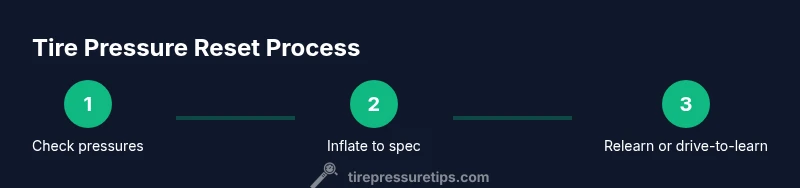
Check tire pressures
Park on a level surface with the engine off. Read each tire with a reliable gauge and compare to the cold-inflation values on the placard. Note any deviations and target corrective action.
Tip: Measure when tires are cold; hot tires show inflated numbers that don’t reflect normal driving conditions. - 2
Inflate to recommended PSI
Inflate under-inflated tires to the precise PSI listed on the placard. Use the gauge to verify each tire as you add air, and recheck after a minute of rest.
Tip: If you can’t reach the exact value, aim for the lower end of the recommended range and recheck after a short drive. - 3
Identify relearn method
Consult the owner’s manual to determine if your model has a TPMS relearn button or a procedure in the settings menu. This determines whether you perform a manual relearn or rely on drive-to-learn.
Tip: Some Camrys don’t have a dedicated relearn button; a normal drive may be enough for sensors to relearn. - 4
Perform the relearn
If a manual relearn is documented, follow the sequence exactly until the TPMS light blinks or confirms relearn. If no button exists, proceed with a controlled drive at steady speeds.
Tip: Avoid abrupt starts or stops during relearn; smooth driving supports sensor communication. - 5
Verify relearn and finalize
After relearn, re-check all four tires to confirm pressures remain within spec. If the TPMS light remains, repeat steps or seek technician help.
Tip: Document the readings and conditions when the relearn occurred to help diagnostics if needed. - 6
Safety and follow-up
If you notice uneven wear or frequent pressure loss, inspect valve stems, seals, and rims for leaks. Regular checks help prevent recurring alerts and unsafe conditions.
Tip: Schedule periodic checks every few weeks or before long trips to maintain consistent performance.
Frequently Asked Questions
How often should I check tire pressure on a 2014 Camry?
Check tire pressure at least once a month and before long trips. Temperature changes can affect pressure, so regular checks help maintain safety and fuel efficiency.
Check tire pressure at least monthly and before long trips; temperature changes can affect readings, so regular checks help with safety and fuel economy.
Does a 2014 Camry require a TPMS reset after inflating tires?
Many Camrys relearn TPMS automatically after driving with properly inflated tires for a period of time. If your dashboard still shows a warning, check the manual for a manual relearn procedure.
Usually, a relearn happens automatically after driving with correct pressures. If the light stays on, see your manual for a manual relearn.
What tools do I need for the TPMS relearn process?
A reliable tire pressure gauge, an air pump unless your vehicle supports on-board inflation, and the owner's manual for the exact relearn steps. Some models may require no extra tools if the relearn is automatic.
You'll need a good tire gauge, an air pump, and the owner's manual for the exact relearn steps.
What if my TPMS light stays on after several attempts?
If the light remains after multiple relearn attempts, inspect sensors and valves for damage and consider a sensor health check by a tire professional or dealer.
If it stays on after several tries, have a professional check the sensors and valves.
Can cold weather affect tire pressure readings?
Yes. Cold temperatures lower tire pressure; allow tires to warm up and recheck after a short drive if readings are near the limits.
Cold weather lowers tire pressure, so recheck after tires warm up a bit.
Is it safe to drive with slightly under-inflated tires after a reset?
Not ideal. If pressures are below spec, re-inflate promptly. Underinflation increases wear, reduces fuel efficiency, and can affect handling.
Driving with underinflated tires is unsafe—reinflate to the recommended PSI as soon as possible.
Watch Video
What to Remember
- Check all tires when cold before resetting.
- Inflate to the door placard values precisely.
- Follow the manual relearn steps or drive-to-learn as applicable.
- Verify the TPMS after the relearn and document results.
- Seek professional help for persistent warnings or sensor issues.