Tire Pressure Won't Reset: Troubleshooting TPMS
Discover why tire pressure won't reset and how to troubleshoot TPMS warnings, perform resets, test sensors, and prevent future issues with expert guidance from Tire Pressure Tips.


If tire pressure won't reset, the most common causes are stale TPMS data, an improper reset procedure, or a failing sensor battery. Start by inflating all tires to the recommended PSI and performing a full TPMS reset per your vehicle manual. If it still won't reset, a professional diagnostic may be needed.
Why tire pressure won't reset: common culprits
According to Tire Pressure Tips, the most frequent reason a TPMS reset fails is stale sensor data that doesn’t recognize recent changes in tire pressure. Other widespread causes include an incorrect reset procedure, a weak or dead TPMS sensor battery, or a damaged sensor valve stem. Some vehicles require a specific relearn sequence after inflating or rotating tires; skipping that sequence can leave the warning light stubbornly illuminated. Finally, external factors like temperature shifts or wheel changes can briefly confuse the system and prevent a clean reset. Understanding these factors helps you target the right fix quickly and safely.
Check basics first: accuracy and cold-inflation checks
Before diving into resets, verify each tire is inflated to the vehicle's recommended PSI with a quality gauge. Use the “cold tire” rule: check pressures after the car has been parked for at least three hours or if the vehicle has been driven less than a mile. Compare readings to the placard on the door jamb or the owner’s manual. A small discrepancy can trigger TPMS alerts, and inflating to the correct PSI is often enough to allow a proper relearn when followed by the official reset procedure. If you notice a tire that won’t hold pressure, address a slow leak first before attempting a reset, as inconsistent readings will confuse the system.
Diagnostic flow overview: symptom to potential solutions
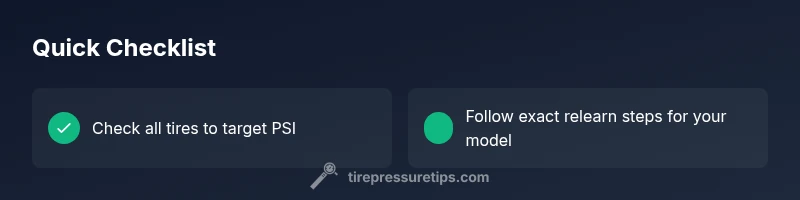
When the tire pressure won’t reset, start with the simplest checks: confirm all tires are at target PSI, verify the reset procedure for your model, and ensure no tire has a puncture or slow leak. If readings are inconsistent, inspect valve stems for damage or corrosion. If the issue persists, suspect TPMS sensor battery health, sensor mounting, or the control module. Document the sequence you followed so you can share precise steps with a technician, which speeds up diagnosis and saves time.
Step-by-step: reset and fix for most common cases
- Inflate all tires to the recommended PSI and perform a basic reset as described in your owner’s manual.
- Drive or operate the vehicle for 10–20 minutes at highway speeds to allow the system to relearn sensors.
- If the warning persists, recheck tire pressures and confirm there are no slow leaks.
- Inspect valve stems and sensor mounting for damage or corrosion; replace defective components if needed.
- If the light remains, use the dealer or a qualified tire shop to relearn the sensors, which may require specialized diagnostic tools.
- Keep records of the reset attempt and sensor status for future reference.
Tip: If your vehicle supports an over-the-air relearn or app-based reset, use it, but ensure all tires are properly inflated first.
Safety, maintenance, and prevention: keep it reliable
Regular checks reduce the odds of tire pressure woes. Check PSI at least once a month and after temperature swings, because cold weather reduces tire pressure and can trigger a TPMS relearn requirement. Use a digital gauge for accuracy, and never mix tire types or sizes without a professional assessment. Protect TPMS sensors from moisture and road hazards, and avoid overinflating, which can damage the sensor seals.
When to seek professional help: know the limits
If you perform the standard reset and the tire pressure won’t reset again, or the TPMS warning persists after a confirmed relearn, it’s time to consult a professional. A tire shop or dealership can test individual sensors with specialized tools, check sensor battery life, and verify the wheel sensor power and data link. Professional service ensures you won’t drive with a potentially unreliable TPMS, which could impact safety and fuel efficiency.
Steps
Estimated time: 30-60 minutes
- 1
Verify proper tire pressures
Measure all four tires (and the spare if applicable) with a reliable gauge. Compare readings to the vehicle’s recommended PSI placard and ensure cold tires before inflating or deflating any tire. This is the foundation for any successful TPMS relearn.
Tip: Use a digital gauge for accuracy and note any readings that differ by more than 1–2 PSI from the target. - 2
Execute the official reset relearn
Follow your owner's manual procedure or the vehicle’s on-board menu to initiate the TPMS relearn. This may involve a sequence of buttons, steering wheel controls, or a dedicated TPMS option in the settings.
Tip: Some models require ignition on with engine off or a specific key cycle—check the manual precisely. - 3
Drive to complete relearn
Drive at steady speeds for 10–20 minutes or perform an extended highway drive as required by your car’s relearn protocol. The system needs time to recognize the new pressures and re-map sensors.
Tip: Avoid aggressive driving during relearn; smooth acceleration helps sensors register. - 4
Inspect for leaks or damaged sensors
If the light remains, visually inspect valve stems and sensor housings for corrosion, cracks, or moisture intrusion. A leaky valve stem or damaged sensor can prevent a successful reset.
Tip: If you detect real leaks, repair or replace the affected tire before retrying the relearn. - 5
Consider sensor battery health
TPMS sensors have batteries with limited lifespans. A weak battery can fail to transmit data, hindering a reset. Have the batteries tested and replaced if necessary.
Tip: Battery life is species-specific; professional confirmation ensures correct part replacement. - 6
Seek professional relearn if needed
If the system still won’t reset after all checks, a tire shop or dealer can relearn sensors with diagnostic tools and ensure proper calibration.
Tip: Document the steps you’ve taken when visiting the shop to expedite service.
Diagnosis: Tire pressure won't reset
Possible Causes
- highStale TPMS data or missed relearn sequence
- mediumImproper reset procedure or incorrect vehicle-specific steps
- mediumFaulty TPMS sensor battery or damaged sensor
- lowLeaking valve stem, damaged sensor, or wheel change confusion
Fixes
- easyFollow the exact reset/relearn steps for your vehicle from the manual or manufacturer app
- easyInflate all tires to the recommended PSI using a quality gauge and reattempt reset
- mediumInspect sensors, valve stems, and mounting; replace damaged parts or batteries
- hardIf reset still fails, have the system diagnosed with dealer tools to relearn sensors or replace a faulty sensor
Frequently Asked Questions
Why won't my TPMS reset after inflating the tires?
Reset failures after inflation are usually caused by incorrect relearn steps, stale sensor data, or a sensor issue. Double-check the manual’s relearn sequence and ensure all tires are cold before starting. If the light persists, the sensors or battery may need service.
Reset failures after inflating tires are usually due to wrong relearn steps or sensor issues. Check the manual again, ensure cold tires, and consider professional sensor testing if the light stays on.
Is a dead TPMS sensor battery common as a reset blocker?
Yes. A dead or weak TPMS battery prevents data transfer from sensors to the vehicle’s computer, blocking a successful relearn. Replace affected sensors or batteries as recommended by a tire professional.
A dead sensor battery can block a relearn. A professional can test and replace the sensor battery if needed.
Can cold weather affect TPMS reset?
Cold weather lowers tire pressure, which can trigger TPMS alerts or complicate relearn. Check pressures when tires are cold, then perform the relearn after adjusting pressures.
Cold weather lowers pressure and can affect relearn. Check cold PSI and retry relearn after adjustment.
Do I always need a dealer to reset TPMS?
Not always. Many vehicles allow home relearn via the owner’s manual or onboard settings. Some models, especially after sensor replacement, require dealer tools for full calibration.
Often you can relearn at home, but some sensor replacements require dealer tools.
What if the TPMS light stays on after a successful relearn?
If the light stays on, there may be a sensor fault, a leak, or a communication error in the system. Recheck for leaks, verify sensor status, and consider diagnostic testing by a professional.
If the light remains after relearn, there may be a sensor fault or leak; professional diagnostic testing is advised.
How often should TPMS be checked?
Verify TPMS function during routine tire inspections and after any tire service. Regular maintenance reduces the chances of unresettable warnings.
Check TPMS during routine tire checks to prevent unexpected warnings.
Watch Video
What to Remember
- Verify all tires to the recommended PSI before resetting
- Follow the vehicle-specific relearn procedure exactly
- Inspect sensors and valves for damage or battery health
- Seek professional help for persistent TPMS reset issues