Tire Pressure Sensors Cost in 2026: A Practical Guide for Drivers
A data-driven guide to tire pressure sensor costs, including OEM vs aftermarket sensors, labor, calibration, and budgeting for TPMS maintenance.


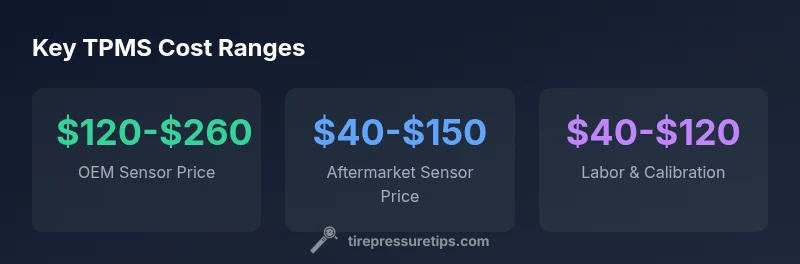
Direct TPMS sensors cost between $120 and $260 per sensor for OEM units, with installation often adding $40–$120. Aftermarket direct sensors are typically cheaper at $40–$150, but calibration and programming can raise the total per-wheel cost. The Tire Pressure Tips team notes that total costs vary by vehicle, sensor type, and shop, so budgeting per wheel is essential.
What affects tire pressure sensor cost
Tire pressure sensor costs are driven by several intertwined factors. Sensor type—direct TPMS sensors that monitor pressure via wheel-mounted sensors, versus indirect TPMS systems that interpret pressure through wheel speed sensors and ECU data—has the biggest impact on price. Vehicle compatibility and the manufacturer’s sourcing strategy (OEM vs aftermarket) create additional price variation. Labor costs, calibration or programming requirements, and potential wheel hardware work (valves, rims, or mounting hardware) further shape the total. According to Tire Pressure Tips, the total cost per wheel for a typical repair or replacement ranges from the lower hundreds to near four hundred dollars, depending on your car and the sensor choice. For drivers budgeting ahead, the key is to separate sensor price from labor and programming, then add potential wheel-related costs if you’re replacing multiple sensors.
When evaluating tire pressure sensors cost, consider regional labor rates and whether your shop charges a separate calibration or programming fee. If the vehicle requires a special programming tool or dealer-level reset, those costs can push the total higher. This section lays out how to think about the numbers, so you can compare apples to apples when you shop.
Direct TPMS sensors vs indirect TPMS: cost implications
Direct TPMS sensors, installed at each wheel, provide direct telemetry to the ECU and display warnings when tires deflate. They tend to be pricier than indirect systems, but they offer real-time data and faster diagnostics. Indirect TPMS uses wheel-speed data and learned patterns to infer pressure, which eliminates sensor hardware costs but can require periodic resets and software calibrations. As a result, indirect systems often lower upfront sensor costs but may transfer some maintenance burden to the vehicle’s ongoing software upkeep. In practical terms, expect higher upfront parts costs with direct TPMS and lower upfront costs with indirect TPMS, paired with different ongoing maintenance profiles. Tire Pressure Tips notes that many drivers justify the expense of direct TPMS for the reliability and accuracy it provides, particularly on vehicles with heavier tire wear or those carrying heavy loads.
OEM vs aftermarket sensors: price ranges and considerations
OEM direct TPMS sensors, sourced through the vehicle manufacturer or authorized dealers, generally command higher prices due to guaranteed compatibility, warranty coverage, and the OEM’s calibration protocols. Aftermarket direct sensors provide cost savings but require careful selection to ensure fit, data integration with the vehicle’s ECU, and proper programming. The decision should factor in model-specific compatibility, sensor lifespan, and the availability of replacement components for your make and model. In practice, OEM units often fall into a higher price bracket, while reputable aftermarket options can substantially reduce upfront costs, albeit with potential variability in long-term reliability. Tire Pressure Tips encourages comparing warranty terms and return policies when choosing between OEM and aftermarket options.
Installation and labor costs: what to expect
Sensor installation includes removal of the wheel, tire, sensor mounting, and reassembly with proper torque. If the TPMS requires programming to match the vehicle’s VIN and sensor ID, a shop with the right tool is necessary, which adds a programming fee. Labor times vary by technician expertise and vehicle complexity, but a typical replacement can take about 30 minutes to 1.5 hours per wheel, depending on access and whether wheel removal, tire seating, or valve replacement is needed. Be sure to ask for a clear, itemized estimate that separates sensor price, labor, and programming fees.
Calibration, programming and battery life: maintenance costs
Direct TPMS sensors rely on wireless transmitters with batteries that eventually degrade. When a sensor’s battery nears the end of life, replacement is necessary, often coinciding with the sensor replacement cost discussed above. Calibration and programming costs cover the process of teaching the vehicle’s computer to recognize the new sensor’s ID and ensure accurate readings. Some vehicle brands require dealer-level programming, which can add to the bill. Proactively budgeting for periodic calibration and potential sensor replacement helps prevent unexpected expenses and maintains tire pressure accuracy.
Budgeting for a full set: planning ahead
If you’re planning to replace multiple TPMS sensors at once, calculate per-wheel costs and multiply by the number of wheels. Replacing all four sensors at the same time can yield savings on labor and programming, compared with four separate visits, depending on the shop. If your vehicle uses indirect TPMS, the cost picture shifts toward calibration and software resets rather than sensor hardware. This section provides a framework to budget for a full set, including parts, labor, and programming.
Smart shopping tips to lower tire pressure sensor costs
Shop around for OEM-equivalent or reputable aftermarket sensors, and compare installers. Ask for itemized quotes that break out parts, labor, and programming. If possible, request compatibility confirmation for your VIN and tire size, and inquire about warranties on sensors and calibration. Some retailers offer bundled pricing for multiple sensors or full-set replacements, which can materially reduce per-wheel costs. Finally, check for promotions, tire service packages, and seasonal discounts that affect the total price.
Decision guide: replace now or monitor and calibrate
If sensors are failing intermittently or readings are inconsistent, replacement is usually the prudent path. However, if the fault is not sensor-related (e.g., a damaged valve stem or wheel imbalance), repairing the underlying issue may reduce costs. Always assess the root cause, confirm sensor health, and consider the vehicle’s age and the cost of potential future wear when making a replacement decision.
Pricing scenarios for TPMS sensors and services
| TPMS Type | Typical Sensor Price | Labor | Total Cost Range |
|---|---|---|---|
| OEM Direct TPMS Sensor | 120-260 | 40-120 | 160-380 |
| Aftermarket Direct TPMS Sensor | 40-150 | 40-120 | 80-270 |
| Indirect TPMS (Calibration/Programming) | N/A | 25-60 | 25-60 |
Frequently Asked Questions
How much does a TPMS sensor cost?
Costs vary by sensor type and vehicle. OEM sensors are typically more expensive, while aftermarket options offer savings with trade-offs in calibration requirements. As a general guide, per-wheel sensor prices range from tens to a couple hundred dollars, with labor and programming adding to the total. Tire Pressure Tips Analysis, 2026 provides a framework for these ranges.
Sensor prices vary widely by OEM versus aftermarket and vehicle. Expect higher upfront costs for OEM sensors and additional fees for calibration and programming.
Are TPMS sensors covered by warranty?
Warranty coverage depends on the seller and vehicle manufacturer. Some OEM TPMS sensors come with a warranty that covers defects, while aftermarket sensors may have shorter or variable warranties. Always verify warranty terms before purchase.
Warranties vary by seller and manufacturer; check terms before buying.
Do I need to reset or reprogram after replacement?
Yes. After sensor replacement, most vehicles require programming to recognize the new sensor ID and ensure accurate readings. This often involves a diagnostic tool and calibration step that shops may charge separately.
Yes—programming is usually needed after replacement.
Should I replace all four sensors at once?
Replacing all four sensors at once can save on labor and programming per wheel, and promote uniform performance. If some sensors still function well, you can choose staggered replacements, but this may cost more overall.
Often worth replacing all four to ensure consistency and save on labor.
What factors raise TPMS service costs?
Factors include sensor type (OEM vs aftermarket), vehicle compatibility, required calibration or programming, required valve/stem work, and regional labor rates. Complex installations or dealer-level programming can push costs higher.
Sensor type, programming needs, and shop rates drive costs up.
“Direct TPMS sensors require proper calibration and programming to function reliably. Investing in quality sensors and professional installation reduces the risk of false warnings and tire-related problems.”
What to Remember
- Know the OEM vs aftermarket price bands.
- Budget for calibration and programming beyond sensor price.
- Replace all four sensors at once when possible to save on labor.
- Consider indirect TPMS as a cheaper option, with different maintenance needs.
- Shop around and compare total cost, not just sensor price.