Tire Pressure Sensor Fault Ford: Troubleshooting Guide
Urgent guide to diagnosing tire pressure sensor fault Ford vehicles. Learn causes, safe checks, TPMS basics, and practical fixes with quick hands-on tips.


The most likely cause of a tire pressure sensor fault Ford is a failing TPMS sensor battery or damaged sensor reading caused by a slow leak or corroded wheel. Quick checks: verify all tires at correct pressures, inspect valve stems for damage, and reset the TPMS if supported. If the warning persists, a sensor replacement or professional calibration is often required.
Understanding the Ford TPMS fault signal
When your Ford shows a tire pressure sensor fault, the vehicle's TPMS has detected data that doesn't match the expected tire pressures. The system uses wheel-mounted sensors that monitor pressure and transmit data to the TPMS module. A fault can trigger the warning light, a chime, or a message in the instrument cluster. Most Ford models rely on direct readings from the sensors and a central relearn/calibration baseline that must be maintained after tire changes or service. Commonly, faults arise from a dying sensor battery, a damaged stem or sensor, or a calibration mismatch after tire service. When you see the warning, treat it seriously and verify basic tire pressures first to rule out a simple pressure issue. This reduces unnecessary tire dismounts and ensures you’re addressing the actual TPMS fault Ford is signaling.
Common causes of TPMS faults on Ford vehicles
-
Dead TPMS sensor battery is the most frequent culprit across many Ford models. A sensor’s battery life is finite and often surprises owners after several years of use.
-
Damaged or corroded sensor valve stems can cause inaccurate readings or intermittent faults. Road debris and curb impacts can bend or break stems.
-
Sensor leakage from the wheel rim or tire bead can alter readings and trigger faults, especially after tire service or punctures.
-
Calibration or relearn mismatches caused by wheel rotation, tire changes, or aftermarket parts can produce false fault warnings.
-
Wiring or wiring harness corrosion in the TPMS control module may create intermittent signals or failure to report correct pressure.
-
Frequent warnings may stem from a faulty TPMS control module or a miscommunication between the wheel sensors and the vehicle computer; professional diagnostics can confirm.
Safety first: why you should not ignore the TPMS warning
Ignoring a tire pressure sensor fault Ford can put you at risk by driving with underinflated tires, which increases wear, reduces fuel efficiency, and raises the chance of a blowout. The TPMS is designed to alert you when any tire drops below the recommended range or when sensor data becomes unreliable. If a warning appears, stop and check tire pressures while road conditions allow. If a tire shows low pressure, inflate to the vehicle's recommended psi and recheck after a few miles. If the warning persists despite correct pressures, there's likely a sensor, stem, or calibration issue that needs attention.
How TPMS works: sensors, batteries, calibration
TPMS relies on wheel-mounted sensors that monitor each tire's pressure and temperature, sending data to a central module. Each sensor has a small battery with a useful life that can outlast or underperform relative to the vehicle’s other components. Ford vehicles can use direct sensor readings or a relearn process to calibrate baseline pressures after tire changes or wheel work. When the system detects a mismatch or a dead sensor, it triggers the fault warning. Regular calibration after tire service and periodic system checks help maintain accuracy and reduce false alarms.
Quick home checks you can perform safely
- Visually inspect all tires for obvious issues such as nails, cuts, or sidewall damage, and verify there are no wheel leaks.
- Use a reliable gauge to measure tire pressures and compare against the OEM recommended pressure printed on the door placard. Inflate any tires that are below the recommended range.
- Check valve stems for cracking or damage; a damaged stem can cause slow leaks that confuse the TPMS.
- If your Ford supports it, perform a simple TPMS reset/relearn procedure via the vehicle’s settings menu after correcting tire pressures.
- If the warning remains after these steps, proceed with a full diagnostic, as replacement sensors or module recalibration may be necessary.
Diagnostic flow overview
This section maps symptoms to likely causes and actionable fixes, helping you decide when to DIY and when to seek professional help. Begin with simple checks (pressure, visual inspection) before moving to sensor-level diagnostics and calibration. If any step fails to resolve the fault, escalate to a TPMS service, which may involve sensor replacement or module reprogramming.
Step-by-step fix for the most common cause
This section provides a practical, hands-on approach to the most frequent root cause: a dead TPMS sensor battery or damaged sensor. It walks you through verifying tire pressures, replacing a faulty sensor, relearning the system, and validating results with a test drive. Common pitfalls include mixing up sensor IDs after replacement and neglecting proper relearn procedures for Ford models.
Safety tips and common mistakes
When working near the wheels, always apply the parking brake, chock wheels, and wear eye protection. Never attempt sensor replacement while tires are inflated or the car is on a lift without proper support. Avoid using aggressive cleaners near sensors and be mindful of static electricity around electronic components. Do not drive long distances with uncertain TPMS status until all checks are complete.
Prevention tips to avoid future TPMS faults
- Schedule periodic TPMS checks during routine tire maintenance, especially after wheel service or tire replacements.
- Use quality gauge measurements, and keep records of pressures and sensor replacement dates to track wear.
- Consider sensor replacement in all four wheels during long-term maintenance if sensors are older or showing signs of failure, to prevent mismatches during relearn.
- Ensure the vehicle’s software and TPMS firmware are up to date via official service channels.
When to seek professional help
If you have confirmed correct tire pressures and the TPMS fault persists, a professional diagnostic is advised. Mechanics can perform a full TPMS relearn, test sensor battery currents, and inspect wiring and the TPMS control module with specialized tools. If the sensor battery is non-replaceable, the sensor itself must be replaced, and the system recalibrated by a pro.
Steps
Estimated time: 1-2 hours
- 1
Ensure safety and prepare tools
Park on a level surface, engage parking brake, and place wheel chocks. Gather a digital tire pressure gauge, a torque wrench, and a TPMS relearn tool if your Ford requires it. Confirm the vehicle is off before touching the wheels.
Tip: Wear eye protection and never service a tire while it's hot or while the vehicle is in gear. - 2
Check all tire pressures
Use a calibrated gauge to check each tire's pressure and compare to the door placard. Inflate any low tires to the recommended level, then recheck to ensure accuracy.
Tip: Record readings to monitor trends and catch slow leaks early. - 3
Inspect tire valves and wheels
Look for cracked valve stems, corrosion around the sensor, or obvious damage to the wheel rim. A damaged stem or loose sensor can cause faulty readings.
Tip: If you see cracks or leaks around the valve, avoid driving on the tire until fixed. - 4
Attempt TPMS reset/relearn
Enter the Ford relearn procedure via the instrument cluster or use a scan tool. Follow the exact steps for your model year to re-sync sensors with the ECU.
Tip: Some models require driving a short distance after relearn to finalize calibration. - 5
Assess sensor condition
If faults persist after reset, inspect or replace the suspected sensor or batteries. For non-replaceable batteries, sensor replacement is typically needed.
Tip: Do not attempt to replace a TPMS sensor battery in older models without manufacturer guidance. - 6
Test drive and verify
Drive at a moderate speed on a straight road and observe the TPMS indicator behavior. Recheck all four tire pressures and confirm the fault does not return.
Tip: If the warning comes back, pursue professional diagnostics.
Diagnosis: TPMS warning light or fault message on Ford
Possible Causes
- highDead or weak TPMS sensor battery
- mediumDamaged TPMS sensor or valve stem
- mediumCalibration/relearn mismatch after tire service
- lowTPMS control module or wiring issue
- lowTire underinflation not corrected after inflating
Fixes
- easyPerform a full tire pressure check and inflate to recommended PSI, then reset TPMS if available
- mediumInspect and replace damaged valve stems or sensors as needed
- easyRun the TPMS relearn/calibration procedure via vehicle settings or scan tool
- hardRepair/replace TPMS wiring or module after diagnostic confirmation
- mediumReplace TPMS sensor(s) and reprogram/relearn, especially if batteries are depleted
Frequently Asked Questions
What is TPMS and how does Ford implement it?
TPMS stands for Tire Pressure Monitoring System. In Ford vehicles, it uses wheel sensors to monitor tire pressure and reports data to the vehicle computer. Faults can come from dead batteries, damaged sensors, or calibration errors after service.
TPMS monitors tire pressure via wheel sensors. Ford models use sensor data and calibration to detect faults. Faults can come from battery or sensor damage or calibration issues.
Why is my TPMS still on after inflating tires?
If the warning remains after tires are inflated to the correct pressure, the issue is likely sensor-related or a calibration problem. A relearn or sensor replacement may be required.
If the light stays on after inflating all tires, it’s probably a sensor or calibration issue. You may need a relearn or sensor replacement.
Can I drive with a TPMS fault?
Driving with a TPMS fault is not recommended. If you can't resolve it quickly, have the system checked by a professional to avoid unsafe driving conditions.
You shouldn’t drive long with a TPMS fault. Get it checked soon to stay safe.
Does TPMS battery die quickly on Ford?
TPMS batteries have a finite life and vary by use and climate. If a sensor fails, battery depletion is a common cause and sensor replacement is often needed.
Sensor batteries wear out over time. If a sensor dies, replacement is usually required.
How much does TPMS service typically cost?
TPMS service costs vary. Relearn procedures at home are free, while sensor replacement and calibration by a technician incur labor and parts costs.
TPMS service costs vary; DIY relearn is free, sensors and calibration require a shop.
Is there a Ford TPMS recall I should worry about?
Recalls are model-specific and not universal. Check Ford’s official recall database or consult a dealer if you suspect a known issue with your model year.
Check Ford recalls for your model year; talk to a dealer if you suspect a known TPMS issue.
Watch Video
What to Remember
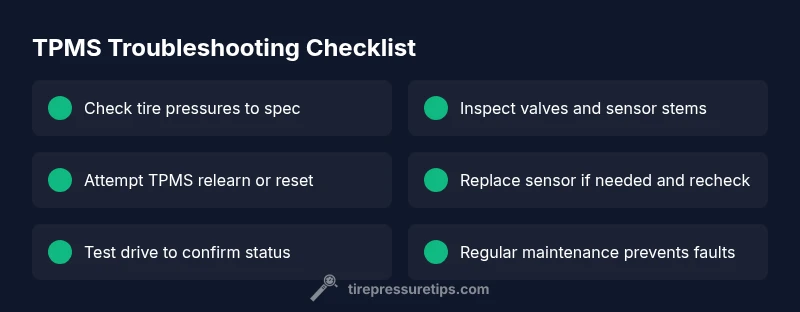
- Check tire pressures first to rule out basic issues
- TPMS faults often come from sensor battery or sensor damage
- Use proper relearn/calibration after tire service
- If unresolved, seek professional TPMS diagnostics
- Regular maintenance prevents most TPMS faults