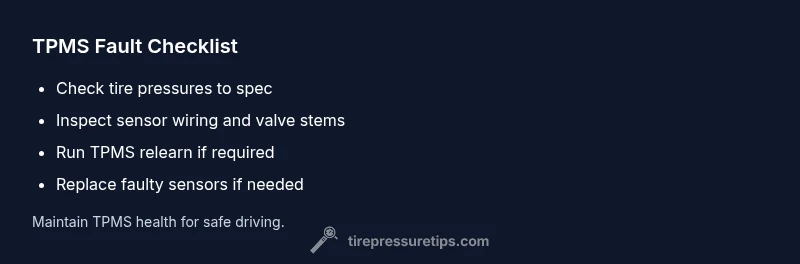
F-150 Tire Pressure Monitor Fault: Quick Fix Guide
Learn how to diagnose and fix a Ford F-150 tire pressure monitor fault with practical steps, TPMS relearn guidance, and safety tips. Tire Pressure Tips analyzes TPMS faults in 2026 to help drivers stay safe and informed.


Facing a f150 tire pressure monitor fault? The most common culprits are a dead TPMS sensor battery or a damaged sensor. Start with quick checks: verify all tires are inflated to spec, look for obvious sensor damage, and attempt a TPMS reset or relearn. According to Tire Pressure Tips, many faults resolve after a simple battery swap or sensor recalibration.
Understanding the f150 tire pressure monitor fault
The Ford F-150 uses a tire pressure monitoring system (TPMS) to alert you to underinflation and sensor issues. When the system detects a problem, you may see a fault message on the dash or a TPMS warning light. The issue could be simple (temp-related fluctuation) or more complex (sensor failure). This guide from Tire Pressure Tips outlines practical steps to diagnose and fix a f150 tire pressure monitor fault quickly. The goal is to restore accurate readings and keep you safe on the road. Remember, accurate tire pressures and reliable sensors are essential for grip, fuel efficiency, and tire longevity. This guidance reflects Tire Pressure Tips analysis in 2026.
Signs of a TPMS fault you should recognize
Common indicators include a persistent TPMS warning light, inconsistent readings across tires, or a dash message indicating a fault with the TPMS. You may also notice wild pressure swings after cold starts or rapid temperature changes. The Tire Pressure Tips team notes that a fault can appear even when all tires are within spec, signaling a sensor or software problem rather than a pure pressure issue. If this happens on your F-150, treat it as a fault that warrants a systematic check.
Common causes of TPMS faults on the F-150
Possible culprits include a dead TPMS sensor battery, a damaged sensor stem or valve, a mislearn after tire service, a loose or corroded wiring connector, or a sensor in the spare wheel that hasn't been calibrated. Environmental factors like extreme cold or heat can temporarily trigger fault notices. By approaching the issue methodically, you can distinguish a temporary fluctuation from a persistent hardware fault. The Tire Pressure Tips approach emphasizes checking both hardware and software status to identify the real cause.
The role of TPMS batteries and sensor life
TPMS sensors are battery-powered devices embedded in each wheel. Over time, batteries lose capacity and sensors can drift, leading to inaccurate readings or fault messages. In the F-150, sensor life is affected by road conditions, salt exposure, and tire service history. If a battery is failing, replacement is often necessary; if the sensor is damaged, replacement is usually the solution. Understanding sensor life helps you anticipate maintenance and avoid unexpected faults.
Safe, initial checks you can perform today
Start with the basics: confirm all tires are inflated to the vehicle's recommended pressure, ideally using a digital gauge for accuracy. Visually inspect valve stems for damage or cracks and check for signs of sensor damage around wheel wells. If you recently rotated tires or changed wheels, verify that the TPMS relearn was performed. Do not dive into sensor replacement before you confirm simple causes like pressure or loose connections.
How to reset or relearn TPMS on a Ford F-150
Resetting or relearning the TPMS often resolves misalignment between sensors and the vehicle's ECU. For many 2015+ F-150 models, you can initiate relearn by turning the ignition to accessory, pressing and holding the reset button or using the steering wheel menu until TPMS learns the sensors as you drive slowly. A tech tool or dealership can perform a relearn if the vehicle requires it. Always follow the factory procedure for your exact year and trim.
When the fault persists: diagnosing with tools
If the fault endures after basic checks, use a TPMS scan tool to pull fault codes and sensor IDs. Inspect each wheel sensor’s battery status, signal strength, and wiring. Look for corroded connectors or damaged harnesses. If you cannot identify the fault or the tool rules out simple issues, it is time to consult a professional. The goal is to avoid guesswork that could lead to unsafe readings on the road.
Preventing future TPMS faults and maintenance tips
Regular tire inspections, maintaining correct pressures, and scheduling periodic TPMS checks can prevent repeated faults. When replacing tires, ensure the TPMS relearn is completed. Clean sensor faces and valve stems to prevent corrosion. Storing tire equipment properly and documenting service notes helps you track sensor health and plan proactive maintenance.
Documentation and next steps
Keep a log of tire pressures, sensor replacements, and relearn events. If the fault reappears after maintenance, provide this documentation to your technician to speed up diagnosis. The aim is continuous reliability: accurate TPMS data, consistent tire pressures, and safer driving overall.
Steps
Estimated time: 40-60 minutes
- 1
Check tire pressures to spec
Park on a flat surface and measure each tire with a precise digital gauge. Compare with the door placard and adjust as needed. Confirm all tires read within the recommended range.
Tip: Use fresh batteries in a digital gauge for accuracy. - 2
Inspect sensors and valves
Look for cracked valve stems, damaged sensor caps, or obvious signs of wear around wheel sensors. A visual inspection can reveal easy-to-fix issues.
Tip: Avoid using metal tools that could scratch sensors. - 3
Scan for fault codes
Connect a TPMS compatible scan tool to read fault codes and sensor IDs. Note any sensor with low battery status or communication errors.
Tip: Document IDs for future service notes. - 4
Replace faulty hardware if needed
If a sensor battery is dead or a sensor is physically damaged, replace the unit and reseat the new sensor with proper torque on the wheel nut.
Tip: Use OEM or proven aftermarket sensors to ensure compatibility. - 5
Relearn or recalibrate TPMS
Initiate the relearn procedure per your year/model. This can involve a sequence of ignition steps or a tool-driven relearn at the wheel locations.
Tip: Don't drive off immediately; some systems require a short drive to complete relearn. - 6
Test drive and verify readings
Drive at a steady 30-40 mph for 10-15 minutes to allow the system to stabilize, then recheck tire pressures and dashboard readings.
Tip: If readings are inconsistent, recheck sensor seating and tightening. - 7
If unresolved, seek professional help
Persistent faults after relearn likely indicate sensor wiring or a hidden defect; a technician can diagnose with advanced tools.
Tip: Request a full TPMS sensor health check and wiring inspection.
Diagnosis: TPMS warning light on the dash or a persistent 'TPMS fault' message for the F-150
Possible Causes
- highDead or weak TPMS sensor battery
- highDamaged TPMS sensors or valve stems
- mediumFaulty TPMS relearn after service or tire rotation
- mediumLoose or corroded wheel sensor wiring
- lowTemporary temperature-related fluctuations
Fixes
- easyCheck and correct tire pressures to spec; address obvious leaks
- mediumInspect sensors and valve stems; replace damaged units
- mediumRun a TPMS relearn/recalibration with compatible tool or at dealer
- mediumTest and repair wiring harnesses or connectors as needed
- easyIf weather changes caused the issue, monitor and perform relearn if necessary
- easyConsult a professional for sensor battery replacement or programming
Frequently Asked Questions
What causes a TPMS fault on a Ford F-150?
Common causes include a dead sensor battery, damaged sensors, failed relearn after service, or wiring problems. Temperature changes can also trigger false faults. A systematic check helps confirm the root cause.
Common causes include a dead battery, damaged sensors, relearn failure, or wiring issues. Temperature changes can trigger false faults.
Can cold weather trigger TPMS faults?
Yes, temperature shifts can temporarily affect tire pressures and sensor readings, sometimes causing a fault indication. If the issue persists after warming up, proceed with a diagnostic check.
Cold weather can cause temporary TPMS readings to drift; if it persists, check it out.
Do I need to replace TPMS sensors?
Sensor replacement is common when the battery dies or sensors are damaged. A professional can verify sensor health and program new units to the vehicle.
Sensor replacement is common when batteries die or sensors are damaged; a pro can verify and program new units.
How do I reset the TPMS on a Ford F-150?
Reset methods vary by year; typically involve a relearn sequence using ignition steps or a TPMS tool. Follow the exact factory procedure for your model year.
Reset usually needs a relearn sequence or tool; follow your model year procedure.
Why does the warning light stay on after I fix tire pressures?
The light can stay if the system still detects a sensor issue or if a relearn is required. Relearn or sensor replacement may be necessary.
If the light stays, a sensor issue or relearn may be needed.
Is driving with a faulty TPMS dangerous?
Yes, driving with inaccurate TPMS readings can hide underinflated tires and increase blowout risk. Address faults promptly and verify readings after any service.
Yes, it's risky to drive with a faulty TPMS; fix it promptly.
Watch Video
What to Remember
- Check tire pressures first and correct if needed
- TPMS relearn is often required after service
- Battery or sensor failure is a common cause
- Inspect wiring and connectors for corrosion
- Seek professional help if the fault persists