Tire Pressure Monitor Fault on Ford Escape: Urgent Troubleshooting Guide
Learn to diagnose and fix a tire pressure monitor fault on Ford Escape. This urgent, step-by-step guide covers common causes, safe checks, sensor replacement, and when to seek professional TPMS service.


According to Tire Pressure Tips, a Ford Escape TPMS fault is most often caused by a dead sensor battery or a wheel sensor communication problem. Start with a cold-pressure check on all tires, then run the TPMS relearn using the vehicle menu or a TPMS tool. If the warning persists, replace the faulty sensor and reprogram. This quick path minimizes guesswork and safety risks.
Understanding the Ford Escape TPMS Fault
According to Tire Pressure Tips, a TPMS fault on the Ford Escape is usually triggered by a dead sensor battery or a communication problem with a wheel sensor. This warning can appear as a TPMS warning light on the instrument cluster or as a 'service TPMS' alert in the driver information display. Either way, it means the system cannot reliably report tire pressures, which can affect handling, fuel economy, and tire longevity. Cold weather and rapid temperature swings can also cause temporary fluctuations that mimic a fault, but persistent alerts require attention. Start by confirming basic physics: are all tires within the recommended range when cold? If yes, proceed with a sensor health check using your vehicle's onboard diagnostics or a dedicated TPMS tool. The goal is to identify whether the fault is sensor-based, battery-based, or caused by a calibration issue. This approach keeps you safe and minimizes unnecessary parts replacements.
Common Causes of TPMS Faults in Ford Escape
TPMS faults do not always mean a failed tire or a blown sensor. In many Ford Escapes, the most frequent culprits are battery-dead wheel sensors, corroded or loose wiring at the sensor harness, and out-of-range tire pressure readings. When a tire is inflated or deflated to cross a threshold, the system should relearn the value; if it doesn’t, the warning persists. A spark of moisture or road salt can also corrode the sensor contacts, especially in climates with winter roads. Another common cause is the sensor’s ID not being learned after tire rotation or wheel service, which leaves the system blind until it receives a correct ID. Finally, software or calibration glitches can trigger a false fault even when hardware is sound. Throughout this process, it’s critical to differentiate a sensor fault from a simple underinflation to avoid unnecessary replacements. Tire Pressure Tips analysis shows sensor-related faults account for a large share of TPMS failures across vehicles, including Ford models.
Temperature, Tire Pressure and TPMS: What You Need to Know
Tire pressure is not static. It changes with ambient temperature, road load, and driving conditions. The Ford Escape’s TPMS uses pressure thresholds that presume tires are cold when the vehicle is parked. When temperatures drop, pressures fall; when you drive, heat rises the pressure. If you park overnight in freezing weather, the system may flag a low-pressure condition that disappears after a short drive. Persistent faults, however, are more likely tied to a faulty sensor, damaged valve stem, or a failed processor in the TPMS module. Keeping a digital gauge in your toolkit helps you verify actual pressures versus what the TPMS reports. Inconsistent readings between tires can also indicate a sensor that is not communicating properly. By understanding the temperature-pressure relationship, you can interpret whether the message is a transient drift or a genuine fault that requires service.
What to Check First: Quick Home Diagnostics
Before you rush to the shop, run through a simple, safe triage. Check all four tires with a reliable tire gauge when the tires are cold, and compare readings to the manufacturer’s recommended pressure (found on the door jamb or owner’s manual). If one tire is notably off, adjust and recheck after driving a couple of miles; the system should update. Next, inspect the valve stems for cracks and look for signs of TPMS sensor damage or corrosion around the wheel rim. If you have access to an OBD-II or TPMS scan tool, scan for TPMS codes to identify whether the fault is a sensor, valve, or communication issue. Some Ford Escape models allow a manual relearn via the vehicle’s settings menu, while others require a reset with a scan tool. If the light persists after confirming pressures and performing a relearn, the fault is unlikely to self-resolve and likely requires sensor replacement or professional calibration. Remember: safety first—do not drive long distances with low pressure and avoid messing with the sensor if you’re not comfortable.
Diagnostic Flow Overview: Symptom to Diagnosis
Start with the symptom: the TPMS warning light on Ford Escape or a 'service TPMS' message. Next, list potential causes: low tire pressure with temperature changes (low), dead sensor battery (high), sensor communication failures (medium), or calibration issues after tire service (low). The fixes must reflect the flow: verify pressures, refresh readings, replace sensor if necessary, and perform a relearn. If the fault persists after basic checks, consider sensor replacement or calibration. Always verify battery health and sensor status; if you see a sensor ID mismatch, re-learn or calibrate. If the problem remains, escalate to a professional TPMS service.
Step-by-Step Fixes: From Easy Wins to Replacements
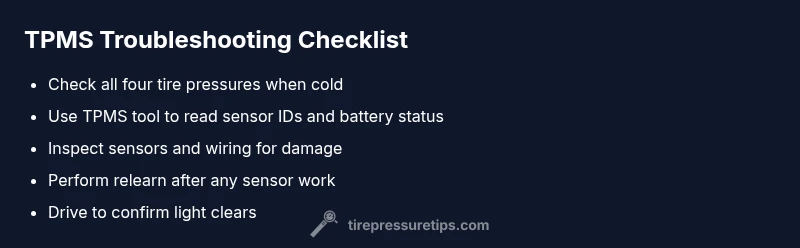
- Verify all tires are within the recommended cold pressure and clear any obvious underinflation signs. Relearn sensors if the vehicle supports it. 2. Use a TPMS-friendly scan tool to read sensor IDs and confirm communication. 3. Inspect valve stems and wheel-mounted sensors for corrosion, damage, or loose connections. 4. If a sensor is dead or its battery is failing, replace the sensor and program the new ID. 5. After sensor replacement, perform a full relearn/initialization procedure. 6. If the fault persists, check the TPMS control module wiring and seek calibration. 7. Recheck all pressures again, then take a short road test to verify the system updates. 8. Document repairs and schedule a follow-up check if warnings reappear.
Prevention and Best Practices
Routine checks before road trips, particularly in extreme temperatures, help prevent TPMS faults. Always scan after tire rotations, wheel changes, or tire repairs. Keep spare TPMS batteries and a compact gauge in the glove box. Regular software updates or calibration can save you time and money. Use quality sensors and ensure proper installation torque to avoid future issues. Keep a record of sensor IDs for quicker relearns after service.
When to Seek Professional Help
If you encounter persistent TPMS faults after performing the basic checks and relearns, or if you see codes pointing to the TPMS control module, it’s time to involve a certified technician. A dealer or experienced independent shop can perform sensor profiling, proper relearn sequences, and calibration with factory tools. Do not ignore repeated warnings, as driving with uncertain tire pressures can lead to tire failure and higher risk on the road.
Quick Actions You Can Take Today
- Verify cold tire pressures for all four tires and compare to the Ford Escape specification. - If one tire is low, adjust and recheck after a short drive. - Run a TPMS relearn if your model supports it, or use a scan tool to reprogram sensor IDs. - Inspect sensors and wiring for corrosion or damage and replace if needed. - Schedule professional service if warnings persist after basic steps. - Keep a tire pressure gauge, a TPMS tool, and the owner’s manual accessible in your vehicle.
Steps
Estimated time: 60-120 minutes
- 1
Confirm warning and gather tools
Record the exact warning message and gather a tire gauge and TPMS scan tool. This minimizes back-and-forth testing and keeps you organized.
Tip: Have the vehicle’s VIN handy for sensor programming if needed. - 2
Check all four tire pressures
Measure cold pressures on all tires and compare to the manufacturer spec. Correct any underinflation immediately.
Tip: Pressure changes with temperature; check when tires are cold. - 3
Inspect sensors and valves
Look for damaged valve stems, corroded sensor areas, or loose wheel screws. Physical damage often explains sensor communication failures.
Tip: Do not yank sensor wiring; gentle inspection prevents further damage. - 4
Test sensor communication
If you have a TPMS tool, read the sensor IDs and battery status to identify weak sensors.
Tip: A dead battery may show as 'low' on one sensor. - 5
Relearn/learn sensors
Use the vehicle’s TPMS relearn menu or your tool to reprogram sensor IDs after any replacement or rotation.
Tip: Some Ford Escape models require vehicle movement during relearn. - 6
Replace faulty sensors
Install new or refurbished TPMS sensors with proper torques and ensure sealing is correct to prevent leaks.
Tip: Use manufacturer-recommended parts to avoid compatibility issues. - 7
Verify calibration
After sensor work, perform a full system check and drive 5-10 miles to confirm the light clears.
Tip: If the light reappears, revisit step 4 for potential issues. - 8
Seek certified help if unresolved
If warnings persist after steps 1-7, consult a dealer or TPMS specialist for advanced diagnostics.
Tip: Professional help ensures proper calibration and avoids false alarms.
Diagnosis: TPMS warning light on Ford Escape or a 'service TPMS' message
Possible Causes
- highDead or weak TPMS sensor battery
- mediumSensor communication failure due to wiring or damaged sensor
- lowIncorrect tire pressure or temperature-related drift without sensor failure
- lowTPMS ID not learned after tire service or rotation
Fixes
- easyCheck tire pressures with a gauge and scan TPMS status with a tool
- mediumReplace faulty TPMS sensor or battery; reprogram/learn sensor IDs
- mediumInspect and clean sensor wiring, connectors, and TPMS module; repair if needed
- easyPerform vehicle relearn/calibration after sensor work; consult manual or dealer
Frequently Asked Questions
What does a TPMS fault mean on a Ford Escape?
A TPMS fault means the system cannot reliably report tire pressures. It could be caused by a dead sensor battery, a sensor communication issue, or a calibration problem after service. Check pressures and consider sensor replacement if the warning persists.
A TPMS fault means the system can't read tire pressures reliably, often from a dead sensor or a calibration issue after service.
Why is my TPMS warning light on after changing tires?
After tire work, TPMS IDs may not be learned automatically. Relearn the sensors with the vehicle menu or a TPMS tool and verify pressures. If the light stays on, a sensor may be faulty.
After a tire change, relearn the sensors with your tool or the car’s menu, then recheck pressures.
Can I drive with a TPMS fault?
If the TPMS fault persists, check all tire pressures per the spec before driving far. Severe underinflation is unsafe; consider professional assessment if the warning cannot be cleared.
You can drive short distances if pressures are correct, but don’t drive far with an unresolved TPMS fault.
How do I reset TPMS on a Ford Escape?
Resetting the TPMS varies by year. Use the vehicle’s relearn option or a TPMS scan tool to reprogram sensor IDs, then drive to let the system update.
Use the relearn option in the car or a TPMS tool to reset sensor IDs, then drive to update.
When should I replace a TPMS sensor?
Replace a sensor if the battery is dead or the sensor repeatedly fails to communicate. Professional calibration helps ensure accuracy after replacement.
Replace a dead or failing TPMS sensor and re-calibrate with a tool.
Is TPMS calibration needed after tire rotation?
Yes, recalibration or relearning is often required after tire rotation. If the system doesn’t update automatically, use a TPMS tool or shop service.
After rotation, relearn the TPMS so it reads correctly.
Watch Video
What to Remember
- Inspect pressures and sensor health before replacements
- Relearn TPMS IDs after tire work
- Replace faulty sensors promptly to restore accuracy
- Use proper tools and seek professional help when needed
- Maintain regular TPMS maintenance to prevent faults