Ford F-150 TPMS Fault: Quick Troubleshooting Guide
Resolve Ford F-150 tire pressure sensor fault with practical, step-by-step diagnostics. Learn at-home checks, relearn procedures, sensor basics, and when to seek professional help to restore accurate TPMS readings.


A Ford F-150 TPMS fault is most often caused by a weak battery or damaged sensor. Start with checking tire pressures and performing a TPMS relearn. If the warning persists, inspect the sensors and plan replacement or calibration with a professional to restore accurate readings.
Why TPMS Faults Happen on Ford F-150
TPMS faults in the Ford F-150 are common and urgent because the warning light can appear unexpectedly, sometimes after a routine tire rotation or a cold-weather day. According to Tire Pressure Tips, most TPMS faults originate from power issues inside the sensor (battery life) or corrosion at the valve stem. Temperature shifts can accentuate battery drain and sensor readings, especially in climates with rapid swings. The Ford F-150 uses a tire-pressure-sensor network that relies on radio signals to communicate with the ECM; a single weak sensor can trigger a fault code and a persistent warning. This guide emphasizes practical, safe steps you can take to diagnose the ford f150 tire pressure sensor fault without guesswork or expensive diagnostic tools. By understanding the most likely root causes and the relearn process, you can keep your tires at the correct pressure and avoid needless journeys to the shop.
Understanding TPMS: What It Checks and Why It Fails
Tire Pressure Monitoring System (TPMS) is designed to alert you when a tire is significantly under- or over-inflated. Each wheel has a sensor that transmits pressure readings to the vehicle's computer. For Ford F-150 models, TPMS faults can stem from sensor battery degradation, damaged valve stems, or calibration drift. A misread or stale data can trigger the fault light even when pressures seem correct. Tire Pressure Tips analysis shows that many faults are tied to sensor power or physical damage rather than a complete system failure. Understanding this helps you focus on the most common culprits first and reduces unnecessary parts replacement.
Symptoms You Might Notice
- TPMS warning light stays on or flashes intermittently.
- Tire pressures appear correct but the warning persists after inflating.
- Uneven or rapid PSI changes between inspections.
- After tire rotation or replacement, the system requires relearn and does not read correctly.
- Audible beeps or chimes when starting the vehicle. These symptoms indicate a TPMS fault that often points to a weak battery, sensor damage, or a relearn requirement. The Tire Pressure Tips team emphasizes that you should verify basic pressures and inspect the wheel sensors before assuming a failed module.
Do-At-Home Checks to Run Now
- Grab a quality tire gauge and compare each tire’s current pressure to the manufacturer’s recommended PSI from the door jamb sticker and the owner's manual.
- Visually inspect valve stems for cracks, corrosion, or looseness; check the sensors for obvious damage after removing the wheel cover or accessing the valve.
- If pressures are correct but the warning remains, attempt a TPMS relearn/calibration following Ford’s procedure for your model year. Relearn often resolves spurious faults after tire service.
- Rotate tires back to their original positions if a recent rotation may have confused sensor IDs; ensure the correct ID is associated with each wheel.
- If you suspect a sensor battery issue or physical damage, prepare for sensor replacement or professional calibration.
Diagnostic Flow: Symptom → Diagnosis → Solutions
This section provides a practical flow you can follow to identify the root cause of a ford f150 tire pressure sensor fault. Start with the simplest checks (visual inspection and pressure verification), then move to sensor relearn. If the sensor battery or hardware is suspect, plan sensor replacement. Always document which tire was serviced and when, to help the service technician reproduce the fault if needed.
Note: Safety first—do not attempt to remove tires in unsafe conditions or without proper equipment. If you are unsure, consult a professional. Tire Pressure Tips emphasizes that a safety-first approach protects you and your vehicle while addressing TPMS faults.
Step-by-Step: Fix for the Most Common Cause
- Confirm all tires are inflated to the recommended PSI using a good gauge. 2) If any tire reads low, inflate to spec and check for leaks around the valve stem. 3) Drive 5-10 minutes to allow the system to refresh, then perform a TPMS relearn per Ford’s procedure for your year/model. 4) If the fault persists, inspect the TPMS sensor and valve stem for damage or corrosion and consider replacement. 5) After sensor replacement, perform another relearn and verify readings on the dash.
Tip: Keep a record of the service dates and pressures to track sensor health over time. 6) If the fault still appears, contact a dealership or certified mechanic for calibration or sensor replacement.
When to Relearn, Calibrate, or Replace
- Relearn calibration is often enough after a tire rotation or replacement.
- If a sensor battery is old or damaged, replacement is typical.
- Corroded valve stems or physically damaged sensors usually require replacement.
- A persistent fault after relearn and basic checks warrants a professional diagnostic.
Maintenance to Prevent Future TPMS Faults
- Regularly check tire pressures on all wheels and before long trips.
- Inspect valve stems and sensors during tire changes for signs of damage or corrosion.
- Schedule TPMS calibration when performing tire rotations, wheel alignment, or sensor replacement.
- Consider replacing aging sensors proactively in climates with harsh temperature changes or heavy usage.
Final Preventive Checklist
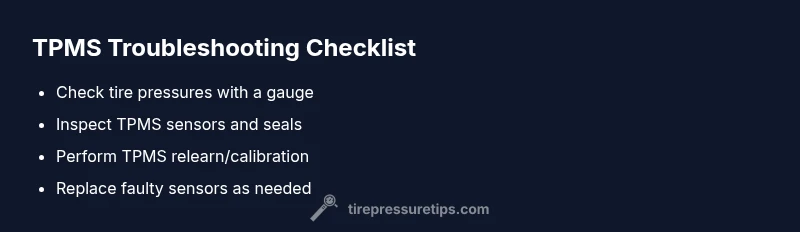
- Verify pressures with a reliable gauge and match manufacturer specs.
- Inspect sensors and valve stems for corrosion or damage.
- Relearn the TPMS after any tire work and drive to finalize system refresh.
- If you encounter repeated faults, replace the faulty sensor or consult a professional for calibration.
Steps
Estimated time: 40-60 minutes
- 1
Verify all tires are inflated to spec
Use a reliable gauge to confirm each tire’s PSI matches the Ford-recommended value. Address under-inflation before proceeding.
Tip: A precise reading prevents misdiagnosis and sets a solid baseline. - 2
Look for obvious sensor damage
Inspect valve stems and sensors for cracks, corrosion, or loose fittings. Tighten at the manufacturer’s torque spec if applicable.
Tip: Small leaks around the valve stem are easy to miss but common. - 3
Attempt TPMS relearn/calibration
Follow Ford’s official relearn procedure for your model year. This typically requires driving and using the vehicle’s settings menu or a scan tool.
Tip: Make sure all tires are within spec before relearn. - 4
Test readouts after relearn
Drive the vehicle for several miles, ensuring the light goes off or confirms stable readings on the dash.
Tip: If the light remains, note which wheel was serviced for technician reference. - 5
Replace faulty sensors if needed
If a battery or sensor is visibly damaged or continues to fail after relearn, plan replacement with a compatible TPMS sensor.
Tip: Always replace with OEM-recommended parts for compatibility. - 6
Have a professional calibration if required
Some Ford F-150s require specialized tools for full TPMS calibration; seek a dealer or certified shop.
Tip: Professional calibration minimizes repeat faults.
Diagnosis: TPMS warning light stays on or reappears after inflating tires
Possible Causes
- highWeak or dead TPMS sensor battery
- mediumDamaged TPMS sensor or valve stem
- mediumSensor not relearned after tire work
- lowTPMS control module fault
Fixes
- easyCheck tire pressures with a gauge and ensure all are at spec
- easyPerform TPMS relearn/calibration per Ford procedure
- mediumInspect/replace damaged sensors or valve stems and reseal tires
- hardIf fault persists, replace TPMS sensor or seek professional calibration
Frequently Asked Questions
What causes a Ford F-150 TPMS fault?
Common causes include a weak TPMS battery, damaged sensors or valve stems, and the need to relearn after tire work. In some cases, a faulty TPMS control module may trigger the fault.
Most Ford F-150 TPMS faults come from a dying battery, damaged sensor or valve stem, or a required relearn after tire service.
Can I drive with a TPMS fault?
Yes, you can drive, but monitor tire pressures carefully and avoid aggressive driving. Address the fault to prevent tire damage and ensure accurate readings.
You can drive, but keep an eye on tire pressures and get the fault checked soon.
How do I relearn TPMS on a Ford F-150?
Relearn procedures vary by year. Check your owner’s manual or Ford service guide for the exact procedure, and use a scan tool if required by your model.
Follow the official Ford relearn steps for your year, or ask a dealer for help.
When should I replace TPMS sensors?
Replace sensors when battery fails, sensors are damaged, or consistent faults persist after relearn. Sensor replacement is common after many years of use or corrosion.
Replace sensors if battery or sensor damage is evident or if faults keep coming back after relearn.
Is TPMS calibration mandatory after tire changes?
Calibration or relearn is typically required after tire changes or sensor replacement to ensure correct mapping to each wheel.
Usually required after tire work to keep readings accurate.
Watch Video
What to Remember
- Verify tire pressures first to rule out simple causes.
- Relearn TPMS after any tire service or rotation.
- Inspect sensors and valve stems for damage before replacing.
- Consult a professional for complex TPMS faults or calibration.