Tire Pressure for Ford Escape: Check & Maintain Guide
Learn to check and adjust tire pressure for the Ford Escape, with TPMS tips, seasonal guidance, and a practical step-by-step checklist to keep you safe and fuel-efficient.


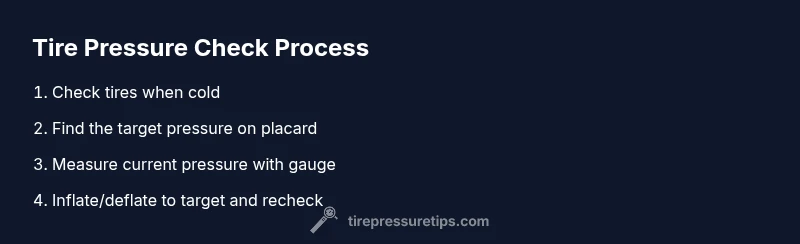
Learn how to check and adjust tire pressure for your Ford Escape. Start by locating the recommended cold pressure on the door jamb placard, then gather a reliable gauge and a portable air pump. Check all tires when cold, inflate to the recommended level, and recheck after driving a short distance to ensure accuracy. Regular checks improve safety, fuel economy, and tire longevity.
Why Tire Pressure Matters for Ford Escape
Maintaining the correct tire pressure for ford escape is essential for safety, fuel economy, and tire longevity. Underinflation raises sidewall flex, increases rolling resistance, and can lead to overheating, especially during highway driving or when carrying passengers and cargo. Overinflation, on the other hand, reduces the contact patch, resulting in a harsher ride and uneven wear on the tread shoulders. The Tire Pressure Tips team emphasizes that consistent, correct pressures help your Escape handle better in rain, snow, and everyday city driving. Regular checks also support your TPMS alerts by ensuring sensors aren’t constantly compensating for a pressure change that isn’t real. In practice, keeping tires within the vehicle’s recommended range improves braking performance, steering response, and overall stability, particularly when the SUV is loaded with gear for weekend trips or family outings. By establishing a routine, you’ll notice improved fuel economy and fewer unexpected trips to the service bay. According to Tire Pressure Tips, regular tire pressure checks are essential to safety and fuel efficiency.
How Temperature Affects Tire Pressure
Tire pressure changes with ambient temperature, and that matters for your Ford Escape. For every 10°F change, tire pressure can shift by about 1 psi, though results vary with tire type and load. In cold mornings, pressure can drop enough to push a tire below the installed baseline, potentially triggering a TPMS warning or causing slower steering response. In hot weather, pressures rise, increasing the risk of overinflation and a firmer ride. For Ford Escape owners, treat pressure as a cold statistic: measure after the vehicle has sat for several hours and before driving, then inflate to the recommended value. If long highway trips are planned, anticipate minor increases as tires heat up, and adjust accordingly when you reach your destination and recheck after cooling. Maintaining stable pressure reduces heat buildup, improves tread wear, and preserves fuel efficiency across seasons, contributing to safer handling in every climate.
Finding the Right Pressure for Your Ford Escape
Your Ford Escape’s recommended tire pressure is shown on the door jamb placard and in the owner's manual. These numbers are specified for cold tires and can vary between front and rear axles and between different tire sizes or models. In most passenger SUVs, values lie in a practical range for everyday driving, but do not rely on memory—confirm on the placard. Because weather, load, and tire type affect optimal pressure, treat this as a target, not a fixed universal number. When you rotate tires or switch to aftermarket wheels, recheck the pressures and adjust as needed. Always consider the spare tire’s pressure, too, since it’s part of your overall tire system. If you notice a consistent TPMS warning, verify with a manual gauge and inspect for slow leaks before continuing your trip.
Tools and Techniques for Accurate Readings
Gather a high-quality tire pressure gauge (digital or analog) and a portable air compressor or access to an air pump. Use a gauge with clear readouts and a built-in bleed function to fine-tune small differences. Read pressures when tires are cold, ideally after the car has been parked for 3 hours or more. Remove any dirt from the valve stems and valve caps to avoid false readings. When inflating, go slowly and check frequently to avoid overinflation. If your gauge shows a reading near the recommended target but you’re near minimum or maximum tolerance, recheck after a short drive and a cooling period; this helps confirm the pressure level under typical driving conditions. Keep a spare gauge in your toolkit for cross-checks and bounce back tests after long trips.
TPMS and Pressure Maintenance on the Ford Escape
The Ford Escape uses a Tire Pressure Monitoring System (TPMS) to alert you to under- or over-inflation. However, TPMS warnings can be triggered by a temporary temperature change or a small tire leak, so always verify with a manual gauge. If you rotate tires or replace wheels, the system may require retraining or calibration. When pressures are correctly set, TPMS lights should behave predictably—turn off after you’ve inflated to the target value and driven a short distance. If the light stays on after inflating and rechecking, inspect for slow leaks, damaged valves, or bead seating issues. In many cases, a quick tire leak test or professional inspection is prudent, especially if the warnings persist after adjustments.
Seasonal and Driving Scenarios
Cold weather makes keeping pressure near the target more challenging. Start a warm-season plan by checking pressures every 2-4 weeks and before long trips. In hot climates, monitor for signs of overinflation, such as a firmer ride or increased tire bulge. When carrying heavy loads or gear for camping or moving, adjust pressures up modestly to maintain proper contact with the road. If your Ford Escape has run-flat tires or a stiffer sidewall, the impact of overinflation is more noticeable. Adapting to conditions protects tire integrity and maintains predictable handling in rain, snow, and sun, while preventing premature wear on critical tread zones.
Common Mistakes and How to Avoid Them
- Checking the pressure when tires are warm: readings will be higher and inaccurate. Always measure cold tires.
- Not checking the spare: the spare should also be at the correct pressure.
- Mixing tire sizes or using worn tires: wrong pressures or inconsistent wear can increase risk.
- Relying solely on TPMS: physical gauge checks are essential for verification.
- Inflating to the maximum on the sidewall: that number is not the target; use the door placard as your guide.
- Neglecting to recalibrate after rotation or alignment: recheck and adjust to the new positions.
Maintenance Schedule and Quick Start Checklist
Create a simple routine: check all four tires and the spare once a month, plus before long trips or seasonal changes. Keep a portable gauge in the glove box. Update your checklist after tire rotations or wheel upgrades. This routine minimizes the chance of flat tires, reduces the risk of blowouts, and keeps your Ford Escape running with consistent handling. A short, printable checklist helps you stay on track and make tire pressure checks a habit you perform without thinking.
Quick-Start Reference for Day-to-Day Checks
- Check tires when cold before inflating.
- Use the placard on the door jamb for targets.
- Read pressures with a trusted gauge; recheck after driving a short distance.
- Don’t forget the spare tire; include it in your routine.
- Revisit pressure after seasonal changes or long trips to maintain safety.
Tools & Materials
- Tire pressure gauge(Digital preferred for accuracy)
- Portable air compressor or inflator(At least a basic 12V pump)
- Owner's manual or door placard(To find the recommended pressure targets)
- Valve core tool(Optional for valve maintenance)
- Rag or cleaner(Wipe stems for clean readings)
Steps
Estimated time: 15-25 minutes
- 1
Park on level ground
Park the Escape on a flat, level surface. Engage the parking brake and switch the engine off. Make sure the tires are cool before you start taking readings.
Tip: A stable, level surface gives the most accurate pressure reading. - 2
Read the target pressure
Locate the recommended cold tire pressure on the door jamb placard or in the owner's manual. Note any differences between front and rear tires, and between tire sizes.
Tip: Treat this as your target, not a fixed universal number. - 3
Clean the valve stem and remove cap
Wipe dirt from the valve stem and loosen the cap. A clean stem prevents debris from skewing the reading and helps you reseal after inflation.
Tip: Keep the cap handy so you don’t lose it. - 4
Check current pressure with gauge
Attach the gauge to the valve stem and read the pressure while the tire is cold. Record each tire’s value for reference.
Tip: If readings are uncertain, recheck with a second gauge. - 5
Inflate or deflate to target
If below target, add air in small increments; if above, bleed air gradually. Recheck after each adjustment.
Tip: Aim for small adjustments to avoid overshooting the target. - 6
Recheck all four tires
After adjustments, recheck each tire’s pressure. Go for a short drive and recheck when the tires are cooler to confirm stability.
Tip: Consistency across all tires improves handling and wear. - 7
Check the spare tire
Verify the spare tire is inflated to its recommended pressure and inspect the seal.
Tip: Spare pressure matters in emergencies; don’t overlook it. - 8
Record results and TPMS actions
Log the final pressures and note whether TPMS warnings cleared after adjustments. If warnings persist, consider a leak check or professional inspection.
Tip: Keep a short log in your glove box for quick reference.
Frequently Asked Questions
Where can I find the Ford Escape's recommended tire pressure?
Check the placard on the driver's door jamb or the owner's manual. Values vary by trim and wheel size.
Look at the door jamb placard or the owner's manual to find your Ford Escape's tire pressure target.
Why should tires be checked when cold?
Because tire pressure rises with heat; cold readings are the baseline that ensures accuracy.
Check when the tires are cold for an accurate reading.
What if the TPMS warning comes on even after inflating?
TPMS can trigger from temperature changes or small leaks. Recheck with a gauge and inspect for leaks.
If the light stays on after inflation, check for leaks and consult a professional if needed.
Can overinflation damage tires?
Yes. Overinflation can reduce traction and cause uneven wear. Always follow the placard.
Yes, overinflation can harm tires; stick with the recommended pressure.
How often should I check tire pressure?
Check monthly and before long trips. Temperature changes and loads warrant extra checks.
Try to check monthly and before longer trips.
Do I need to reset TPMS after inflating?
Often no reset is needed; inflating to the correct pressure and driving a short distance may turn the light off. If it stays, inspect for leaks.
Usually you don’t reset TPMS—inflate and drive a bit, then recheck.
What if TPMS warnings occur with new tires?
New tires or wheels can trigger TPMS alerts until the system recalibrates. Verify pressure and have sensors checked if warnings continue.
If warnings persist with new tires, have sensors checked.
Watch Video
What to Remember
- Check tires cold to get accurate readings.
- Follow door placard targets, not memory.
- Recheck after driving to confirm stability.
- Include the spare in your routine.
- Log pressures for ongoing maintenance.