Ford Edge Tyre Pressure Guide: Check, Inflate, and Maintain
Practical steps to check Ford Edge tyre pressure, understand cold vs warm readings, and maintain correct inflation for safe handling, better fuel efficiency, and longer tire life.


Learn how to check and adjust ford edge tyre pressure safely, read TPMS alerts, and maintain correct inflation for performance and safety. This how-to covers using the vehicle placard, your owner's manual, and practical steps with tools. According to Tire Pressure Tips, start with cold tires, verify all four wheels, and recheck after adjustments for consistent readings. It also highlights safety warnings and common mistakes.
Ford Edge tyre pressure basics
Maintaining proper ford edge tyre pressure is a simple yet essential part of vehicle upkeep. Correct pressure improves fuel efficiency, tire wear, and handling, and interacts with the Tire Pressure Monitoring System (TPMS). According to Tire Pressure Tips, the quickest way to start is by locating the official cold inflation numbers on the driver's door jamb placard and in the owner's manual. For Ford Edge models, the exact numbers can vary by year and trim, so never rely on memory. The placard shows separate values for the front and rear tires, and sometimes a spare is listed too. Remember that 'cold' means the car hasn't been driven for at least three hours or has been driven less than a mile. Ambient temperature can influence tire pressure noticeably; a few degrees of change can alter the readout by a surprising amount. When you inflate, do so to the recommended cold value and then recheck after a short drive to account for any heat buildup.
Why correct tyre pressure matters for the Ford Edge
Inflation that is too high or too low can affect steering response, braking distance, and tire wear. The Ford Edge relies on consistent contact between the tire and road surface to maintain grip, comfort, and efficiency. Maintaining the correct pressure also helps TPMS readings stay accurate and reduces the likelihood of nuisance warnings. Tire performance is a function of temperature, load, and speed, so it's important to reference the placard when the vehicle is lightly loaded versus fully loaded. As Tire Pressure Tips notes, your tires perform best when they operate near the manufacturer’s specification as a baseline for safety and efficiency.
Temperature, load, and readings: what changes mean
Tire pressure is sensitive to ambient temperature. In colder weather, pressures tend to drop; in heat, they rise. When you drive, tires heat up and pressure increases slightly. This is why many drivers check pressures when the tires are cold and recheck after a short drive to ensure the tires still meet the recommended value under operating conditions. For mixed-use days—commuting, highway time, or carrying cargo—it's wise to adjust based on the placard guidance rather than a single static number. The goal is consistent performance and even tread wear across all four tires.
Tools & Materials
- Digital tire pressure gauge(Calibrated tool for quick, accurate readings)
- Owner’s manual and door placard(Source of official cold inflation numbers for front/rear tires)
- Air compressor or access to atmospheric air pump(Used to adjust pressure when readings are low or high)
- Tire repair kit or spare tire information(Useful if you need to adjust pressure to accommodate spare)
Steps
Estimated time: 20-40 minutes
- 1
Find the official tyre pressure spec
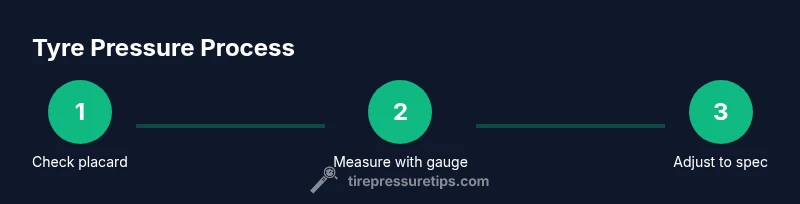
Open the driver door and locate the placard that lists cold inflation pressure for the Ford Edge. Note separate values for front and rear tires and look for any model-year specific notes. If the placard differs from the owner's manual, prioritize the placard as the source of truth.
Tip: Always use the cold reading as the baseline; hot tires will read higher. - 2
Check all four tires when cold
With the vehicle parked for several hours (or driven less than a mile), remove the valve cap and place the gauge on the valve stem to record the reading. Do this for each tire and the spare if equipped. Record the numbers or keep a quick note for later comparison.
Tip: If a tire reads significantly lower than the target, plan to adjust after gathering all four readings. - 3
Adjust inflation to the recommended value
If a tire is below the spec, add air using an air pump until the gauge meets the cold inflation value. If above, release air gradually until the reading matches. Repeat for all tires to ensure uniformity across the axle.
Tip: Make small adjustments and recheck to avoid overshooting the target. - 4
Recheck after a short drive
Drive for 5–10 minutes to bring tires into typical operating temperature, then park and recheck pressures. Minor adjustments may be needed after heat buildup. This ensures readings reflect real-world conditions.
Tip: Keep notes on any adjustments to track changes over time. - 5
Inspect for leaks and valve integrity
While checking, inspect valve stems for damage, cracks, or leakage. Replace damaged valves before driving long distances. A faulty valve can give false readings and degrade safety over time.
Tip: Tighten valve caps firmly but avoid overtightening that can damage the stem. - 6
Document your tire pressure routine
Log the date, time, outside temperature, and each tire reading. A simple record helps you monitor trends and catch slow leaks early. Periodic checks are part of good maintenance for the Ford Edge.
Tip: Set a reminder to check every 2–4 weeks, and whenever temperatures shift significantly. - 7
Store equipment and review the placard regularly
Keep your gauge and air source accessible and make a habit of reviewing the placard whenever you rotate tires or replace wheels. This keeps the Ford Edge in optimal condition and supports safe driving.
Tip: Revisit tire pressure values after tire replacements or suspension work.
Frequently Asked Questions
What is the recommended tyre pressure for the Ford Edge?
The official value is listed on the door placard for front and rear tires and may vary by year and trim. Always use the placard as the baseline. If in doubt, consult the owner's manual or a dealer for model-year specifics.
Check the door placard on your Ford Edge for the exact front and rear tire pressures; consult the manual or dealer for your year’s spec.
How often should I check tire pressure?
Check at least once a month and before long trips. Temperature changes and heavy loads can affect pressure, so regular checks help maintain safety and efficiency.
Check your tires at least monthly and before long trips to maintain safety and efficiency.
Can I drive with TPMS warning light on?
A TPMS warning indicates at least one tire is under-inflated or the system detected a fault. Do a quick check with a gauge and adjust if needed; if the light stays on, have the system inspected.
If the TPMS light stays on after inflating to spec, get the system inspected for leaks or sensor issues.
Should I inflate tires to the maximum sidewall pressure?
No. The maximum printed on the sidewall is the tire’s limit, not the vehicle’s recommended pressure. Always follow the door placard for the correct values.
Never inflate to the maximum sidewall pressure; follow the placard for safe and optimal values.
What tools are best for checking tire pressure?
A calibrated digital tire pressure gauge and a reliable air source (air compressor or service station). Track readings and adapt to temperature changes.
Use a good digital gauge and a reliable air source to check and adjust tire pressure.
What if TPMS shows faults but readings are fine?
A fault in TPMS sensors or a faulty receiver can trigger warnings. Have the sensors tested and replaced if necessary by a professional.
If TPMS faults persist even with correct pressures, schedule a sensor inspection.
Watch Video
What to Remember
- Check cold readings first and use the placard
- Use a reliable gauge for accuracy
- Adjust all four tires to the spec
- Recheck after driving to account for heat
- Keep a tire pressure log for trend monitoring