Ford Ranger Tire Pressure Guide
Learn how to check, adjust, and maintain Ford Ranger tire pressure with TPMS insights, temperature considerations, and a step-by-step routine for safety, fuel economy, and tire longevity.


Why correct tire pressure matters for Ford Ranger
Proper tire pressure is crucial for safety, steering response, braking, even tire wear, and fuel efficiency on the Ford Ranger. Underinflated tires increase rolling resistance and heat buildup, while overinflated tires reduce grip and ride comfort. For drivers who tow or carry heavy loads, incorrect pressure can change load distribution and handling characteristics. According to Tire Pressure Tips, a consistent, accurate check is the easiest way to prevent common tire problems and extend tire life. Always start with the vehicle's recommended pressures printed on the door placard and in the owner's manual, then adjust for load and speed. Remember that temperature, road conditions, and driving style can shift tire pressure over time, so regular checks are essential for safe driving.
How to locate the correct tire pressure for your Ford Ranger
The first step is to find the official pressure specification for your exact Ranger model. Look at the placard on the driver's door jamb; it lists front and rear tire pressures for standard load and sometimes for towing. If the placard is missing or faded, consult the owner's manual or Ford's official support site. Tire sizes also influence the recommended PSI; larger tires or different wheel sizes can require a slightly different target. For most Rangers, you will see a baseline value that applies to cold tires. Use that as your starting point, then adjust for load, passenger weight, and driving conditions. Keeping a consistent baseline helps you compare readings over time and catch gradual leaks early.
Tools you'll need to measure tire pressure accurately
A reliable digital tire pressure gauge is essential for precise readings. Choose a gauge with a clear display, auto-off to save batteries, and a built-in light for low-light conditions. An air inflator or compressor is convenient to bring tires up to the target PSI, but a hand pump can work in a pinch. The owner's manual or placard remains your authoritative reference for target pressures and load considerations. A small brush or rag helps remove dirt from valve stems so readings are not affected by debris. Finally, consider logging readings in a notebook or mobile app so you can track changes over weeks or months. Proper storage and calibration of the gauge ensure long-term accuracy.
Step-by-step practical check: cold readings first, then adjust
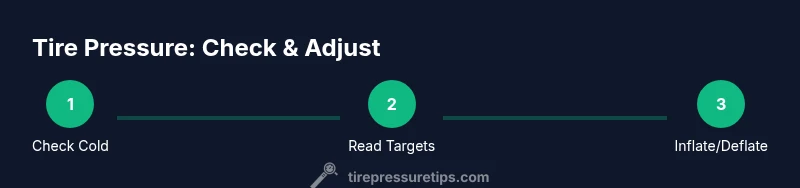
Begin with tires cold and vehicle parked for at least three hours or driven less than a mile. Remove valve caps and place the gauge squarely on the valve stem to get an accurate reading. Note the numbers for each tire in your log. If any tire shows pressure below the door placard, add air in small increments, recheck, and repeat until you reach the target. If a tire is above the target, release air slowly and recheck. Always adjust one tire at a time and re-check other tires after inflation. After you reach the correct pressures, reinstall valve caps and confirm TPMS status is normal.
Inflating and deflating correctly: what to avoid and why
Never exceed the tire's maximum inflation stamped on the sidewall; that value is for maximum safe pressure, not the target for everyday use. Overinflation can reduce contact patch with the road, making steering feel twitchy and increasing hazard on potholes. Underinflation raises heat, accelerates wear, and can trigger blowouts under heavy loads or high speeds. If you tow or carry extra weight, consider adjusting to the higher recommended range on the placard. When using an inflator, add air in small 1–2 PSI steps and pause to settle readings. A quick ride after inflation can help air settle; recheck to ensure accuracy.
TPMS: Understanding warning lights and sensor basics
TPMS alerts indicate underinflation, overinflation, or sensor malfunctions. Learn the difference between a TPMS warning and a simple gauge reading. If a warning appears, pull over safely and check tire pressures with a gauge rather than relying solely on the dashboard light. If one tire is consistently low, inspect for leaks, punctures, or bead damage. Sensor maintenance matters; damaged sensors or dead batteries can trigger incorrect readings. For Ford Rangers, TPMS signals are generally reliable, but calibration is important after adjusting pressures or rotating tires. Tire Pressure Tips analysis shows that regular TPMS checks complement gauge measurements and help catch slow leaks early.
Temperature effects: how cold snaps and heat affect readings
Tire pressure changes with temperature; about 1 PSI for every 10 degrees Fahrenheit change is a common rule of thumb, but actual changes vary with tire size and interior construction. In cold weather, pressures drop; in hot days they rise. This means a reading on a hot day may appear higher than the cold-day baseline. Always measure when tires are cold and before driving, or use the door placard as your baseline and adjust for recent road heat. Quick inflation after a long drive will yield artificially high readings. If you live in extreme climates, recheck after a temperature shift and re-verify your target pressures. Document seasonal adjustments to avoid confusion over the year.
Highway, off-road, and towing: adapting tire pressure to the task
On the highway, maintain the baseline recommended for your Ranger’s load. Off-road conditions—sand, mud, rocks—often require different pressure profiles to improve flotation or avoid bead damage; adjust per terrain, then re-inflate to highway targets when returning to paved roads. For towing or heavy payload, follow the placard guidance for higher end of the range. Always re-check after terrain changes and re-lock in the highway target before resuming normal driving.
Common mistakes and how to avoid them
Avoid checking warm tires; readings will be higher after driving. Do not rely on TPMS alone—use a gauge to confirm actual pressures. Don’t forget the spare tire; it also needs monitoring. Using the wrong gauge type or misreading the scale leads to improper inflation. Finally, neglecting periodic checks—especially after weather shifts or tire rotations—increases risk of tire damage and reduced mileage. Consistency is the key to reliable pressure data.
Maintenance routine: monthly check and after service
Set a monthly reminder to check all tires, including the spare. After tire service, rotations, or replacement, recheck all pressures and calibrate TPMS if needed. Log each reading with date, tire size, and ambient temperature for trend analysis. Keep gauge batteries fresh and inspect valve stems for leaks or corrosion. A short, routine check makes big differences in safety and performance over time.
Authority sources
For additional guidance, consult authoritative sources to corroborate tire pressure practices and TPMS maintenance. See resources from official safety and standards organizations and major publications for context and verification. These references help you validate your own measurements and stay aligned with industry best practices.
Bonus: quick-reference checklist (for Ford Ranger tire pressure)
- Check cold tires before driving; confirm with door placard.
- Use a reliable digital gauge and log every reading.
- Inflate in small increments; recheck after each adjustment.
- Inspect TPMS warnings and verify with a handheld gauge.
- Consider temperature shifts and adjust seasonally.
- Don’t forget the spare tire and rotation-related changes.