Tire Pressure on Ford F-150: Practical Guide for 2026
Learn to check, adjust, and maintain tire pressure on the Ford F-150 with TPMS tips, safe targets, and a maintenance plan for optimal performance.


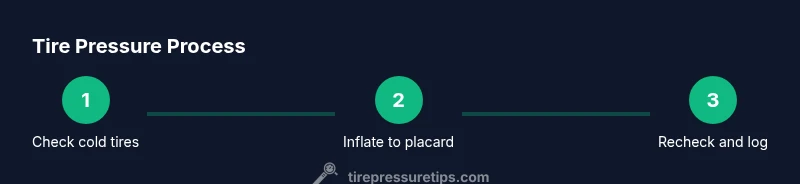
You will learn how to check and set the Ford F-150’s tire pressure correctly, keep TPMS alerts in perspective, and build a simple maintenance routine for a safer, more efficient ride. Start with the door placard, check tires cold, and inflate to the recommended targets; always log changes for consistency.
Why Tire Pressure on Ford F-150 Matters
Maintaining correct tire pressure on the Ford F-150 is not just about avoiding a harsh ride or a flat tire. Proper pressure improves handling, traction, and braking performance, especially when carrying payloads or towing. It also helps protect tires against uneven wear and can improve fuel efficiency by ensuring the contact patch is optimized. The Tire Pressure Tips team emphasizes that consistently checking tire pressure is a foundational part of vehicle maintenance and overall safety. When you keep tires near the recommended cold-inflation targets, you reduce the risk of overheating during heavy loads and adverse driving conditions. Regular checks also help you spot slow leaks early, preventing unexpected tire failures on the road.
For Ford owners, large pickups like the F-150 benefit from proactive pressure management due to varied load scenarios—from empty daily commutes to full payload days. Whether you’re navigating rough terrain, towing a trailer, or simply driving on city streets, correct tire pressure supports predictable steering feel and even tire wear. Establish a routine that fits your schedule and environment, and treat tire pressure as a constant maintenance item rather than a one-off task. According to Tire Pressure Tips, safety and performance start with accurate pressure and consistent checks.
Ford F-150 Tire Pressure Specs: What to Know
The Ford F-150 has tire pressure targets that depend on several factors, including the model year, trim level, payload, and whether you’re towing or carrying a heavy load. Every F-150 will have a recommended cold tire pressure printed on the door placard and in the owner's manual. When you load the vehicle more heavily, you may need to adjust the pressures slightly to maintain the intended contact patch and handling characteristics. These targets can differ between front and rear tires, and they may change if you switch from a standard to a heavier-duty tire option. Always prioritize the placard values and consult your manual for any year-specific guidance. Temperature, tire size, and aftermarket wheels can affect the ideal pressure as well, so verify the specifics for your exact configuration.
To avoid confusion, view the Ford F-150’s official documentation for your year and trim; if in doubt, use the door-jamb placard as the primary reference. The general principle is to inflate tires when cold to the target, rather than inflating hot after a drive, which can give you an inaccurate reading. In addition, note that the recommended pressures are designed to balance ride quality, tread wear, and safety under typical operating conditions. If you plan to tow or haul heavy loads regularly, your targets may shift to accommodate the extra weight, and you should re-check after making any changes.
How to Check Tire Pressure on Your F-150 (Cold Check)
The most accurate way to measure tire pressure is to check cold tires, before you drive or after the vehicle has sat for several hours. Start by gathering your tools: a reliable gauge, the vehicle’s manual or placard, and a method to inflate if needed. Remove the valve cap, place the gauge on the valve stem, and press firmly to get a steady reading. Compare the reading to the door placard values. If pressure is too low, inflate in small increments (2-3 psi at a time) and recheck. If too high, release air slowly until you reach the target. Remember to replace the valve cap after the check. Repeat for all tires, including the spare, and note any unusual readings that might indicate a slow leak or a puncture.
For Ford F-150 owners, it’s common to see slightly different targets between the front and rear tires, particularly with different load configurations. When inflating, always aim for the cold-inflation target values and avoid an underinflated or overinflated state, which can affect traction and tire wear. Regular checks help you catch leaks early and maintain consistent handling across road conditions. If you do not have a personal air compressor, plan time to visit a service station or use a portable unit; consistent checks still apply even when you rely on external pumping.
Interpreting TPMS Alerts and When to Inflate
TPMS (Tire Pressure Monitoring System) is designed to alert you when a tire’s pressure is significantly different from the recommended level. If the TPMS warning light comes on, don’t ignore it. First, manually check all tires with a gauge to confirm readings against the placard. If one tire is consistently low, inspect for punctures or leaks. If the pressure reads near target but the light remains on, there could be a sensor fault or a slow leak in another tire. After inflating to the correct cold target, recheck readings to ensure the issue is resolved. If you repeatedly encounter a TPMS warning, seek professional inspection to avoid running on underinflated tires, which can compromise safety and tire longevity.
The TPMS is a valuable safety feature, but it should complement, not replace, manual pressure checks. Temperature changes, driving style, and road conditions can all affect tire pressure readings, so combining TPMS awareness with periodic manual checks yields the best results for a Ford F-150.
Adjusting for Load, Towing, and Terrain
A Ford F-150 frequently experiences changes in load: daily commuting with light cargo, long highway trips with passengers, or heavy-duty towing. Each scenario may warrant a slight adjustment in tire pressure to preserve steering response, brake performance, and tire wear. For heavier loads, you might need to increase tire pressure to maintain the same contact patch and to handle the extra weight. When towing, front and rear pressures may differ more noticeably to preserve stability and traction. Terrain also matters; off-road or uneven surfaces can influence tire deformation. Always revert to the original recommended pressures once the heavy load or towing is complete to avoid abnormal wear.
As you adjust pressures for different tasks, document the changes and consider seasonal temperature effects. A pressure target that’s perfect in warm weather may become insufficient on a cold morning. Keeping a small log—either on paper or a note in your phone—helps you track what you’ve changed and why, and supports consistent maintenance over time.
Temperature, Season, and Tire Pressure
Temperature has a direct impact on tire pressure. In colder weather, air contracts and pressure readings drop, while heat expands air and raises readings. For Ford F-150 owners, this means you should be especially mindful of gauge readings during seasonal transitions. If you store your truck outside or park in a shaded area, temperature swings can be more pronounced. A good practice is to check tire pressure when the tires are cold, and to anticipate drops as temperatures fall. If you notice a persistent difference in readings without corresponding temperature changes, there may be a slow leak that requires professional assessment.
To minimize the seasonal effect, consider performing checks at the same time of day and under similar weather conditions. In regions with wide temperature variation, a monthly check routine is prudent to detect gradual pressure loss and to keep your tires in their optimal pressure range for safe driving and fuel efficiency.
Maintenance Routine and Troubleshooting for Ford F-150 Tires
Create a simple maintenance routine that fits your driving habits and climate. A practical approach includes monthly pressure checks, prior to long trips, and after mounting new tires or adjusting wheel configurations. When performing checks, use a high-quality gauge and verify readings against the vehicle placard. If you detect slow leaks or abnormal wear patterns, address them promptly with professional tire service. Regular rotation, alignment checks, and balance maintenance help extend tire life and improve fuel efficiency. If your tire pressure readings seem inconsistent across tires, investigate potential sensor faults, valve stem issues, or rim leaks.
The maintenance plan should also include inspecting spare tires; many spares sit at lower pressures and may require adjustment before use. Documentation of readings over time can reveal gradual leaks or slow failures in tires or valves, enabling proactive maintenance that keeps your Ford F-150 running safely and efficiently.
Common Mistakes to Avoid and Quick Fixes
The most common mistakes include inflating tires while they are hot, failing to check the spare tire, and neglecting to recheck after inflation. Another frequent error is over-reliance on TPMS without manual verification. Always use a gauge to confirm your tires are at the correct cold pressure and remember to replace the valve caps after checking. If you notice persistent low readings despite inflating, there could be a slow leak, a damaged valve stem, or a puncture that needs professional attention. Quick fixes include rechecking after cooling, inspecting for foreign objects in the tread, and ensuring the gauge is calibrated.
Finally, do not ignore differences in tire sizes or aftermarket wheels; the Ford F-150 may have variations in recommended pressures based on the tire and wheel combination. When in doubt, consult the owner’s manual or a tire professional to avoid misalignment with the vehicle’s intended performance.
Quick Reference: Front vs Rear Pressure Differences
Front and rear tire pressures are not always identical on the Ford F-150, especially under heavier loads or with certain tire choices. Maintain front and rear pressures according to the placard values and adjust for load when needed. Pay attention to how the vehicle feels on the road; a front-rear pressure imbalance can lead to understeer or oversteer, reducing overall stability. Always recheck all tires after any inflation or adjustment to ensure uniform performance across the axle set.
The Ford F-150 tire pressure routine is proactive and practical. By combining manual checks with TPMS alerts and a consistent maintenance schedule, you gain confidence in your vehicle’s performance across seasons and tasks. The Tire Pressure Tips guidance emphasizes that regular checks and mindful adjustments lead to safer, more efficient driving.
Tools & Materials
- Tire pressure gauge (digital or analog)(Calibrated to ±1 psi; digital gauges reduce user error.)
- Owner's manual and door placard(Model-year specifics and load-based targets.)
- Air compressor or access to air station(For inflating tires to the exact cold targets.)
- Notebook or app for logging pressures(Helpful for tracking leaks and maintenance history.)
- Clean cloth(Wipe stems and caps for a clean measurement.)
Steps
Estimated time: 30-40 minutes
- 1
Prepare and confirm cold tires
Park in a shaded area and let the tires cool for at least 3 hours if possible. Remove the valve caps and keep them in a safe place. Have the door placard and manual handy so you can reference the exact targets for your Ford F-150.
Tip: Check tires before driving to avoid readings altered by heat. - 2
Locate the correct pressure settings
Find the cold-inflation targets on the door jamb placard or in the owner's manual. Note any differences between front and rear tires or changes based on payload and towing.
Tip: If you tow or carry heavy loads regularly, document the adjusted targets for different configurations. - 3
Remove valve caps and attach the gauge
Take off the valve cap and place the gauge on the stem firmly. Ensure no air escapes from the stem or the gauge. Read the gauge and compare it to the target on the placard.
Tip: If using a bleed valve on a digital gauge, small adjustments are easier. - 4
Inflate or deflate to target
If pressure is too low, add air in small increments and recheck. If too high, depress the valve stem slightly to release air until you reach the target.
Tip: Never inflate beyond the target; small steps reduce overinflation risk. - 5
Repeat for all tires
Check each tire’s pressure, including the spare, to ensure uniform readings. If you notice a tire that stays low, inspect for leaks or damage and consider professional assessment.
Tip: Always recheck after inflating the last tire to ensure consistency. - 6
Recheck after a short drive
Drive a few miles, then recheck all tires to confirm stability and that no pressure has leaked due to seat and rim interaction.
Tip: Be cautious not to drive aggressively right after inflation. - 7
Inspect the TPMS and reset if necessary
If TPMS alerts persist after adjusting, check for sensor faults or slow leaks. Some systems auto-reset, others require manual reset per the manual.
Tip: If in doubt, have the TPMS system inspected by a pro. - 8
Document your readings
Record tire pressures and date for future reference. This helps you notice gradual leaks and manage maintenance.
Tip: Keep a simple log in your vehicle notebook or app. - 9
Confirm readiness for different seasons
Before seasonal changes, recheck tire pressures and adjust if necessary to maintain safe handling and wear.
Tip: Seasonally adjust the routine to account for temperature shifts.
Frequently Asked Questions
How often should I check tire pressure on my Ford F-150?
Check at least once a month and before long trips, and recheck after any tire service or significant temperature change. Regular checks prevent sudden pressure loss and help maintain safe handling.
Check your Ford F-150's tire pressure at least monthly and before long trips, especially after weather changes or tire work.
Are TPMS alerts always accurate?
TPMS is a helpful warning system, but it should be confirmed with a manual gauge. Temperature, driving conditions, and sensor issues can affect readings.
TPMS is useful but confirm with a manual gauge to ensure accuracy, especially during temperature shifts.
What should I do if the TPMS light stays on after inflation?
Recheck all tires with a gauge to confirm pressures. If readings are correct but the light remains, there may be a slow leak or sensor fault requiring professional inspection.
If the TPMS stays on after inflation, recheck all tires. If readings are correct, seek professional help for possible sensor issues.
Can overinflated tires cause problems on the Ford F-150?
Yes. Overinflation reduces the tire’s contact patch, causing a harsher ride and uneven wear. Always follow the placard targets.
Overinflating can lead to a harsher ride and uneven wear; stick to the recommended pressures.
How do temperature changes affect tire pressure?
Air expands with heat and contracts in cold weather. Check tire pressures when tires are cold and expect readings to shift with temperature.
Temperature changes can change readings; check cold and account for seasonal shifts.
Should I check the spare tire pressure?
Yes. Many spares require a different target. Verify the spare’s pressure before relying on it in an emergency.
Yes—spares matter. Check their pressure and ensure it’s ready for use.
What if I have aftermarket tires or wheels on my F-150?
Tire pressure recommendations can change with different tires and wheels. Always confirm targets for your specific setup in the placard or manual.
Aftermarket tires can change the targets; verify the exact numbers for your setup.
Watch Video
What to Remember
- Check tires regularly against placard targets
- Always measure cold for accuracy
- Document changes to spot leaks early
- Use TPMS as a guide, not a substitute for manual checks
- Adapt pressure with load, tow, and season