F250 Tire Pressure: Check, Inflate, and Maintain
Learn how to check and adjust tire pressure on the Ford F-250, find placard values, understand TPMS, and maintain safe, efficient tires across loads and conditions.


Learn how to check and adjust tire pressure on a Ford F-250, including finding the correct cold PSI from the placard, understanding TPMS alerts, and choosing the right pressures for load or towing. This quick guide covers the tools you’ll need, a step-by-step process, and practical tips to keep tires safe and fuel-efficient.
Why the Ford F-250 tire pressure matters for trucks
According to Tire Pressure Tips, maintaining correct tire pressure on a Ford F-250 is more than just a number on the placard. The right pressure helps with even tread wear, improves fuel efficiency, and maintains optimal handling when the truck is loaded for work or towing. Heavy pickups carry weight in the rear axle, and underinflation can cause excessive heat buildup in the sidewalls and reduce tire life. In addition to safety, correct pressure improves steering response on uneven surfaces and reduces the risk of blowouts after hitting potholes or curb impacts. This guidance covers typical F-250 setups, how to read your tire placard, and how to adapt pressures for different driving scenarios. The Tire Pressure Tips team found that drivers who routinely check cold pressures and adjust for load see measurable benefits in mileage and tire longevity, especially on larger LT tires and aggressive off-road tires.
Understanding cold PSI and load considerations
Cold tire pressure is the baseline you should use for inflation. Placing a tire at the correct cold PSI from the placard ensures the tire has the right shape and footprint when it starts to heat up during use. On a Ford F-250, different configurations (2WD vs 4WD, axle setup, and tire size) may demand different targets, especially when carrying heavy payloads or towing. Always measure when tires are cold—ideally after the vehicle has been parked for several hours or before you’ve driven more than a mile. If you’ve just driven, allow the tires to cool and re-measure. Remember that temperature and load changes can shift the optimal pressure, so use the placard as your primary guide and adjust within its safe range.
How TPMS works on F-250 and common alerts
The Ford F-250 relies on Tire Pressure Monitoring System sensors to alert you when a tire is significantly underinflated or overinflated compared to the target value. TPMS alerts are designed to prompt a check when there is a meaningful deviation from the placard or a fault with a sensor. If you see a TPMS warning, inspect all tires for leaks or punctures, verify the valve stems and sensors, and re-check after adding or releasing air. Do not ignore a persistent TPMS warning; it can signal a slow leak, a damaged sensor, or a failing system. The goal is to keep all tires within the manufacturer-recommended range for safe handling and optimal wear.
Finding the correct pressure for your F-250: placard vs model variations
The correct tire pressure for your F-250 is found on the door jamb placard and in the owner's manual. Vehicle variants—such as different tire sizes, load ratings, or dual rear wheels—will shift the target pressure. If you’re towing heavy loads or using larger or LT tires, the placard values may be higher to support the extra weight. When in doubt, start with the placard value for cold inflation and adjust in small increments while rechecking. Do not exceed the tire’s maximum pressure printed on the sidewall, and ensure that both front and rear tires meet their respective targets.
Checking tire pressure: a practical, step-by-step test you can perform today
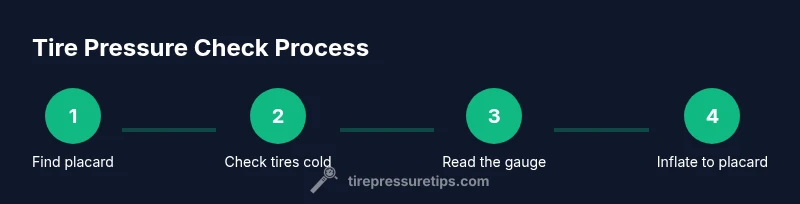
To ensure accuracy, use a reliable gauge (digital or analog) and verify readings on all tires, including the spare. Begin with tires cold, remove the valve stem cap, press the gauge onto the valve, and read the pressure quickly to minimize air loss. If readings are below target, inflate in small increments and recheck after each adjustment. If readings are above target, release air gradually until you reach the correct level. After inflating, replace valve caps and re-check all tires. Record the numbers for future reference and compare at your next check.
Adjusting pressure for load, towing, and on-road vs off-road use
When the truck carries a heavy payload or is towing, the tires may need higher inflation within the safe range to maintain contact with the road and distribute weight evenly. For off-road driving, some drivers prefer slightly higher or lower pressures depending on terrain; the key is to stay within the placard limits and aim for a consistent footprint across all tires. Always re-check the pressures after changing tire size or load configuration, and be mindful that different axle positions may require different targets. Never exceed the tire maximum or compromise the balance between front and rear tires.
Seasonal and temperature effects on tire pressure
Temperature changes affect tire pressure because air expands with heat and contracts when cold. In practice, a drop in ambient temperature can reduce tire pressure, while a warm day may increase it. This means you may need to adjust pressures seasonally to maintain the placard targets as the truck’s tires heat up from driving. For consistent readings, measure when tires are cold and avoid inflating to target values on a hot tire. This practice helps protect tire structure and improves fuel efficiency year-round.
Safety, maintenance, and common mistakes to avoid
Common mistakes include inflating without checking cold readings, neglecting the spare tire, and not rechecking after changes in load or weather. Always carry a gauge and keep the door placard visible. Do not rely solely on the TPMS as your primary inflator guide; use it as an alert and confirm with a manual check. Regular maintenance—at least monthly checks, before long trips, and after seasonal changes—helps prevent uneven wear and tire failure. If you notice uneven wear, leaks, or persistent TPMS alerts, consult a tire specialist.
Building a tire pressure maintenance routine for your F-250
Create a simple routine that fits your driving habits. Check cold pressures every month, and recheck after long trips or when the weather shifts significantly. Keep a small note or digital log of readings, which tires were adjusted, and the final target pressures. If you regularly tow or carry heavy loads, adjust the routine to include a pre-tull load check and a post-load check after you’ve completed your trip. Consistency is the key to longer tire life and safer highway performance.
Note: The information above is intended as practical guidance. Always refer to your specific F-250 model’s placard and owner's manual for exact numbers and safety limits.
Tools & Materials
- Tire pressure gauge (digital preferred)(Choose a gauge with a clearly readable display and a wide range that covers up to your tire capability)
- Owner's manual and door jamb placard(Always verify the recommended cold pressure values for your exact model and tire size)
- Air source (compressor or portable inflator)(Ensure it can provide stable, controlled inflation; use a gauge during inflation)
- Valve caps and gaskets(Keep caps in place to prevent dirt and moisture from entering the valve stem)
- Pen and notebook or digital log(Record readings for trend tracking and maintenance reminders)
Steps
Estimated time: 20-30 minutes
- 1
Prepare the vehicle
Park on a level surface and chock the wheels to prevent movement. Ensure the tires are cold—ideally parked for several hours or before driving. Remove the valve caps to access the stems.
Tip: Chocked wheels prevent roll-away accidents during inflating and checking. - 2
Locate target pressures
Consult the door jamb placard and owner's manual to identify the cold PSI targets for each axle and tire size. Note any differences between front and rear tires, especially if towing or carrying heavy loads.
Tip: If you have LT tires or a special axle configuration, targets may differ by tire position. - 3
Check tires with a gauge
Attach the gauge squarely to the valve stem and read the pressure quickly to avoid air loss. Repeat on all tires, including the spare if you want a full profile.
Tip: Take multiple readings on each tire to confirm consistency. - 4
Inflate to target
If readings are low, add air in small increments and recheck after each addition. If readings are high, release air gradually until you reach the target.
Tip: Do not exceed the placard value; small adjustments can matter for load handling. - 5
Recheck and secure
Recheck all tires after inflation to ensure uniform pressures. Replace valve caps to protect stems and prevent air leaks.
Tip: Q: How do you preserve accuracy? A: Recheck once the tire settles for a minute after inflation. - 6
Record readings
Note the final pressures next to each tire and the conditions (load, temperature, time of day). This helps with future maintenance and diagnosing TPMS alerts.
Tip: Keeping a log helps you spot trends and catch slow leaks early. - 7
Address TPMS alerts
If TPMS warns after inflating to target, inspect for leaks or damaged sensors. If the tire is seated and still low, there may be a slow leak requiring professional inspection.
Tip: A persistent TPMS alert is not normal; investigate promptly. - 8
Create a maintenance routine
Set a monthly reminder to recheck pressures and adjust for seasonal changes, loads, or towing. Update your notes after each check.
Tip: Pair tire pressure checks with seasonal maintenance for maximum impact.
Frequently Asked Questions
What is the correct tire pressure for a Ford F-250?
The exact value depends on tire size, load, and configuration. Check the door jamb placard and owner's manual for the specific cold PSI targets for each axle and tire size.
Look at the placard on your door jamb or in the manual for the exact cold PSI targets for your F-250.
Should I check tire pressure when tires are hot or cold?
Always check when tires are cold to get an accurate reading. Hot tires pressurized by driving can show higher numbers and mislead inflations.
Check the tires when they're cold to get accurate readings.
How often should I check tire pressure?
Aim to check tire pressure at least once a month and before long trips, especially when carrying a heavy load or towing.
Check monthly, and before long trips, especially if you're towing or carrying cargo.
What if my TPMS warning stays on after inflating?
If the warning remains after inflating to the target, inspect for leaks or sensor faults. If unresolved, have the TPMS system checked by a professional.
If it stays on after inflation, check for leaks or sensor issues and seek service if needed.
Can you overinflate tires to improve towing performance?
Overinflating can reduce the tire's contact with the road and degrade ride quality. Always follow the placard values and adjust gradually with caution.
Don’t overinflate; follow the placard and adjust gradually if needed.
Do TPMS sensors need recalibration after tire changes?
Yes. After changing tires or wheels, TPMS sensors may require recalibration or reprogramming to ensure accurate readings.
Sensors may need recalibration after tire changes to stay accurate.
Watch Video
What to Remember
- Check cold pressures against placard values.
- Account for load and towing when inflating.
- Use a reliable gauge for accuracy.
- Monitor TPMS alerts and verify with manual checks.
- Regular checks reduce wear and fuel use.