Tire Pressure Monitor Fault vs Sensor Fault: A Practical Comparison
Learn the difference between tire pressure monitor fault and sensor fault, how TPMS works, common signs, and practical steps to diagnose and fix TPMS issues safely.


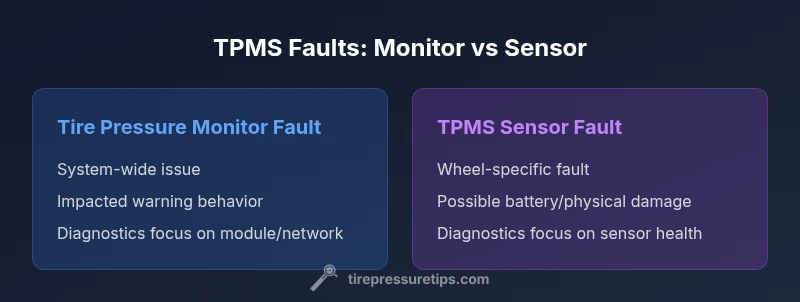
Both tire pressure monitor fault and sensor fault affect TPMS reliability, but they point to different problems. A TPMS fault usually indicates a system-wide communication or module issue, while a sensor fault points to an individual wheel sensor or battery problem. Correctly distinguishing them saves time and guides targeted repair.
What tire pressure monitor fault vs sensor fault really means in practice
When drivers encounter a TPMS warning, the distinction between a tire pressure monitor fault and a sensor fault matters. A tire pressure monitor fault generally signals a problem with the TPMS control unit, the receiver, or the data network that connects sensors to the central module. A sensor fault, on the other hand, is tied to a specific wheel's sensor—often due to a weak battery, corroded contacts, or a damaged valve stem. Understanding this difference helps you avoid replacing the wrong component and reduces downtime on the road. According to Tire Pressure Tips, accurate diagnosis should start with confirming which part of the TPMS chain is affected: sensor, network, or module. This approach keeps maintenance focused and cost-effective.
Comparison
| Feature | Tire Pressure Monitor Fault | TPMS Sensor Fault |
|---|---|---|
| Nature of fault | System/communication or module fault affecting the entire TPMS data stream | Sensor-specific fault causing data loss or out-of-range readings |
| Typical symptoms | Unreliable readings across wheels, warning light behavior varies | Warning light on one wheel or persistent fault that won’t clear after inflating |
| Common causes | Software glitches, initialization issues, or network interference | Battery degradation, damaged sensor, or physical damage to the stem |
| Repair approach | Diagnostics of the TPMS module, reinitialization, or software calibration | Sensor replacement or battery service, possible sensor relocation after tire service |
| Cost context | Moderate when diagnosed by a professional, with potential software updates | Variable, often higher if wheel sensors must be replaced across multiple wheels |
Strengths
- Improved safety by highlighting pressure anomalies early
- Centralized diagnostics speed up fault isolation
- TPMS data supports proactive maintenance planning
- Reduces risk of driving with underinflated tires
Drawbacks
- Temperature shifts or radio interference can trigger false alarms
- Sensor replacement can be costly and may require specialized tools
- During service, TPMS functionality can be temporarily unavailable
- False positives can occur if not properly diagnosed
Prioritize diagnostic steps that distinguish system faults from wheel sensor faults
A structured diagnostic path minimizes unnecessary part replacements and ensures accurate repair. When in doubt, professional TPMS diagnostics can validate sensor health and module integrity.
Frequently Asked Questions
What is the practical difference between a tire pressure monitor fault and a sensor fault?
A tire pressure monitor fault usually indicates a problem with the TPMS controller or data network. A sensor fault points to a single wheel sensor, often due to battery or signal issues. Diagnosing which one is failing guides targeted repairs.
A tire pressure monitor fault affects the system as a whole, while a sensor fault is limited to one wheel. Diagnose which part is failing to target the right fix.
Can weather or temperature cause TPMS faults?
Yes, temperature changes can affect tire pressure readings and trigger TPMS alerts. Extreme cold or heat can create perceived pressure differences that resemble faults, especially if the system isn’t recalibrated after inflating tires.
Weather can trigger TPMS alerts due to pressure changes; always recheck pressures after big temperature shifts.
What steps should I take first if a TPMS warning appears?
Manually check each tire’s pressure with a gauge. If readings are normal, perform a TPMS reset or relearn procedure with your vehicle’s manual or a diagnostic tool. If the warning persists, seek professional inspection.
Check tire pressures first, then reset the TPMS if your car supports it; persistent warnings require a professional check.
Is sensor replacement every time I see a TPMS fault?
Not always. Many TPMS faults are software-related or wiring issues. Sensor replacement is considered when a specific wheel sensor is proven defective or has a failed battery.
Sensor replacements aren’t automatic—diagnose first to confirm sensor failure.
How long do TPMS sensors typically last?
TPMS sensors commonly last several years, but battery life and exposure to road conditions can shorten life. Regular checks after tire service help catch degradation early.
Sensor life varies; have wheels checked after tire work to catch battery or signal issues early.
What maintenance helps prevent TPMS faults?
Keep tires inflated to recommended levels, rotate tires as advised, and have TPMS relearns performed after tire changes. Regular inspections reduce the chance of false alerts.
Regular tire maintenance and sensor relearn after changes help prevent TPMS faults.
What to Remember
- Identify whether the fault is system-wide or wheel-specific
- Use a logical diagnostic sequence to prevent unnecessary sensor replacements
- Weather and temperature can affect TPMS readings
- Regular calibration after tire service improves accuracy
- Consult a qualified technician if warning patterns persist