Mercedes Tire Pressure Reset: TPMS Relearn Guide
Learn how to perform a Mercedes tire pressure reset (TPMS relearn) after adjusting pressures. This guide covers model variations, safety checks, and tips to keep readings accurate for better tire wear and fuel efficiency.


Learn how to perform a Mercedes tire pressure reset (TPMS relearn) after adjusting tire pressures. This guide covers model-agnostic steps, safety notes, and practical tips to ensure your TPMS readings match the actual cold tire pressures. Follow the steps, then verify the light is off and your pressures are correct for optimal tire wear and fuel efficiency.
Understanding TPMS and Mercedes tire pressure reset
The Tire Pressure Monitoring System (TPMS) in Mercedes-Benz vehicles is designed to alert you when a tire's pressure falls outside the recommended range. A Mercedes tire pressure reset, or TPMS relearn, is the process by which the system associates current sensor data with the actual tire positions after you adjust pressures or rotate tires. The goal is to synchronize the readings with the physical tires so that the dashboard lights and the on-board display reflect accurate pressures. In this context, the term mercedes tire pressure reset is used broadly to describe the relearn sequence across most recent models, though the exact steps can vary by model year and infotainment system. According to Tire Pressure Tips, understanding the difference between "cold" pressures and "hot" readings is essential: TPMS measures relative pressure and is most accurate when tires are cold, typically before driving or after the vehicle has been stationary for several hours. Use the recommended cold pressure values from the door jamb label or owner's manual for your specific Mercedes model.
Why you might need a TPMS reset after tire changes
A TPMS relearn becomes necessary whenever you change tires, rotate wheels, or replace TPMS sensors. If the sensor positions shift or if the system loses track of which sensor belongs to which wheel, the warning light may illuminate or readings may diverge from actual pressures. Tire Pressure Tips analysis shows that a proper relearn helps prevent inaccurate warnings and ensures the system supports safe driving. Even small changes in tire pressure due to temperature fluctuations can affect readings, so a relearn helps the system recalibrate to current conditions. Always verify that the tires are inflated to the manufacturer’s recommended cold pressures before initiating a relearn.
Model variations and how resets differ across Mercedes vehicles
Mercedes models span several generations of infotainment interfaces and TPMS implementations. Some cars use a dedicated TPMS relearn option in the vehicle settings, while others rely on a sequence triggered via steering wheel controls or a physical button on the dashboard. Newer models may provide a guided tutorial on-screen that walks you through the steps, including prompts to confirm sensor data and wheel positions. Always consult your owner’s manual for the exact relearn procedure for your model year. While the core principle remains the same—relinking sensor data with wheel positions—the precise menu paths and button presses can differ. The key is to identify the TPMS or Tire Pressure section and follow the relearn prompts exactly as shown.
Safety and prerequisites before starting
Before you begin, ensure all tires are at their recommended cold pressures, and the vehicle is on stable, level ground. Do not attempt to relearn TPMS if a tire is visibly underinflated or damaged; fix the tire first. Keep children and pets away from the vehicle to avoid accidental movement during relearn. It’s also wise to have your owner’s manual handy so you can confirm the exact sequence for your specific Mercedes model.
What you’ll need: tools and prep
- Tire pressure gauge (digital preferred for accuracy)
- Access to the Mercedes onboard menu or TPMS relearn prompts
- The vehicle’s owner’s manual or a trusted Mercedes service guide
- A reliable source for the recommended tire pressures (door jamb label or owner’s manual)
- Optional: portable air compressor if you need to top off any tire after inflating to spec
How the relearn process works in practice
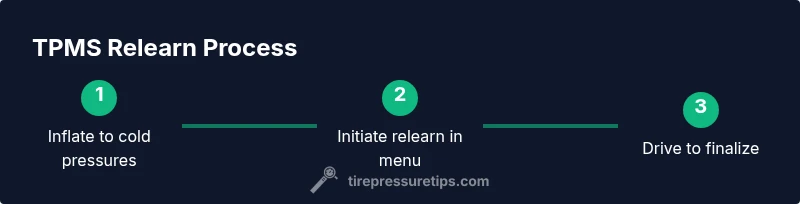
The relearn process typically involves inflating all tires to the specified cold pressures, then initiating the TPMS relearn through the vehicle’s menu. The system may require you to confirm wheel positions or to drive for a short distance to complete the relearn. In some models, you’ll hear a chirp from the tire service indicator or see a confirmation message on the dashboard once the relearn is successful. After the relearn, it’s common to drive 10–15 minutes at a steady speed to finalize sensor calibration and to verify that all four tires are correctly registered with their positions.
Common mistakes and how to avoid them
- Don’t begin the relearn with underinflated tires; always inflate to the cold, recommended pressures first.
- Don’t skip the post-relearn drive; sensor data often stabilizes only after some highway or steady-speed driving.
- Don’t ignore warning lights; if the TPMS light stays on, recheck each tire and consider sensor issues or valve leaks.
- Don’t confuse tire pressures with warm readings; wait for tires to cool before recording numbers for the relearn.
Verifying a successful reset and post-checks
After completing the relearn and the post-drive stabilization, recheck the tire pressures with the car off and the tires cold to confirm they match the label values. Ensure the TPMS warning light remains off. If the light returns, recheck all valve stems and sensors for leaks or damage, and consult the manual or a technician. Document the final pressures for your records and set a reminder to recheck every month or after seasons change.
Maintenance tips for long-term tire pressure health
Regular checks are the easiest way to keep TPMS accuracy high. Check pressures monthly and after temperature swings, especially in winter or summer. Keep a digital gauge in the glove box for quick checks on the go. Consider a proactive approach: note tire wear and tread depth, which can influence reading accuracy as the tire wears down.
Tools & Materials
- Tire pressure gauge(Digital gauge preferred for accuracy; check all four tires when cold.)
- Mercedes owner’s manual(Model-specific relearn steps and tire pressures are listed here.)
- Access to vehicle settings/TPMS menu(Location varies by model; ensure you know how to reach the TPMS section.)
- Door jamb tire pressure label(Use this to confirm the recommended cold pressures per tire position.)
- Portable air compressor (optional)(Helpful if any tire is low after air-up.)
- Notebook or vehicle log(Record final pressures and relearn date for future reference.)
Steps
Estimated time: 25-40 minutes
- 1
Find target pressures
Locate the recommended cold tire pressures for your Mercedes model from the door jamb label and the owner’s manual. Note the values for each wheel position. This step sets the baseline for accurate inflations during the relearn.
Tip: Use the same source for all four tires to avoid inconsistencies. - 2
Inflate to the spec
Using a calibrated gauge, inflate each tire to its specified cold pressure. Do this with the tires cold and the vehicle not driven recently for the most accurate baseline. Avoid topping off after a short drive, which would skew the reading.
Tip: Double-check pressures after a few minutes to account for gauge settling. - 3
Access relearn menu
Navigate to the TPMS or Tire Pressure section in your Mercedes’ onboard system. Locate the Relearn or Reset option. If you’re unsure, consult the owner’s manual for the exact path in your model’s infotainment interface.
Tip: If you can’t locate it, perform a quick search in the system’s help or prompts for ‘TPMS relearn’. - 4
Initiate the relearn
Select the Relearn/Reset option and confirm when prompted. The system may require wheel-position confirmation or a brief systems check. Do not shut off the car during this process unless instructed.
Tip: Some models require you to press and hold a button for several seconds; follow the on-screen prompts precisely. - 5
Drive to finalize
Drive at a steady speed (around 40–60 mph) for 10–15 minutes to allow sensors to calibrate and complete the relearn. Avoid abrupt accelerations or braking during this period.
Tip: Check the TPMS light after the drive to ensure it’s off. - 6
Recheck pressures
Park on a level surface and recheck all four tires when cold. Confirm that the pressures match the door jamb values. If any tire differs, re-inflate and rerun the relearn if necessary.
Tip: Keep your final readings documented for future reference. - 7
Address warnings
If the TPMS light remains on after relearn, inspect valve stems and sensors for leaks or damage. A persistent warning may indicate a failing sensor or a defective valve.
Tip: Consider professional inspection if the light stays on after a second relearn attempt. - 8
Record and plan ahead
Record your final pressures and the relearn date. Schedule monthly checks or season-based checks so you maintain accurate readings and optimal tire health.
Tip: Set a calendar reminder to check pressures during weather changes.
Frequently Asked Questions
Do I always need to reset TPMS after changing tires on a Mercedes?
In most cases, yes. Changing tires or sensors can disrupt the TPMS data mapping, so a relearn helps ensure accuracy. Always reference your model’s manual for model-specific steps.
Yes, usually you should relearn TPMS after changing tires. Check your manual for the exact steps for your Mercedes model.
How can I tell if the relearn was successful?
A successful relearn typically clears the TPMS warning light and the dashboard confirms correct readings. If the light returns, recheck all tires and sensor components.
Look for the TPMS light turning off and a dashboard confirmation. If it comes back on, recheck and possibly service sensors.
What if my Mercedes model doesn’t show a relearn option?
Some models require a road test or a different sequence for relearn. If no option appears, consult the owner’s manual or contact a dealer for the exact method for your model year.
If you don’t see relearn options, check the manual or call a dealer for model-specific steps.
Can cold weather affect TPMS readings after a relearn?
Yes. Temperature changes can influence tire pressure, which may affect readings. Regular checks help ensure continued accuracy across seasons.
Temperature changes can shift tire pressure readings, so keep an eye on temps and recheck regularly.
What should I do if the TPMS light stays on after retrying?
Inspect for slow leaks and sensor faults. If you cannot clear the light after a second relearn, seek professional service to diagnose sensors or valves.
If the light won’t go off after retrying, have the system checked by a professional.
Is the relearn process the same for all Mercedes models?
No. Relearn procedures vary by model year and infotainment system. Always use the manual or dealer guidance for model-specific steps.
Procedures differ by model and year; verify with your manual or dealer for the exact steps.
Should I reset TPMS after rotating tires?
If you rotated tires, it’s a good practice to relearn so the system correctly maps sensors to wheels. This helps maintain accurate readings.
Yes, rotate tires and then relearn to keep TPMS accurate.
Can I perform TPMS relearn without driving after the procedure?
Many Mercedes models require a short drive post-relearn to finalize calibration. Check your manual for the exact duration and conditions.
Often you need a quick drive after relearn; check your manual for the exact guidance.
Watch Video
What to Remember
- Inflate tires to cold spec first.
- Follow the vehicle prompts for relearn.
- Drive to finalize sensor calibration.
- Verify TPMS light is off and pressures match labels.