Kia Forte Tire Pressure Monitoring System Troubleshooting Guide
Urgent, step-by-step troubleshooting for the Kia Forte tire pressure monitoring system (TPMS): diagnose warnings, reset sensors, replace batteries, and prevent false alerts with practical guidance from Tire Pressure Tips.


If the Kia Forte TPMS warning is on, the most likely cause is a low tire pressure in one or more tires, or a faulty sensor. Start by verifying all tires are at the recommended pressure, then reset the TPMS if your model supports it. If the light remains, inspect sensors and consider calibration or professional service.
Understanding the Kia Forte Tire Pressure Monitoring System (TPMS)
The Kia Forte tire pressure monitoring system (TPMS) is a safety feature that warns you when any tire falls below or rises above the car's recommended pressure. In most Forte models, the system uses direct sensors in each wheel and a central control module to monitor pressure changes continuously. When a sensor detects a pressure drop or significant sudden change, the TPMS warning light on your dash illuminates and a message may appear in the instrument cluster. This is your first cue to check all tires and address potential causes. According to Tire Pressure Tips, the Kia Forte TPMS is designed to alert you quickly so you can avoid unsafe driving conditions and prevent uneven tire wear. The Tire Pressure Tips team found that properly maintained TPMS contributes to safer handling, better fuel efficiency, and longer tire life. For Kia Forte owners, keeping the TPMS sensor and battery in good condition isn't optional—it's part of responsible vehicle maintenance.
Why TPMS Alerts Matter for Kia Forte Owners
TPMS alerts exist to protect you in real time. When a tire runs low, hot weather, and even heavy highway use can alter pressure, the system can warn you before a dangerous situation develops. Ignoring these alerts can lead to reduced traction, longer stopping distances, and accelerated tire wear. Based on Tire Pressure Tips research, timely attention to TPMS warnings reduces risk by ensuring tires remain within the vehicle’s safe operating range. For Kia Forte drivers, treating a TPMS warning as a priority helps maintain steering response, ride comfort, and fuel efficiency. Regular TPMS checks can also reduce the frequency of costly tire replacements and keep your car running reliably through seasonal changes.
Common TPMS Warning Types and What They Mean
You may see several indicators: a solid TPMS warning light, a tire-pressure-specific warning, or a sensor fault message. A steady light often points to a tire that’s underinflated or overinflated relative to the vehicle’s recommended range, which is usually listed on the door jamb placard. A flashing TPMS light or a dedicated TPMS Service Required message can indicate a sensor fault, battery issue, or a calibration problem. Understanding these distinctions helps you decide whether to inflate a tire, recalibrate the system, or seek service. The intent of these warnings is simple: keep every tire at its optimal pressure for safety, efficiency, and even wear rates.
How to Verify Tire Pressure Without a Gauge
If you don’t have an instant tire pressure gauge, use the door jamb placard as a reference and inspect tires for obvious signs of underinflation (flattened sidewalls, bulge, or curvature). Check for even tire wear and ensure there are no nails or punctures. For the most accurate assessment, obtain a reliable tire pressure gauge as soon as possible and measure cold tires before driving. This practice helps confirm whether the TPMS warning aligns with real pressure levels. In urgent situations, visit a service center or gas station equipped with a gauge to verify all four tires and the spare if applicable.
Troubleshooting the TPMS Fault: From Simple to Serious
Start with the simplest checks: ensure all tires are within the recommended range, then reset the TPMS if your Forte supports it. If the warning persists after a full tire pressure check, inspect valve stems, wheel sensors, and wiring for signs of damage or corrosion. A dead sensor battery or a misread from the receiver can trigger faults. If the fault continues, recalibration or reprogramming of sensors may be required, and professional service is advised since it often involves specialized tools and vehicle-specific software.
Step-By-Step: Fixing a Faulty TPMS Sensor on Kia Forte
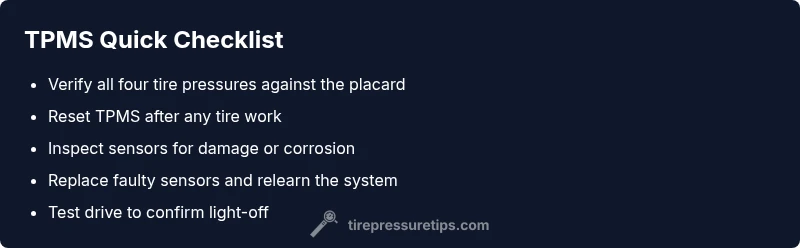
- Check tire pressures on all four wheels using a reliable gauge and adjust to the door jamb specification. 2) Use the Forte’s TPMS reset procedure (menu-based or instrument cluster option) if available. 3) Inspect each wheel sensor for corrosion, damage, or loose wiring. 4) If a sensor or battery appears weak, replace the sensor assemblies as a complete unit (relearn may be required). 5) After any tire service or sensor replacement, perform a sensor relearn/recalibration following the owner’s manual or dealership tool guidance. 6) Take a short test drive and verify the TPMS light remains off; if it returns, check for leaks or seek professional calibration. 7) If the warning persists after all steps, schedule service to verify there isn’t a module or communication issue.
Prevention, Maintenance, and Safe Driving Habits
Prevention starts with routine checks. Check tire pressures at least once a month, especially before long trips or seasonal changes. Rotate tires as recommended by Kia to ensure even wear and sensor longevity. If you replace a tire or wheel, ensure sensors are properly relearned. Keep TPMS software up to date and replace weak or failing sensors promptly. Practicing these habits reduces false alarms, saves fuel, and helps you stay safer on the road.
Steps
Estimated time: 45-60 minutes
- 1
Check tire pressures in all tires
Use a reliable gauge to measure cold tire pressures and compare against the door jamb placard. Inflate or deflate to the recommended range as needed, ensuring even pressure across all four tires.
Tip: Record readings to track pressure changes over time. - 2
Attempt TPMS reset (if available)
Navigate to the vehicle’s settings or TPMS menu and perform the reset. This helps the system relearn current pressures after adjustment or tire service.
Tip: Reset only after all tires have been adjusted to spec. - 3
Inspect wheel sensors and wiring
Look for corrosion on sensor stems, damaged electrical connectors, or loose wiring near the wheel wells. Any visible damage should be addressed before driving.
Tip: Avoid driving with exposed or damaged wiring; it can worsen the issue. - 4
Test or replace TPMS sensors
If a sensor battery is suspected or a sensor is damaged, replace the sensor assembly. This often requires relearning the new sensor.
Tip: Always use OEM or reputable aftermarket sensors and ensure proper relearn procedures. - 5
Relearn sensor data
After replacing sensors or rotating tires, perform a relearn using either the vehicle interface or a diagnostic tool to re-sync the sensors with the car.
Tip: Follow the exact relearn steps as described in the manual for your trim level. - 6
Take a test drive and verify
Drive a short distance to allow systems to recalibrate. Check the dashboard to confirm the TPMS light stays off.
Tip: If the light returns, recheck tire pressures again and consider professional help. - 7
Schedule professional service if unresolved
Persistent TPMS warnings may indicate ECU, module, or deeper sensor issues that require dealer-level diagnostics.
Tip: Don’t ignore persistent warnings; unresolved faults can compromise safety.
Diagnosis: TPMS warning light stays on or flashes intermittently in a Kia Forte
Possible Causes
- highLow tire pressure in one or more tires
- mediumFaulty TPMS sensor or dead battery in a sensor
- lowTPMS recalibration or antenna/wiring issue
Fixes
- easyCheck and adjust tire pressures to the vehicle's recommended level
- easyReset the TPMS from the vehicle’s settings or using an OBD tool if available
- hardInspect and replace faulty sensors or damaged wiring; program new sensors if required
Frequently Asked Questions
Why is my Kia Forte TPMS light on even though tires look fine?
TPMS lights can indicate sensor faults, calibration needs, or hidden tire pressure issues. Start with a fresh tire pressure check and reset if available, then check sensors if the light persists.
TPMS lights can mean a sensor fault, calibration issue, or hidden pressure changes. Start with a fresh tire pressure check and reset; if it stays on, have the sensors inspected.
Can I reset the TPMS myself?
Yes, many Kia Forte models support a TPMS reset via the vehicle menu. If the warning returns, you may need sensor replacement or calibration with a tool.
Yes, often you can reset TPMS from the car’s menu. If it returns, sensors or calibration may be needed.
What should I do if TPMS warns after a tire rotation?
Sensor relearning is often required after tire rotation. Check manual for the relearn procedure or have a technician perform it to ensure the system recognizes the updated wheel positions.
Rotation can require relearning the sensors. If the light comes back, perform relearn or have a tech do it.
Is a TPMS warning the same as a tire pressure gauge reading?
No. TPMS monitors pressure automatically, while a gauge provides a manual pressure reading. Use both: gauge for measurement, TPMS for ongoing monitoring.
TPMS watches pressure automatically; a gauge reads it manually. Use both for best results.
How long do TPMS sensors last on a Kia Forte?
TPMS sensors generally last several years, but battery life varies. If a sensor is slow to respond or dies, replace the unit and relearn.
Sensors last several years; if one stops responding, replace and relearn.
Watch Video
What to Remember
- Check tire pressures monthly and after long trips.
- Reset and relearn TPMS after servicing wheels or tires.
- Replace faulty sensors promptly to avoid false alerts.
- Regular maintenance reduces false alarms and improves safety.