Tire Pressure Light on Kia Soul: Quick Troubleshooting Guide
Urgent guide to diagnose and fix the tire pressure light on the Kia Soul. Learn how to check tire pressure, reset TPMS, and when to seek help with practical steps from Tire Pressure Tips.


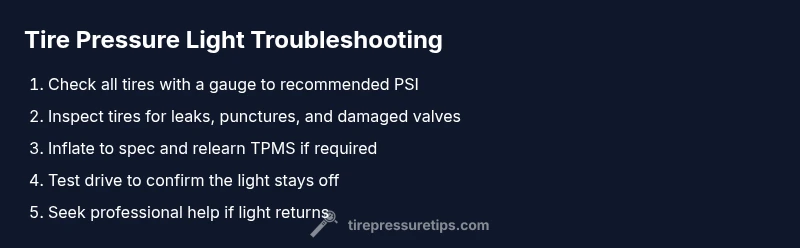
TPMS or low tire pressure is the most common cause of the tire pressure light on kia soul. Inflate tires to the recommended level, then perform a TPMS relearn if required. If the light returns, have a professional inspect the sensors and valves. This quick step set helps you respond safely without delay.
What the tire pressure light on kia soul means
Seeing the tire pressure light on kia soul can be alarming, but understanding what triggers it helps you respond quickly and safely. This indicator is tied to TPMS, the Tire Pressure Monitoring System, which monitors the air pressure in each tire and alerts you when any reading falls outside the vehicle's acceptable range. In practice, the light can come on for a number of reasons: a single tire has lost air, multiple tires are underinflated, or the TPMS sensor or its battery has a fault. Temperature changes, driving style, and recent tire service can also trigger a temporary fluctuation that lights the warning momentarily. According to Tire Pressure Tips, TPMS is designed to prevent underinflated tires, which are a leading cause of reduced fuel efficiency and increased risk of tire damage. The key is not to panic, but to confirm the conditions that produced the warning and plan a safe remedy. Begin by verifying the tire pressures when cold, then compare them to the vehicle's recommended PSI found on the door jamb sticker or in the owner's manual. If you see any tire significantly below spec, inflate to the recommended level and monitor the light after a short drive. If it persists, you've likely uncovered a deeper issue with either the tire or the TPMS itself.
Immediate checks you should perform
Before you panic, perform the quickest checks first. Start by pulling over in a safe spot and inspecting all tires for obvious signs of damage. Use a reliable gauge to measure each tire's cold pressure, and compare the readings to the recommended psi printed on the door jamb sticker or in the owner's manual. Inflate any underinflated tire to the recommended level. Also check for visible leaks, nails, or punctures, and inspect valve stems and wheel rims for damage. If one tire is consistently low while others are fine, consider a slow leak or a damaged TPMS sensor. After inflating, drive a short distance (a few miles or kilometers) to let the system recalibrate. If the light returns or refuses to go away, you may be dealing with a TPMS fault rather than a simple underinflation, and you should consult a technician. Remember: never ignore the warning light, and always perform your checks when the tires are cold for accurate readings.
Common causes in order (diagnostic flow)
Symptom: tire pressure light on kia soul is on or flashing. Causes (likelihood): - Low tire pressure in one or more tires — high; - TPMS sensor fault or dead battery — medium; - Temperature changes affecting tire pressure — low; - Recent tire rotation or wheel work causing TPMS miscalibration — low; - Wiring or module fault within the TPMS system — low. Fixes (examples): - Check and inflate tires to the specified pressure; - If inflation fixes the issue, perform a TPMS relearn or reset as per manual; - If a tire is damaged, replace and repair promptly; - If TPMS continues to trigger, schedule a diagnostic with a professional.
How to safely check and reset TPMS
TPMS sensors are mounted in each wheel and measure air pressure in real time. To reset safely: - Ensure all tires are inflated to the recommended level when cold. - Drive for a few minutes to allow the system to refresh. - Use the vehicle's TPMS relearn procedure (found in the Kia Soul owner's manual) or a professional tool to reset the sensors if needed. - If the light persists after inflation and relearn, inspect the sensors for corrosion, damaged stems, or battery failure. - In some models, you may need to press and hold a TPMS button or go through a settings menu to trigger the relearn. Do not attempt to disassemble sensors yourself. When in doubt, seek support from a certified technician. After a successful relearn, monitor the system over the next few days to ensure consistent results.
Preventive maintenance and best practices
Regular checks prevent the tire pressure light from turning on unexpectedly. Schedule monthly tire pressure checks, especially before long trips or in extreme temperatures. Use a digital tire gauge for accuracy and compare readings to the door jamb sticker. Rotate tires according to the manufacturer's schedule and balance wheels if you notice vibration. Inspect TPMS sensors during tire service and replace sensors or batteries as needed. Keep the valve stems clean and free from dirt. If you notice frequent pressure loss, examine for punctures, wheel damage, or a failing sensor. This proactive approach saves fuel, extends tire life, and reduces the risk of sudden loss of pressure.
When to seek professional help
If the tire pressure light returns after inflation and TPMS relearn, or if you discover a slow leak that cannot be repaired, schedule a professional inspection. A technician can confirm sensor health, check for corrosion on the wheel and sensor, and replace faulty parts. If the light remains on despite correct tire pressures and a successful relearn, you likely have a TPMS fault that requires diagnostic tools and possibly wheel sensor replacement. The Tire Pressure Tips team recommends consulting a trusted shop to avoid driving with underinflated tires, which can compromise safety.
Steps
Estimated time: 40-60 minutes
- 1
Verify tire pressures when cold
Park on a level surface with the engine off. Use a reliable gauge to measure each tire’s pressure when the tires are cold. Compare readings to the vehicle’s recommended PSI printed on the door jamb sticker. Record any significant deviations for reference.
Tip: Use the same gauge for consistency and check the spare if applicable. - 2
Inflate to the recommended level
Inflate any underinflated tires to the recommended PSI. Do not exceed the maximum pressure listed on the tire sidewall. Recheck all four tires to ensure consistent readings across the board.
Tip: Inflation should be done with the tires cold to get accurate results. - 3
Inspect for leaks or damage
Look for nails, screws, cuts, or punctures in the tread and around the sidewalls. Check valve stems and wheel rims for corrosion or cracks. If you find damage, do not drive long distances; arrange a tow or professional repair.
Tip: Even a small puncture can cause slow leaks that trigger TPMS. - 4
Check TPMS sensor health
If inflation doesn’t fix the issue, inspect the TPMS sensors for corrosion, damaged stems, or battery failure. Some parts are not serviceable and require replacement by a technician.
Tip: Battery life varies by model; some sensors are non-serviceable on the vehicle. - 5
Relearn or reset TPMS
Follow the Kia Soul owner’s manual relearn procedure, or use a dealership/tool-based reset. Successful relearn is shown when the light goes off after a short drive.
Tip: If you’re unsure, have a technician perform the relearn. - 6
Test drive and monitor
Drive for 10–15 minutes at highway speeds to allow the system to recalibrate. Check if the TPMS light stays off. If it reappears, proceed with professional diagnosis.
Tip: Keep a log of readings and light status for reference.
Diagnosis: Tire pressure light on Kia Soul after startup
Possible Causes
- highLow tire pressure in one or more tires
- mediumTPMS sensor fault or dead battery
- lowRecent tire rotation or wheel service causing TPMS miscalibration
Fixes
- easyCheck all tires and inflate to the recommended pressures
- mediumPerform a TPMS relearn/reset if needed
- hardInspect sensors and replace faulty units if necessary
Frequently Asked Questions
What does the tire pressure light indicate on the Kia Soul?
The tire pressure light indicates a TPMS trigger, usually due to low tire pressure or a sensor fault. Start with a cold pressure check and inflation, then reset the TPMS if needed. If the light returns, investigate sensor health or leaks.
The TPMS light means your tires may be underinflated or the sensor needs service. Start by checking air pressure, then reset the system if required. If it stays on, have a technician inspect the sensors.
How do I know my tires are at the correct pressure?
Use a calibrated gauge to measure cold tire pressure and compare to the owner’s manual or door sticker. Adjust each tire to the specified PSI and recheck after a short drive to ensure stability.
Check all tires with a good gauge and set to the recommended PSI from your vehicle label.
What is TPMS and how does it work in a Kia Soul?
TPMS uses wheel-mounted sensors to monitor air pressure in real time and alerts you with a warning light when readings fall outside acceptable ranges. Regular checks help ensure accuracy and safety.
TPMS monitors tire air pressure and warns you if it drops too low.
Can I drive with the tire pressure light on?
If the light is continuous but the tires show proper inflation, proceed cautiously and plan a service visit soon. If any tire is underinflated, reduce speed and avoid heavy loads until resolved.
If the light is on, don’t ignore it—check pressures and seek service if needed.
How do I reset the TPMS on a Kia Soul?
Refer to the owner’s manual for the relearn procedure. It often requires inflating tires to spec and using a combination of button presses or the settings menu. If unavailable, a dealer can perform the relearn.
You may need to relearn the TPMS using the manual or a dealer tool.
When should TPMS sensors be replaced?
Sensors may need replacement if their battery is dead, if there is corrosion, or if readings remain erratic after a relearn. A professional should assess sensor health.
Replace faulty TPMS sensors if readings stay inconsistent after relearning.
Watch Video
What to Remember
- Check all tires first, cold, with an accurate gauge
- Inflate to door-jamb recommended PSI and recheck
- If light persists, suspect TPMS faults and seek professional help
- A TPMS relearn is often required after inflation or tire work
- Regular maintenance prevents future TPMS-related alerts