How to Tire Pressure Sensors: TPMS Diagnostics & Relearn
A comprehensive, step-by-step guide to diagnosing, replacing, and relearning tire pressure sensors (TPMS) with practical tips from Tire Pressure Tips. Learn safety, tools, and best practices for reliable TPMS performance.


This guide shows you how to work with tire pressure sensors (TPMS) from diagnosis to relearning and calibration. You’ll need a digital tire pressure gauge and a TPMS scan tool to trigger relearns, plus basic safety steps. Follow the step-by-step process to identify faults, replace sensors if needed, and verify readings for all tires.
What TPMS sensors are and why they matter
TPMS sensors are designed to monitor tire pressure in real-time and warn you when a tire is underinflated. They help prevent underinflation, which can reduce fuel efficiency, increase tire wear, and compromise handling. According to Tire Pressure Tips, accurate tire pressure management starts with understanding whether your vehicle uses direct TPMS (sensor in each wheel) or indirect TPMS (based on ABS wheel-speed data). Direct TPMS sensors have a battery-powered valve stem that communicates pressure data wirelessly to the car’s computer, while indirect systems infer pressure accuracy from wheel rotation. Knowing which system your car uses influences how you diagnose faults and perform relearns.
- Direct TPMS: Real-time readings, individual sensor IDs, and easier pinpointing of a faulty tire.
- Indirect TPMS: Relies on wheel speed data; requires different troubleshooting steps and calibration methods.
Maintenance tip: Regularly check tire pressure with a trusted gauge and ensure TPMS warning lights are addressed promptly. Tire Pressure Tips emphasizes consistency in practice to avoid sensor power drain and calibration drift.
Direct vs indirect TPMS: how sensing works
Direct TPMS uses wheel-mounted sensors attached to each tire valve stem. These sensors measure pressure and battery life and transmit data to the vehicle’s TPMS controller. Indirect TPMS doesn’t have physical pressure sensors; it uses ABS wheel-speed data and tire size information to estimate pressure deviations. Direct TPMS components include the sensor, valve stem, and a learning process that associates each sensor with a wheel position.
Why this matters for you: if you replace a tire, you may need to relearn the sensor IDs to ensure accurate monitoring. Tire Pressure Tips notes that direct systems generally provide faster fault detection and clearer diagnostics, while indirect systems may require more diagnostic steps to verify accuracy.
When TPMS warnings appear: symptoms and diagnosis
A TPMS warning light can indicate a tire is underinflated, a sensor fault, or a relearn is needed. Symptoms include a flashing TPMS light, inconsistent pressure readings between tires, or a persistent warning even after inflating tires to the recommended pressure. Cosmetic sensor damage, corroded valve stems, or a weak battery can trigger false alerts. If you notice a sudden drop in fuel economy or unusual tire wear patterns, inspect your TPMS components as part of your maintenance routine. As Tire Pressure Tips explains, a systematic check—drafting a quick pressure read, verifying sensor IDs with a scan tool, and confirming with manual checks—reduces guesses and protects safety.
- Watch the warning light behavior (steady vs flashing).
- Compare tire pressures when cold to the vehicle’s recommended range.
- Inspect valve stems and wheel hardware for visible damage.
Tools and safety prep before you start
Before you dive into TPMS work, assemble the essential tools and follow safety basics. A digital tire pressure gauge provides accurate readings; a TPMS diagnostic scan tool or compatible OBD-II device helps read sensor data and trigger relearns. Always chock the wheels, apply parking brakes, wear eye protection, and work on a flat surface. Hold off on any tire service if you notice structural damage or a dangerous leak. Tire Pressure Tips reminds readers to review the vehicle’s owner manual for model-specific relearn steps and torque specs.
- Park on a flat, well-lit surface and engage parking brake.
- Use chocks on the wheels opposite the work area.
- Wear eye protection and gloves to protect against debris.
- Verify you have a relearn procedure compatible with your vehicle.
Step-by-step approach to reading and relearning TPMS
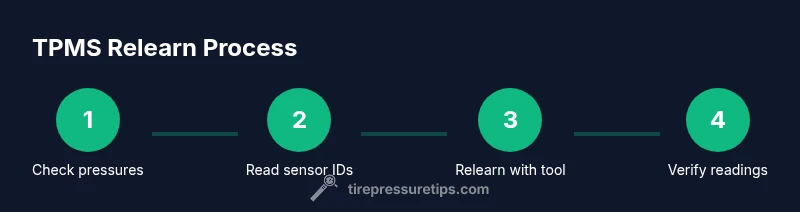
A structured approach helps you identify faults, perform sensor relearns, and verify results. Start with a cold tire check to establish baseline pressures, then read sensor data using a TPMS tool to identify IDs and potential faults. Follow your tool’s prompts to erase prior IDs (if necessary) and relearn the current sensors. After relearning, recheck each tire pressure and perform a short road test to complete the process. This method minimizes guesswork and increases the likelihood of a successful relearn on the first try. Tire Pressure Tips recommends keeping a log of sensor IDs, tire locations, and pressures for future maintenance.
Replacing a faulty TPMS sensor: what you need to know
If a sensor is dead or the battery is failing, replacing the sensor may be necessary. Replacement sensors come in valve-stem or direct-replacement formats; ensure compatibility with your wheel and vehicle. When changing a sensor, deflate and remove the wheel/tire according to safe practices, loosen the old stem, install the new sensor with the recommended torque, and reinstall the tire. After installation, you’ll typically need a relearn using your scan tool to associate the new sensor with its wheel position. Remember that battery life in TPMS sensors can vary; plan replacements as part of a broader maintenance schedule, not as an emergency fix.
Note: Always consult your vehicle’s service manual for wheel torque specs and proper installation procedures to avoid wheel leaks or sensor damage.
Calibrating and relearning TPMS with a tool: a practical workflow
Relearning TPMS generally requires a scan tool that supports TPMS functions. Start by inflating tires to the recommended pressures while the car is off, then access the relearn menu on your tool. Some vehicles require ignition on, engine off steps; others may need to drive a short distance after a relearn to finalize the process. After completing the tool prompts, recheck all four tires with a gauge to confirm pressures are within target ranges. The final validation step is a road test to ensure the TPMS light stays off and sensor data reads correctly. As always, if the warning persists, re-run the relearn procedure or seek professional help.
Pro tip: many modern cars require a quick road drive to complete the learning cycle; follow the vehicle’s specific guidance in the relearn menu.
Safety, common mistakes, and maintenance tips
Common mistakes include inflating tires while the TPMS is actively warning, using incorrect sensor IDs, or failing to follow the exact relearn sequence for the vehicle. Always confirm tire pressures with a reliable gauge after a change, and avoid overinflation during the relearn process. Battery health can degrade sensor performance; if a sensor reads inconsistently, replace it rather than chasing a phantom fault. Routine TPMS checks should be part of your seasonal maintenance—especially when changing tires for seasonal weather. Tire Pressure Tips emphasizes documenting sensor IDs and pressure targets for each tire to simplify future maintenance and sensor replacement.
What to do next: maintenance and testing
After you’ve completed relearning and basic checks, establish a simple maintenance routine: monthly pressure checks when tires are cold, quarterly TPMS system sanity checks with a scan tool, and inspection of valve stems and wheels for corrosion. If your TPMS light reappears, review the relearn steps, check each tire’s pressure, and confirm sensor IDs match wheel positions. For drivers, this ensures safer driving, optimal fuel economy, and longer tire life. The Tire Pressure Tips team recommends incorporating TPMS checks into your regular vehicle maintenance schedule.
Tools & Materials
- Digital tire pressure gauge(Reads precise psi across 0-120 psi; read tires when cold)
- TPMS diagnostic scan tool or OBD-II scanner with TPMS support(Used to read sensor IDs, fault codes, and trigger relearns)
- Replacement TPMS sensor (valve-in or snap-in)(Only if a sensor is faulty; ensure vehicle compatibility)
- Vehicle manual or manufacturer TPMS relearn procedure(Consult model-specific steps for accuracy)
- Wheel chocks and safety gear(Secure vehicle; protect against movement during work)
Steps
Estimated time: 45-60 minutes
- 1
Prepare safety setup and workspace
Park on a flat surface, apply the parking brake, and place chocks on the wheels opposite the one you’ll work on. Put on safety glasses and gloves. Clear the area of potential trip hazards and ensure the vehicle is stable before you touch the tires.
Tip: Double-check that the parking brake is fully engaged and wheel chocks are firmly in place. - 2
Verify tire pressures with a gauge
Measure each tire when cold using a digital gauge. Compare readings to the vehicle’s recommended pressures printed on the door placard or owner’s manual. Record the values for later reference.
Tip: Do not rely on the dash readout; it can lag or be inaccurate. - 3
Read TPMS data with a scan tool
Connect the TPMS tool and read the sensor IDs and any fault codes. Note which wheel corresponds to which sensor and identify any sensors showing weak battery or communication issues.
Tip: Take a photo of the tool’s screen for reference if needed. - 4
Trigger relearn or reset
Follow your tool’s prompts to erase existing IDs (if required) and initiate the relearn sequence. Keep the vehicle stationary during the process unless your tool indicates otherwise.
Tip: Ignition on may be required; ensure you follow model-specific steps exactly. - 5
Replace a faulty sensor
If a sensor is dead, remove the tire and wheel, replace the sensor with the correct model, re-seat the tire, and torque the lug nuts to spec. Relearn the sensor with your tool afterward.
Tip: Ensure the new sensor is properly seated and the tire bead is clean to prevent leaks. - 6
Verify readings and road-test
Inflate tires to the recommended pressure and verify that all four sensors register correctly. Drive 5–10 miles to complete the relearn and watch for the TPMS warning light to stay off.
Tip: If the light returns, re-run the relearn or re-check pressures and sensor IDs.
Frequently Asked Questions
What is a TPMS sensor?
A TPMS sensor monitors tire pressure and alerts you if any tire is underinflated. It helps prevent underinflation-related issues and ensures safer driving.
A TPMS sensor monitors tire pressure and alerts you if a tire is underinflated, helping keep you safe on the road.
How do I tell if my TPMS sensor is failing?
Common signs include a persistent warning light, inconsistent pressure readings between tires, or sensor battery failure indicated by the scan tool.
Look for a persistent warning light and inconsistent readings; a diagnostic scan can confirm sensor failure.
Do TPMS sensors require recalibration after tire rotation?
Yes, some vehicles require a relearn after rotating tires or replacing sensors to ensure correct wheel mapping.
After rotation or sensor changes, a relearn is often required to map sensors to the correct wheels.
Can I replace TPMS sensors myself?
You can replace sensors if you have the right sensor type and tools, but some vehicles require programming or dealer-level access.
You can replace TPMS sensors yourself if you have the right tools, but some cars need programming by a shop.
What tools do I need to relearn TPMS?
A TPMS-capable scan tool is typically required; some vehicles can relearn via built-in system prompts with ignition on.
A TPMS-capable scan tool is usually needed; some cars relearn through the built-in prompts.
How long does TPMS relearn take?
Most relearns take 15–30 minutes, but it can vary by vehicle and method. If the light stays on, retry the process.
Typically 15 to 30 minutes, but it varies by vehicle. If unresolved, retry or seek help.
Watch Video
What to Remember
- Identify TPMS type before starting work
- Use a compatible relearn tool and follow model steps
- Verify all four sensors after relearn
- Keep tires within recommended pressure range for safety