How to Refresh Tesla Tire Pressure: Step-by-Step Guide
Learn how to refresh tire pressure on your Tesla, recalibrate the TPMS, and maintain optimal PSI for safety and efficiency. This practical guide covers model nuances, tools, and step-by-step actions for 2026.


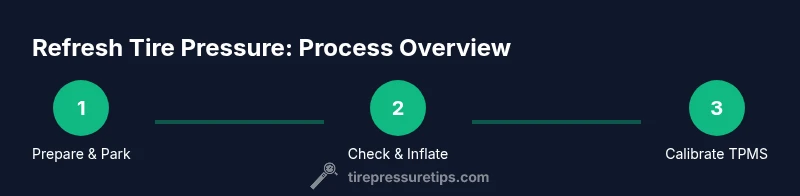
To refresh tire pressure on a Tesla, first confirm all four tires are cold and note their current readings. Inflate each tire to the vehicle’s door jamb recommended PSI, then use the car’s TPMS settings to calibrate the system. Drive 10–15 minutes above 30 mph to complete calibration.
Why Refreshing Tire Pressure Matters for Tesla Owners
Maintaining correct tire pressure is essential for any vehicle, but it carries special importance for electric vehicles like Teslas. Proper tire pressure helps maximize range, preserve tire life, and ensure predictable handling. When pressures drift, accelerating wear can occur on the inside or outside edges of the tires, and energy efficiency can suffer as rolling resistance increases. For Tesla owners, who rely on precise performance and efficiency, a regular check becomes part of responsible maintenance. According to Tire Pressure Tips, consistent tire pressure checks support safer driving and better overall vehicle reliability. Keeping readings accurate helps the TPMS deliver trustworthy alerts, avoiding nuisance warnings and ensuring the tires perform as intended in varied driving conditions. This guidance aligns with common-sense maintenance habits that fit into a typical monthly check or before long trips.
In addition to safety, maintaining proper psi supports consistent ride quality and even tread wear. Temperature swings can cause pressure to rise or fall, so a cold-reading approach gives the most accurate baseline. By treating tire pressure as a routine maintenance item, Tesla drivers protect their investment, maintain predictable handling, and optimize energy efficiency in 2026 and beyond.
How to Find Your Tesla's Recommended Tire Pressure
Tesla vehicles carry model-specific tire pressure guidance that is usually printed on a door jamb placard and documented in the owner’s manual. The exact PSI values depend on the model, tire size, and load, so it’s important to use the placard as the primary reference. When you compare the placard to the tire sidewall maximums, remember that the sidewall maximum is not the target pressure you should aim for while driving. Always use the recommended cold PSI values for your vehicle and tire combination to ensure safe handling, optimal grip, and balanced wear. If you swap tires or change wheel sizes, revisit the placard values to confirm you’re inflating to the correct targets. Staying aligned with these model-specific figures supports TPMS accuracy and consistent performance across the fleet.
For a Tesla owner, the most reliable source of the correct pressure is the placard on the driver’s door frame or the official doc that comes with the vehicle. If you’re unsure about your exact model’s values, consult your owner’s manual or Tesla’s official support resources. Remember that differences between Model S, Model 3, Model X, and Model Y can be subtle but meaningful for optimal performance. The goal is to start from the recommended cold psi and then monitor for any drifting as seasons or driving style change.
This attention to model-specific numbers ties into practical, everyday decisions—such as before a road trip, after tire changes, or when temperatures swing dramatically. By basing inflation on the placard rather than memory or habit, you minimize the risk of underinflation or overinflation that could impact handling and energy efficiency.
Tools and Preparations You’ll Need
Before you start, assemble a small toolkit of dependable equipment and verify you have access to the right sources for the exact values. A digital tire pressure gauge with a fine readout helps you achieve precise measurements, especially if you’re inflating to a tight tolerance. An air compressor or access to a station with a regulated air source is essential for safe, controlled inflation. Your Tesla’s owner’s manual or the driver’s door placard should be your reference for the recommended PSI values. Optional items can simplify the process, such as leak-detection solution to identify slow leaks at valve stems or tire beads, and wheel chocks to stabilize the vehicle during inflation.
Tools & Materials
- Digital tire pressure gauge(Reads in 0.1 psi increments; ensure it covers the 0-60 psi range commonly used for passenger tires)
- Air compressor or access to regulated air pressure(Regulated supply; maintain steady pressure while inflating to target psi)
- Owner’s manual or door placard with recommended PSI(Model-specific values; check Model S/X/3/Y differences)
- Wheel chocks(Stabilize vehicle while inflating if you’re on an incline)
- Leak-detection soap or spray(Check for slow leaks at valve stems or bead seats)
Steps
Estimated time: 20-25 minutes
- 1
Prepare and Park Safely
Park on a flat, level surface and engage the parking brake. Turn off the vehicle and let the tires cool for at least 15 minutes if you’ve just driven, so you’re measuring cold PSI. This baseline ensures accuracy and prevents overinflation during the process.
Tip: Use a level surface and engage the parking brake for safety. - 2
Check Current Tire Pressures
Use a reliable gauge to read each tire’s cold PSI and record the values. Compare them to the door placard values to identify which tires drift from the recommended range. Recording readings helps you track changes over time.
Tip: Write readings in a notebook or notes app for quick reference. - 3
Inflate to Recommended PSI
Using the regulator on your compressor, inflate each tire to the recommended cold PSI shown on the placard. Do not rely on a prior inflating set or the car’s own readings if they’ve drifted; aim for the exact target to ensure uniform performance.
Tip: Inflate gradually and check pressure after each inflation. - 4
Recheck and Adjust
Re-measure all four tires after inflation to confirm they hold the target pressures. If any tire is low, top it up a little more and recheck. Uniform pressures across all four tires support balanced handling.
Tip: Aim for equal readings within 1–2 psi of each other. - 5
Calibrate the TPMS
Enter the Tesla Settings menu and locate the Tire Pressure or TPMS calibration option. Initiate calibration if the vehicle supports it, or note that some models recalibrate automatically after inflation and safe driving. Follow the on-screen prompts.
Tip: If calibration isn’t obvious, check the manual or Tesla support site. - 6
Test Drive and Verify
Drive 10–15 minutes at highway speeds to allow the TPMS to recalibrate. Recheck all four pressures after the drive to confirm they still align with the target values.
Tip: If readings drift, repeat inflation and calibration steps.
Frequently Asked Questions
How do I know if my Tesla tires need air?
Tesla's TPMS will alert you to low pressures, but always confirm with a cold PSI measurement against the placard values.
If the TPMS warns you, check the tires and inflate to the recommended cold PSI first.
Can I refresh TPMS without a service visit?
Yes. You can calibrate the TPMS via the Settings menu and complete recalibration with a short drive.
You can recalibrate TPMS using the car settings and a brief drive.
Where can I find the recommended tire pressure for my Tesla model?
Check the door placard on the driver’s door jamb or refer to the owner’s manual for model-specific PSI values.
Look at the placard on the driver's door frame; the manual confirms the numbers.
How often should I check tire pressure?
Check monthly and before long trips; temperature changes can affect PSI.
Check at least once a month and before trips.
Does temperature affect tire pressure?
Yes. Colder temperatures lower PSI; warmer temperatures raise PSI. Regular checks help catch drift.
Temperature changes affect tire pressure; inspect regularly.
What if TPMS readings stay wrong after calibration?
Recheck tires for leaks, ensure proper seating, and consult a professional if drift persists.
If drift continues, recheck and seek professional help.
Watch Video
What to Remember
- Inflate to the placard values before calibration
- Use TPMS calibration and drive to complete recalibration
- Recheck all tires after calibration
- Keep records of readings for ongoing maintenance