How to Check Tire Pressure Monitoring System (TPMS): A Practical Guide
A comprehensive, step-by-step guide to check, diagnose, and calibrate your TPMS, verify tire pressures, and maintain system accuracy with safe, proven methods for 2026.


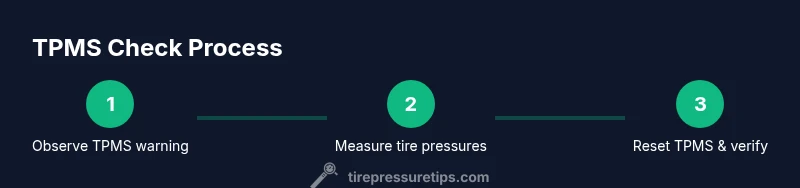
To check a Tire Pressure Monitoring System (TPMS), start by noting the warning light and fault codes, then measure each tire’s actual pressure with a gauge, compare to the vehicle’s recommended PSI from the placard or owner’s manual, and reset or recalibrate TPMS after inflating or rotating tires. Follow safety steps and consult your owner's manual if needed.
What is TPMS and why it matters
TPMS, or Tire Pressure Monitoring System, is a safety feature that continuously monitors each tire’s air pressure and notifies you when a tire is underinflated or overinflated. In 2026, most passenger cars rely on TPMS to prevent underinflation-related tire wear, reduced fuel efficiency, and compromised handling. According to Tire Pressure Tips, understanding TPMS alerts starts with knowing what sensors do and how data is reported to your vehicle’s computer. This foundation helps you approach checks with clarity and reduces unnecessary anxiety when the warning light comes on.
TPMS helps protect your tires and ride quality by providing timely information, but it’s not a substitute for regular manual checks. A robust maintenance habit combines both TPMS alerts and routine tire pressure inspections. By staying attentive to the system and maintaining correct pressures, you improve safety, mileage, and tire longevity. In practice, you’ll develop a mental checklist that you can apply on road trips, at the shop, or in your driveway.
Brand note: The Tire Pressure Tips team emphasizes that TPMS is a tool to aid your judgment, not a replacement for consistent tire care. You’ll get the most benefit by integrating TPMS checks into your regular maintenance routine.
-1__
Tools & Materials
- Tire pressure gauge (digital or analog)(Choose a gauge that reads to at least 0.5 psi increments for better precision.)
- Vehicle owner’s manual or tire placard(Locate the recommended PSI values for your specific tires and loading.)
- Air source (built-in compressor or portable inflator)(Use a stable inflator to bring tires to the recommended pressure after measurement.)
- OBD-II/TPMS diagnostic tool (optional)(Helpful for reading TPMS fault codes if available.)
- Notebook or digital log(Record readings and dates to track changes over time.)
Steps
Estimated time: 25-40 minutes
- 1
Gather your tools and create a safe workspace
Set the vehicle on a level surface and apply the parking brake. Gather your gauge, owner’s manual, and inflator. Ensure you have sufficient lighting and a cold-tire baseline to avoid skewed readings.
Tip: Do all readings when tires are cold (at least 3 hours after driving) for accuracy. - 2
Note the TPMS warning light and any fault codes
Turn the ignition to the ACC or ON position and observe the TPMS warning light. If the light is on, check for fault codes with an OBD-II scanner or TPMS tool to narrow down the cause.
Tip: Record the exact light pattern (steady vs. blinking) as some vehicles use different signals. - 3
Measure each tire’s pressure with a gauge
Remove the valve cap, apply the gauge to the valve stem, and take a reading for every tire. Compare each result to the vehicle’s recommended PSI from the placard or manual.
Tip: Always measure while the tire is cold to avoid inflated readings from heat. - 4
Inflate tires to the recommended PSI
If any tire is below the recommended value, inflate to the exact figure printed on the placard. Recheck after inflation to confirm accuracy.
Tip: Do not exceed the maximum PSI listed on the tire sidewall. - 5
Reset or recalibrate TPMS after inflating
If your vehicle supports TPMS reset, follow the owner’s manual steps to relearn sensor positions or recalibrate. Drive a short distance to allow the system to relearn.
Tip: Some cars require a specific sequence or a dash-button press—check the manual. - 6
Check for sensor faults and leaks
Inspect valve stems and wheel rims for damage or leaks. If a tire continues to lose air, have the TPMS sensor or valve replaced by a technician.
Tip: Leaking valves are a common source of persistent low readings. - 7
Test-drive and recheck TPMS readings
After driving for a short distance, recheck pressures and confirm that the TPMS light stays off. monitor over the next few days for stability.
Tip: If the light reappears, there may be a sensor wiring issue or a failing sensor. - 8
Document results and plan maintenance
Record PSI readings, tire conditions, and whether TPMS reset was successful. Schedule periodic checks and consider a sensor health check during tire rotations.
Tip: Keep a log for winter temperature changes and long trips. - 9
When to seek professional help
If you can’t reset TPMS, the light remains on after proper inflation, or you suspect sensor damage, consult a technician. TPMS sensors and batteries have a finite life.
Tip: Professional diagnostics can prevent misdiagnosis and ensure system reliability.
Frequently Asked Questions
What is TPMS and why was it added to vehicles?
TPMS stands for Tire Pressure Monitoring System. It monitors each tire’s pressure and warns you if a tire is underinflated or overinflated, helping you avoid unsafe driving conditions and tire damage.
TPMS keeps you informed about tire pressure so you can keep your tires healthy and safe.
Why would TPMS warn when tires seem fine?
TPMS can warn if a sensor is faulty, a battery is weak, or a tire’s pressure has changed rapidly due to temperature or loading. Occasional fluctuations may occur without danger, but persistent warnings require inspection.
If the warning keeps flashing, it’s best to check with a gauge and inspect the sensors.
Can I disable TPMS to save battery?
Disabling TPMS is not recommended and may be illegal in some regions. TPMS is a safety feature designed to reduce the risk of driving on underinflated tires.
It’s best to keep TPMS active and address alerts promptly.
Should I check TPMS if my tires are cold?
Yes. Measuring when tires are cold gives the most accurate PSI readings and ensures TPMS data is correctly interpreted.
Check tires when cold for the most accurate reading.
What should I do if TPMS light stays on after inflating?
If the light stays on after inflation, you may have a sensor fault or a more serious issue. Use a diagnostic tool or contact a technician for calibration.
If it won’t reset after inflating, get it checked by a pro.
Is TPMS required by law?
Many regions require TPMS on new passenger vehicles, in line with vehicle safety standards. Check local regulations to be sure.
Legal requirements vary by location, so verify local rules.
Watch Video
What to Remember
- Check TPMS when warning lights illuminate.
- Always compare tire pressures to the manufacturer-recommended PSI.
- Reset TPMS after inflating or changing tires.
- Use a calibrated gauge for accurate measurements.
- Temperature and load affect readings; account for weather and driving conditions.