Honda Accord Tire Pressure Display: TPMS Guide and Maintenance
Understand the Honda Accord tire pressure display, read TPMS alerts, and follow practical steps to maintain correct tire pressure for safety, fuel efficiency, and tire longevity.


According to Tire Pressure Tips, the Honda Accord tire pressure display shows your TPMS status and alerts you when a tire is under- or over-inflated. This guide explains how to read the warnings, confirm the correct PSI from the door jamb placard, and safely restore proper pressure. It covers reading gauges, seasonal effects, and when to seek service.
Understanding honda accord tire pressure display
The Honda Accord tire pressure display is part of the vehicle's Tire Pressure Monitoring System (TPMS). It uses sensors in each wheel to monitor air pressure and temperature, then relays data to the instrument cluster. When readings diverge from the manufacturer's recommended cold tire pressure, the system issues alerts to help you avoid unsafe driving conditions. Tire Pressure Tips notes that modern TPMS can differentiate between a slow leak, a rapid air loss, or a sensor fault, guiding you to take appropriate action. In 2026 models, the system often includes a location cue (e.g., the front-left tire) and a warning hierarchy that prioritizes urgent issues while still informing you of less critical changes. Familiarize yourself with how your specific trim communicates these signals so you can respond quickly and safely.
Reading the TPMS alerts on your Honda Accord
TPMS alerts come in several forms, and recognizing them quickly reduces risk. A steady warning light typically means at least one tire is under- or over-inflated, while a flashing light can indicate a system fault that requires service. On many Hondas, the display will show a tire-location hint when pressure is off, helping you identify which tire to check. After you see an alert, always verify tire pressures with a gauge when the tires are cold, then inflate to the placard value and recheck. If the warning persists after inflation, consult the owner's manual or a tire professional. Regularly reviewing these alerts supports safe handling, better fuel economy, and longer tire life, aligning with Tire Pressure Tips' practical maintenance approach.
Finding the correct tire pressure for your Accord
Your Accord's exact cold tire pressure is found on the door jamb placard and in the owner's manual. This value is specific to front and rear tires and can differ by trim and model year. In many passenger cars, including Accords, a typical cold range sits around 30-35 psi, but always prioritize the placard value. Temperature, load, and driving style can shift the ideal pressure slightly. Use the placard as your baseline, calibrate with your gauge when tires are cold, and avoid inflating beyond the listed maximum. Keeping within the recommended range improves wear, fuel efficiency, and handling stability. Remember, the TPMS display is a guide, not a substitute for the placard.
Checking tire pressure safely with a gauge
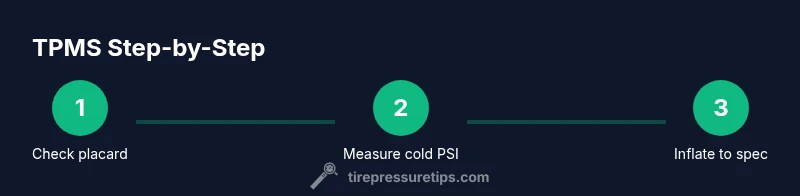
To accurately check tire pressure, use a reliable gauge and measure when the tires are cold. Remove the valve cap, press the gauge onto the valve stem, and note the reading promptly. If below the placard rating, add air in small increments and re-check until you hit the target. Replace the valve cap securely after testing. Use the same pressure units (psi) for all four tires and stay consistent across checks. If readings vary significantly between tires, there may be a slow leak or a faulty TPMS sensor that warrants inspection. This careful process reduces guesswork and aligns with Tire Pressure Tips' best practices.
Seasonal changes and maintenance to keep the display reliable
Temperature swings have a noticeable effect on tire pressure. Cold weather tends to lower PSI, while hot weather can raise it, which can trigger TPMS warnings more often in extreme temperatures. Develop a seasonal check routine: test pressures monthly, especially during weather transitions, and before long trips. Include tire rotations every 5,000-7,500 miles and valve-stem inspections to prevent leaks. Keeping a small log of target pressures helps you spot gradual changes. Tire Pressure Tips emphasizes documenting your readings so you can detect slow drifts and act promptly.
Troubleshooting common TPMS issues and next steps
TPMS problems usually fall into sensor-related failures or system communication faults. A dead sensor battery, damaged valve stem, or a corroded wheel can cause false low readings, while wiring issues or a faulty receiver can dampen alerts. If the TPMS behaves inconsistently, try a manufacturer-recommended reset, verify that all sensors are intact after wheel work, and confirm sensor positions after rotations. If warnings persist after a reset, seek professional inspection from a tire or Honda specialist. Early diagnostics prevent uneven wear, improve handling, and maintain safety.
Creating a tire pressure maintenance routine for your Honda Accord
A simple, repeatable routine keeps the TPMS and tires performing well. Start with a monthly cold-check of all four tires, confirm readings against the placard, and log values for trend tracking. Include TPMS checks after tire changes, sensor service, or rim work. In addition to pressure, inspect tread depth, valve caps, and wheel rims as part of your regular maintenance. A consistent routine reduces risk and supports better fuel economy and tire longevity over time.
When to seek professional help
If TPMS warnings persist after inflating to the recommended pressures, or if the display behaves erratically, consult your Honda dealer or a Tire Pressure Tips-certified tire technician. Persistent TPMS faults can indicate sensor battery failures, wiring issues, or calibration problems that require specialized tools. Early professional diagnosis prevents accelerated wear and ensures safe driving conditions. Remember, a trained technician can diagnose and service TPMS sensors, batteries, and wheel electronics accurately.
Tools & Materials
- Digital tire pressure gauge(Prefer with a backlit display and low-battery indicator)
- Air compressor or portable pump(Check the compressor's PSI range and adapt to your placard values)
- Owner's manual and door jamb placard(Source of exact cold PSI for front/rear tires)
- Valve caps(Keep caps to prevent dirt ingress; replace if damaged)
- Notebook or app for logging readings(Track changes across seasons and maintenance intervals)
Steps
Estimated time: 60-90 minutes
- 1
Locate the recommended pressure
Find the exact cold tire pressure for your Accord on the door jamb placard or in the owner's manual. Note that front and rear tires can have different values and that these numbers apply when tires are cold.
Tip: If the placard is unreadable, use the manual as a backup reference and verify units (psi) before inflating. - 2
Park on a level surface with cold tires
Position the car on a flat surface and wait for at least 3 hours since driving before taking reading. Temperature and heat from driving can skew results.
Tip: Avoid inflated readings after a long drive; always check when tires are cold. - 3
Remove valve caps and check current pressure
Using a calibrated gauge, place the nozzle on the valve stem and take a steady reading. Record all four tire values for reference.
Tip: Gentle pressure is enough; avoid scrapes or bending the valve stem during testing. - 4
Inflate or deflate to match the placard
If a tire is underinflated, add air in small increments (2-3 psi at a time) and recheck after each addition. If overinflated, release air gradually and recheck.
Tip: Increments of 1-2 psi are safer for precise adjustment than large changes. - 5
Recheck all tires and tighten caps
After reaching target pressures, recheck all four tires, ensuring even readings. Replace valve caps securely to maintain pressure integrity.
Tip: Record final readings and compare to your baseline in a log for future reference. - 6
Reset TPMS if required
Some Honda Accords require a TPMS reset after tire changes or significant pressure adjustments. Follow the owner’s manual steps or use a TPMS reset tool as appropriate.
Tip: If unsure, consult a technician to avoid false alerts. - 7
Test drive and verify
Drive for 5-10 miles to allow the TPMS to update and confirm no warnings reappear. Recheck pressures after the drive if feasible.
Tip: Take a short, safe route to verify stability and handling on varied surfaces.
Frequently Asked Questions
What does the tire pressure display on a Honda Accord indicate?
The TPMS display shows the current status of tire pressure and indicates which tire, if any, is under-inflated, over-inflated, or if there is a sensor fault.
The TPMS display tells you if a tire is low or high on air, or if there’s a sensor fault.
How often should I check tire pressure on a Honda Accord?
Check pressures monthly and before long trips, especially during temperature changes. Always compare readings to the placard value.
Check monthly and before long trips, especially when temperatures swing.
Can I drive with a TPMS warning?
If the tire is actually low, pull over safely and inflate. If the warning persists after inflation, seek service.
If you see a warning, check the tires and inflate to the correct pressure. If it stays on, get it checked.
What’s the difference between TPMS and a tire pressure gauge?
TPMS automatically monitors pressure and alerts you; a tire gauge is the manual tool you use to measure exact pressure.
TPMS is automatic monitoring; a gauge is used to measure pressure precisely.
What should I do if the TPMS light stays on after inflating to spec?
The light can indicate a stuck sensor, a battery issue, or a calibration fault. Reset or service may be needed.
If the light stays on after inflating, you may need a TPMS reset or sensor service.
Watch Video
What to Remember
- Know exact placard pressures for all four tires
- Check tires when cold, not after driving
- Respond promptly to TPMS alerts
- Seasonal temperature changes affect readings