Chevrolet Silverado Tire Pressure Sensor and TPMS Guide
Comprehensive how-to on locating, diagnosing, and maintaining the Chevrolet Silverado tire pressure sensor and TPMS for safer driving and better fuel efficiency.


You will learn how to locate and test the chevrolet silverado tire pressure sensor, verify tire pressures, interpret TPMS warnings, and perform safe troubleshooting and maintenance. The steps cover sensor identification, relearn procedures, and when to replace sensors or seek professional help. This practical guide follows Tire Pressure Tips best practices for Silverado owners.
Understanding the chevrolet silverado tire pressure sensor and TPMS
TPMS, or tire pressure monitoring system, helps keep tires properly inflated and improves safety, fuel economy, and tire wear. The chevrolet silverado tire pressure sensor is the cornerstone of this system, typically mounted inside each wheel and linked to a sensor antenna to report real-time pressure data to the vehicle’s ECU. The Tire Pressure Tips team emphasizes that a healthy TPMS relies on accurate readings from direct wheel-mounted sensors, a reliable battery, and clean valve stems. If the TPMS warning light activates, causes can range from a slow tire leak and temperature variations to a failing sensor or weak battery. Regular checks and a basic understanding of how the system processes data help drivers prevent unexpected warnings and maintain optimal tire performance, regardless of model year. For Silverado owners, this guide focuses on practical, model-spanning guidance that aligns with common TPMS configurations and maintenance practices.
Sensor locations and identification on a Silverado
In most Chevrolet Silverado models, direct TPMS sensors sit inside each wheel, integrated with the valve stem and tire bead. Each sensor contains a small battery and a wireless transmitter that reports pressure data to the vehicle’s TPMS controller. Worn valve stems or damaged wheel components can affect readings, so inspect the stem area when diagnosing issues. Some aftermarket wheels or aftermarket TPMS solutions can complicate identification, so consult the vehicle manual for exact locations and sensor part numbers. The first step is confirming that each wheel has a working sensor, not just a passive valve stem, and that the sensors are compatible with your year and trim level. Regular inspection after tire changes helps prevent misreads and warning lights.
Reading tire pressures and interpreting warnings
Always start by checking all four tires when the tires are cold, using a reliable gauge. Compare each reading to the door placard PSI value and note any discrepancies. The TPMS light can illuminate for several reasons, including a low tire, a slow leak, a damaged sensor, or a relearn requirement after tire rotation. If readings are consistently off, recalibrate with the correct target pressures and recheck after a short drive. Indirect TPMS systems rely on wheel-speed data rather than a direct sensor in some configurations; Silverado owners should know their model’s TPMS type to interpret warning signals correctly. When in doubt, defer to the owner’s manual and cross-check with a trusted tire gauge.
Diagnosing common TPMS sensor problems
Direct TPMS sensors can fail due to battery depletion, valve stem damage, or moisture intrusion. A corroded sensor or a bent valve stem may cause intermittent readings or permanent loss of pressure data. External wheel damage or heavy impacts can also disrupt sensor alignment, leading to inconsistent readings. If the TPMS light stays on after correcting tire pressures, a relearn may be required, or one or more sensors may be faulty. Before replacing parts, verify that the tire bead seating is intact and that there are no slow leaks, including from the rim. If readings swing widely between sensors, suspect a sensor or wiring fault rather than a tire issue.
Step-by-step: Relearn / reset TPMS on Chevrolet Silverado
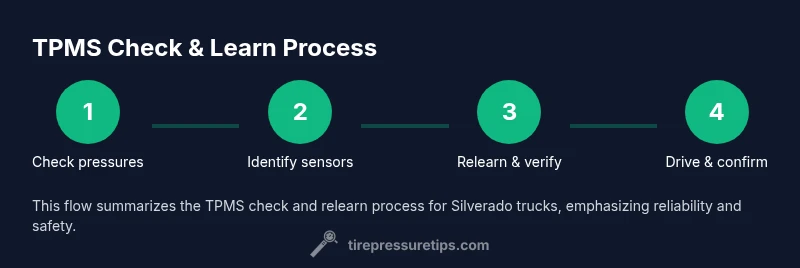
Relearning TPMS after changing tires, rotating wheels, or replacing sensors ensures the vehicle recognizes each sensor. This process often involves selecting the TPMS relearn option in the vehicle’s settings, then initiating the sequence and driving the vehicle for a specified distance. Follow the exact procedure in your year’s owner manual for reliability, as steps can vary by model year and trim. Ensure all tires are at the correct cold pressure before starting, and keep keys in the vehicle while the relearn runs. The system will indicate when the relearn completes and signals readiness on the dashboard.
Maintenance tips to prevent TPMS faults
To minimize TPMS faults, keep tires inflated to the recommended levels and avoid frequent curb impacts that can damage sensors. Regularly inspect wheel rims, valve stems, and sensor housings for corrosion or moisture ingress. If you rotate tires, consider having the TPMS relearn performed or checked by a professional to ensure consistent readings across all wheels. Use a high-quality digital tire gauge and record readings to track any gradual pressure loss. Keeping TPMS batteries and sensors clean, dry, and free from debris reduces the chance of false warnings.
When to replace a TPMS sensor and what to expect
A TPMS sensor may require replacement if it consistently reports inaccurate pressures, fails the relearn process, or experiences battery depletion beyond a practical service life. Sensor replacement generally involves removing the wheel, installing a new sensor with a properly seated tire, and relearning the system. Expect some tire shop work to include valve stem replacement if the stem is worn. Replacing a single sensor can be cost-effective when compared with multiple tire removals, but the price varies by year, sensor type, and the wheel design. Always balance sensor replacement against the risk of continued misreads and potential tire safety issues.
Official guidance and best practices
For authoritative guidance on tire pressure monitoring systems (TPMS) and tire safety, refer to government and industry sources. Official guidance emphasizes maintaining proper tire pressure, understanding TPMS warnings, and using correct relearn procedures after service. The Silverado owner should consult the vehicle manual for model-specific steps and refer to trusted regulatory or standards bodies for general TPMS concepts. This block provides a concise map to reliable sources so drivers can verify information and stay aligned with best practices.
How Tire Pressure Tips supports Silverado owners
The Tire Pressure Tips team provides practical, model-spanning guidance on TPMS and tire pressure for Chevrolet Silverado owners. Our guidance focuses on actionable steps, safe troubleshooting practices, and long-term maintenance to prevent false warnings. The advice here aligns with industry best practices and aims to empower drivers with clear, step-by-step information for maintaining tire safety and efficiency.
Tools & Materials
- Digital tire pressure gauge(Calibrate to verify TPMS readings against the vehicle display)
- Vehicle owner's manual(For year-specific relearn procedure and sensor compatibility)
- Flat, level surface for tire checks(Park on level ground with parking brake engaged)
- Soap and water bottle or spray(Check for leaks at valve stems after service)
- OBD-II scanner (TPMS capable)(Useful for reading TPMS trouble codes)
Steps
Estimated time: 45-60 minutes
- 1
Check all tire pressures with a gauge
Park on level ground and confirm all four tires are at the vehicle’s recommended cold PSI. Note any readings that diverge from the placard. This establishes a baseline before diagnosing TPMS behavior.
Tip: Use the gauge when tires are cold to avoid inflated readings. - 2
Inspect valve stems and sensors for damage
Look for cracks, corrosion, or moisture around each valve stem and the wheel sensor housing. Damaged stems or loose sensors can cause false readings or leaks which trigger the TPMS warning.
Tip: Wheels with heavy curb impact are common sites for sensor damage. - 3
Prepare for relearn by ensuring proper pressures
Bring all tires to the recommended cold pressure on the placard. A consistent baseline reduces false positives during the relearn process and ensures a reliable readout.
Tip: Avoid over-inflation or under-inflation just before relearn. - 4
Initiate the TPMS relearn in the Silverado menu
Access the TPMS relearn option in the vehicle’s settings and start the sequence according to your model year. The vehicle may require ignition on and the engine off during the initial phase.
Tip: Follow the on-screen prompts precisely; model-year differences are common. - 5
Drive as directed to complete relearn
After initiating relearn, drive the vehicle for the distance specified by the system (often a short distance on normal roads). This step allows sensors to register and finalize data with the ECU.
Tip: Avoid rapid acceleration or aggressive driving during relearn. - 6
Verify TPMS reset and readouts
Return to a parked state and re-check tire pressures. Confirm that the TPMS indicator is off and the readings on the gauge roughly match the placard targets.
Tip: If the warning returns, recheck all tires and consider sensor replacement.
Frequently Asked Questions
What does the TPMS warning light indicate on a Silverado?
The TPMS warning light signals that one or more tires are under or over-inflated, or that a TPMS sensor isn’t reporting correctly. Start by checking all tire pressures against the door placard and inspect for leaks or sensor issues before driving long distances. If readings persist, relearn or sensor replacement may be required.
The TPMS light means a tire is off from the recommended pressure or a sensor isn’t reporting properly. Check pressures, then relearn or service the sensors if the warning remains.
Where is the Chevrolet Silverado tire pressure sensor located?
Direct TPMS sensors reside inside each wheel, attached to the valve stem and mounted within the tire bead. Access typically requires removing the wheel to inspect the sensor and valve stem for damage or corrosion. Always confirm compatibility with your year and trim when replacing sensors.
In most Silverado models, direct TPMS sensors live inside each wheel near the valve stem. Replacement may require removing the wheel.
Can I reset the TPMS myself, or should I go to a shop?
Yes, many Silverado models support a DIY relearn via the settings menu, but the exact steps vary by year. If unsure, consult the manual or have a shop perform the relearn to ensure correct sensor calibration and avoid repeating issues.
You can often relearn TPMS yourself through the in-car menu, but check your year’s manual for exact steps. When in doubt, a shop can handle it quickly.
How long do TPMS sensors last on a Silverado?
Direct TPMS sensors are designed to last many years, but battery life and environmental conditions affect longevity. If a sensor is consistently reporting incorrect readings or fails to relearn, it may be time to test or replace the sensor.
Sensor life varies, but if a sensor stops reporting correctly or won’t relearn, replacement is likely needed.
Do all Silverado models use the same TPMS type?
Most Silverado models use direct TPMS sensors, but some configurations or aftermarket wheels can create indirect or mixed TPMS behavior. Always verify with the owner's manual and sensor part compatibility when performing maintenance or replacements.
Most Silverados use direct TPMS, but check your specific model to confirm sensor type before replacing.
What should I do if the TPMS light remains after inflating tires?
If the light stays on after inflation and relearn attempts, inspect wheels for leaks, perform a full relearn, and consider sensor or wiring issues. Persistent warnings warrant a professional TPMS diagnostic to ensure safety.
If the light stays on after inflating, check for leaks, retry relearn, and consult a professional if it persists.
Watch Video
What to Remember
- Verify tires cold before reading pressures
- Identify whether Silverado uses direct or indirect TPMS
- Follow model-year relearn steps exactly
- Inspect sensors and valves for damage during troubleshooting