Tire Pressure Gauge for Mountain Bike: A Practical How-To Guide
Learn how to choose, use, and maintain a tire pressure gauge for mountain bikes to improve grip, traction, and puncture resistance on rugged trails.


This guide helps you select, use, and calibrate a tire pressure gauge for mountain biking. You’ll learn gauge types, how to read readings accurately, and how to tailor pressures to terrain, tire width, and rider weight so you ride with control and confidence.
Why tire pressure matters for mountain biking
Tire pressure is a foundational setting that directly affects grip, control, comfort, and puncture resistance on mountain trails. The right PSI lets the tire deform enough to grip uneven surfaces while the sidewalls stay protected from rocks and roots. Underinflation can cause sluggish handling and pinch flats; overinflation can reduce traction and increase harshness through rough sections. For tubeless setups, riders can often run slightly lower pressures for enhanced grip without sacrificing pinch resistance. According to Tire Pressure Tips, dialing in the correct tire pressure is one of the quickest ways to transform ride feel and confidence on technical terrain. When pressures are off, corners feel unpredictable, steering feedback becomes inconsistent, and climbing traction can suffer. The goal is to establish a reliable baseline and then tune by terrain, tire width, and rider weight for optimal performance on a given ride.
Types of tire pressure gauges for mountain bikes
Gauges come in several forms, each with advantages for MTB use. Analog dial gauges show a rotating needle on a clear face, while digital gauges display a numeric PSI or bar value on an LCD. Dial gauges are often rugged and fast to read in sunlight, whereas digital gauges excel in low light and can offer higher precision with a quick glance. For mountain biking, a gauge with a broad, easy-to-read scale (0–60 psi or 0–4 bar) is practical, especially when alternating between tubed and tubeless tires. Many riders also appreciate gauges with dual units (psi and bar) and a built-in bleed button for fine adjustments. If you frequently ride at night or in damp conditions, look for a gauge with a backlit display or high-contrast dial. Finally, ensure a snug, leak-free attachment to the valve stem—loose fittings yield inconsistent readings and wasted air. The best gauge feels sturdy in hand and remains readable in sun and shade alike.
How to choose the right gauge for MTB
Accuracy matters on rugged trails because a few PSI can noticeably change grip and handling. Look for an accuracy specification around ±1–2 psi to ensure reliable readings while you fine-tune pressure. A wide measurement range is helpful if you switch between narrow and wide tires or tubed versus tubeless setups. Durability is essential: a rugged housing, protective cap, and a seal against dust and moisture help keep readings stable after drops or splashy rides. Ergonomics matter too—choose a gauge with a comfortable grip and a secure chuck that stays on the valve. For MTB use, a model with a bleed button lets you shave off air in small increments without removing the gauge. Digital gauges require battery checks; verify battery life and availability of spare batteries. If possible, compare a few models in-store to gauge readability in sunlight and to assess how quickly each one reads a target pressure. A reliable gauge reduces guesswork and helps you maintain consistent performance across rides.
Reading and interpreting gauge readings
Begin with a cold tire and a calibrated gauge. Remove the valve cap, press the gauge onto the valve stem firmly, and read the pressure with the gauge seated squarely to prevent air leakage. Record the current reading and compare it to your target range based on terrain, tire width, and rider weight. If you overshoot, use the gauge’s bleed function or release air gradually and recheck in small increments. If you’re under the target, add air in small increments, then recheck. Keep in mind that tubeless tires may run slightly lower pressures than tubed tires for similar terrain due to their sealing properties. After making adjustments, recheck once more after a short ride to gauge how heat affects pressure. If readings diverge noticeably across gauges, the issue may be calibration drift or a faulty valve core; inspect and replace components as needed. Consistency matters, so maintain a simple log of baseline pressures for different trails and seasons.
Setting MTB tire pressure by terrain and tire width
Terrain and tire width dictate how soft or firm you want a tire to feel. Technical, loamy, or rocky sections usually benefit from lower pressures to maximize grip and allow the tire to deflect around obstacles. Firmer fire roads or smooth descents call for higher pressures to reduce squirm and improve stability. Wider tires maintain grip at slightly lower pressures than narrower tires because of larger contact patches, while tubeless setups typically tolerate lower pressures than tubed tires thanks to self-sealing behavior. Start with an evidence-based baseline based on tire width and rider weight, then fine-tune in 2–3 psi steps as you gain experience. For front tires, you might run slightly lower pressures to improve steering feel and traction, while the rear tire often stays a touch firmer for predictable climbing. Always read tires’ sidewall recommendations and confirm cold readings before you ride; check again after several miles to confirm the pressure remains stable as you heat the tire.
Calibrating and maintaining your gauge
Gauge accuracy can drift over time, especially with frequent field use. For analog gauges, periodically compare readings against a known reference or a trusted shop gauge. Digital gauges benefit from fresh batteries; replace batteries as recommended and recheck accuracy against a reference after battery changes. Protect gauges from dirt, moisture, and extreme temperatures; clean the connection at the valve stem and inspect seals regularly. Store gauges in a protective case away from direct sun and heat exposure to prevent material degradation. If your gauge consistently reads low or high compared with another gauge, retire it and replace it. When you upgrade tires or wheels, re-check baseline pressures and adjust your records accordingly. Regular calibration and careful storage extend the life of your gauge and keep readings reliable across seasons.
Common mistakes and troubleshooting
Common mistakes include trusting an inaccurate gauge, inflating by feel rather than measurement, and neglecting to account for cold readings. Rushing valve connections or failing to press the gauge straight onto the stem can yield false numbers. Valve cores, stems, or gauge fittings can leak and cause under- or over-reading; re-seat or replace as needed. If readings differ by more than 2 psi between gauges, suspect calibration drift and test with a second, known-good gauge. For tubeless setups, be aware that sealant and bead seating events can shift readings temporarily; re-check after seating or after seating repairs. Finally, don’t ignore safety: never exceed tire ratings and always work with the bike secured to prevent pinching fingers near the wheel. By avoiding these mistakes, you’ll maintain precise control over your bike’s feel on every trail.
Quick-start checklist to dial in wheel pressure
This concise checklist helps you establish and maintain the ideal MTB tire pressure for your setup:
- Check tire sidewall for a recommended PSI range and record it.
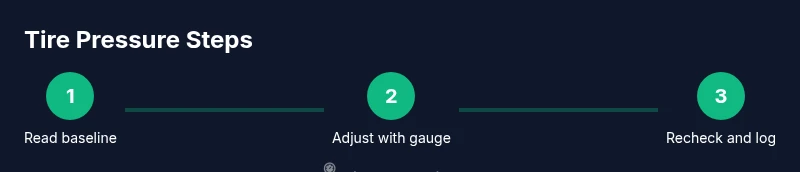
- Measure cold pressure with your chosen gauge and establish a baseline.
- Pick an initial target within the range based on terrain and tire width.
- Inflate or deflate in small steps, rechecking after each adjustment.
- Take a short ride and recheck after heat builds in the tire.
- Record the final pressures for your typical trails.
- Inspect valve cores and stems for wear; replace if needed.
- Store your gauge properly and carry a spare if possible. With consistent use, you’ll dial in pressures faster and ride with greater confidence.
Tools & Materials
- MTB-specific tire pressure gauge(Choose a gauge with 0–60 psi (0–4 bar) range and a large, easy-to-read display.)
- Floor pump or mini-pump with built-in gauge(Useful for on-trail top-ups; ensure it seals well on schrader/Presta valves.)
- Spare batteries or battery kit for digital gauge(Carry a spare if you rely on a digital model.)
- Valve core tool (optional)(Helpful for replacing a leaky core or reseating a valve.)
- Protective gauge case(Keeps device clean and reduces wear during transport.)
Steps
Estimated time: 15-25 minutes
- 1
Gather and inspect
Bring your gauge, pump, and a notebook. Inspect the gauge for cracks, a smooth dial or clear display, and intact seals. If you see visible damage, replace the device before using it on a ride.
Tip: Check the gauge against a known reference before the first ride of the day. - 2
Find the target pressure
Look at the tire sidewall for a recommended PSI range and note your terrain. Start with a baseline inside that range, adjusted for your weight and the tire width.
Tip: Record the baseline value in a notebook or app for future rides. - 3
Attach the gauge and read
Remove the valve cap, place the gauge squarely on the valve, and read the pressure. Ensure the connection is tight to avoid air loss during measurement.
Tip: If you hear air hiss when attaching, reseat and recheck. - 4
Adjust to target
Inflate or bleed air in small increments (1–2 psi) until you reach the target. Recheck after each adjustment to confirm the reading.
Tip: Use the bleed button if available on your gauge for fine control. - 5
Recheck after ride
After a few miles, the tire heats up and pressure can shift. Recheck to confirm stability and adjust if necessary.
Tip: Record post-ride numbers to account for heat and terrain in future sessions. - 6
Document and protect
Log your tire type, width, weight, terrain, and target pressures. Store the gauge in a protective case and keep spare parts handy.
Tip: Bring a small notebook or install a simple pressure-tracking app.
Frequently Asked Questions
What is the best type of gauge for mountain bikes?
Both analog dial and digital gauges work well for MTB use. Dial gauges are rugged and fast to read; digital gauges offer clear readouts and precise numbers. Choose based on readability, durability, and your preference.
A dial gauge is quick and durable, but a digital gauge is easy to read; pick the one you can use without overthinking on the trail.
Should I check tire pressure when tires are cold?
Yes. Checking cold provides a more accurate measurement because heat from riding raises PSI. Try to measure before you start your ride if possible.
Yes, check the pressure when the tires are cold for the most accurate reading.
Can tire pressure vary by tire width or tubed vs tubeless?
Yes. Wider tires and tubeless setups often run at slightly different pressures than narrow tires or tubed setups. Use a baseline for your specific tire and adjustment for terrain.
Pressure can change with tire width and whether you’re tubed or tubeless; adjust based on your setup.
How often should I replace a tire pressure gauge?
Replace a gauge if readings drift consistently compared with another trusted gauge or if the device shows physical wear. Regular calibration checks help decide when to retire a gauge.
If readings drift or the device shows wear, replace it and re-check with a backup gauge.
Do I need to recalibrate after changing tires?
Yes. Different tires and rims can change the baseline pressure. Recalculate and log a new baseline when you change tires or wheels.
Yes—change tires or wheels and update your baseline pressures.
Are digital gauges better than analog for MTB?
Digital gauges offer quick, easy-to-read numbers, while analog gauges are often tougher in wet or dirty conditions. Choose based on your riding environment and reading comfort.
Digital is easy to read, but analog can be more rugged in mud and rain.
Watch Video
What to Remember
- Know your baseline pressure by tire width and terrain.
- Choose a gauge with appropriate range and accuracy.
- Calibrate and maintain your gauge regularly.
- Document pressures to track changes over time.