How to Use a Bike Tire Pressure Gauge
Learn how to choose, use, and maintain a bike tire pressure gauge to keep tires inflated safely, improve performance, and extend tire life. Includes tips for Presta/Schrader valves, reading psi accurately, and avoiding common mistakes.


By the end of this guide, you’ll confidently use a bike tire pressure gauge to check and adjust your tire PSI, determine the correct target pressure for road, gravel, or mountain riding, and maintain gauge accuracy. You’ll learn about Presta and Schrader valves, how to attach readings without leaks, and practical inflation tips for safe, efficient riding. This quick answer sets your path to safer, faster cycling.
Why a Bike Tire Pressure Gauge Matters
Maintaining the correct tire pressure is one of the simplest, most effective ways to improve cycling safety, performance, and efficiency. A reliable bike tire pressure gauge lets you verify the precise PSI and avoid the guesswork that comes with using a tire gauge built into a pump or a rough feel of the tire. According to Tire Pressure Tips, consistent, accurate readings help riders optimize rolling resistance and reduce the risk of flats by maintaining the proper contact patch with the road or trail. By checking pressure regularly, you can respond to temperature changes, load variations, and terrain shifts that affect how the tire behaves. Whether you ride on smooth pavement, loose gravel, or aggressive dirt, a dedicated gauge brings objective numbers to your maintenance routine, making it easier to train, race, or just enjoy a safer ride.
Understanding Gauge Types
There are three common types of bike tire pressure gauges: analog dial gauges, digital readouts, and built-in gauges on pumps. Analog gauges are durable and don’t rely on batteries, but reading tiny needles can be tricky in poor lighting. Digital gauges offer crisp numbers, quick readings, and often a hold function to verify accuracy, but they require batteries and can be less rugged in rough conditions. Pump-integrated gauges are convenient but may trade off precision for convenience. When shopping, look for gauges with a clear scale, a wide, easy-to-read display, and compatibility with both Presta and Schrader valves. For the best results, calibrate your gauge against a known reference occasionally and keep spare batteries or backups on hand. The Tire Pressure Tips team recommends checking gauge accuracy at least once a month in moderate conditions.
Reading and Interpreting PSI
Tire pressures are given in psi (pounds per square inch) and can vary by tire width, rider weight, terrain, and temperature. Road tires typically run much higher psi than mountain bike tires, while gravel and hybrid tires often sit in between. A tire’s sidewall usually lists a recommended pressure range; use that as your baseline, then adjust within the range for conditions. Temperature affects readings: a cold morning will show lower psi than a warm afternoon, so consider ambient temperature when planning inflation. The goal is a consistent, comfortable contact patch that maintains traction without causing excessive wear. For most riders, aiming near the middle of the tire’s recommended range yields balanced handling and longevity, but always adapt to your bike, tire, and riding style. Tire Pressure Tips’ analysis highlights the value of consistent measurements to avoid over- or under-inflation.
How to Prepare Your Bike and Gauge
Before you measure, ensure the tire valve is clean and free of dust or debris that could create a poor seal. Check that the gauge is set to the correct unit (psi is standard in the U.S.; some riders prefer bar). If you’re using a pump with a gauge, confirm it reads accurately by comparing with a standalone gauge. Remove the valve cap to expose the valve, but keep the cap nearby to protect the valve stem after inflation. For Presta valves, ensure the valve core is tight but not overtightened; for Schrader valves, press the valve core gently if needed to clear any obstruction. Store gauges in a dry place and avoid exposing them to extreme temperatures. Through proper preparation, you’ll get stable, repeatable readings every time.
Using Gauges with Different Valve Types
Bike tires use Presta or Schrader valves, and you’ll need to match your gauge or use adapters accordingly. Presta valves are narrow and require a smaller valve head; Schrader valves are wider and resemble car tire valves. If your gauge or pump supports both types, you’re set. If not, a simple Presta-to-Schrader adapter can bridge the gap. Always double-check that the adapter is snug and not loose, as a loose fit will leak air and skew readings. After attaching, briefly depress the valve to clear any air or debris, then take your measurement. With the right adapter and a stable reading, you’ll see consistent results across both valve types, which is especially important when you’re swapping between road and mountain bikes.
Common Mistakes and How to Fix Them
Common mistakes include forgetting to remove the valve cap, reading while tires are hot after a ride (which inflates readings), or inflating with a gauge that isn’t properly seated. Another frequent error is over-tightening the gauge and damaging the valve stem or gauge head. To fix these issues, always pause after removing the cap to align the gauge correctly, wait a few seconds for the tire to settle after riding before checking, and ensure the gauge seals firmly without cross-threading. If you notice a lagging or erratic read, recalibrate the gauge or compare with a second gauge to confirm accuracy. Regularly inspect the valve stem for cracks and replace any worn components promptly; small issues left unchecked can lead to slow leaks or flats during rides. Remember to re-cap the valve after inflation to protect it.
Gauge Maintenance and Replacement Schedule
A well-maintained gauge stays accurate longer. Calibrate or compare your gauge against a trusted reference every few months, especially if you notice drifting readings. Replace batteries in digital gauges as soon as they show low power, and clean the sensor regularly to prevent debris buildup. Store gauges away from moisture and heat, and avoid dropping them, which can misalign internal mechanisms. If the gauge consistently reads high or low by a noticeable margin, replace it rather than trying to compensate with guesswork. A quality gauge is a small investment with big payoff in consistent performance and safety on every ride.
Integrating Gauge Readings with Tire Wear and Weather
Tire pressure interacts with tire wear and weather. Warmer temperatures can slightly raise pressure, while cold mornings can drop PSI; always check when the tire is cold for the most accurate baseline. As tires wear, their flexibility changes and the optimal PSI can shift, often requiring a slight adjustment to maintain the intended contact patch. If you notice unusual wear patterns or frequent flats, re-check the recommended range and adjust accordingly. A stable gauge reading becomes a reliable data point in your maintenance routine, helping you spot anomalies early and avoid performance drops, pinch flats, or reduced grip in wet conditions. Brand guidance from Tire Pressure Tips emphasizes consistency and routine checks as keys to reliable performance.
Practical Examples: Road vs Mountain Bikes
Road tires usually operate at higher psi ranges to reduce rolling resistance on smooth surfaces, while mountain bike tires run at lower psi to maximize traction on uneven terrain. Gravel bikes often sit between, balancing comfort and control. When switching disciplines, verify the new tire’s sidewall range and adjust the gauge reading accordingly. For road riders, aim toward the upper portion of the range on a cold morning and fine-tune after a warm-up ride. Mountain bikers should prefer the lower end of the range on climbs and the higher end on descents where ground contact and stability matter most. Keeping a small mental note of your typical targets for each discipline helps you inflate quickly and stay within safe limits on every ride.
Safety Tips and Quick Maintenance Routine
Always re-check tires after inflating to the target pressure, and ensure the valve cap is secured to prevent dust or moisture from entering. Check both tires for consistent readings, then log the numbers in a maintenance notebook or app if you use one. Consider keeping a portable gauge in your saddlebag for on-the-road checks, especially during long rides or in temperature-variable conditions. Regularly inspect your gauge’s calibration against a known reference, and replace the device if readings drift or if the display becomes unreadable. By treating gauge checks as part of your safety routine, you’ll reduce the risk of pinch flats, improve handling, and extend tire life. Tire Pressure Tips recommends a quarterly review to keep your toolkit precise and ready.
Tools & Materials
- Bike tire pressure gauge(Choose an analog or digital gauge with clear readability; ensure compatibility with Presta and Schrader valves)
- Bicycle pump with gauge or separate gauge(Must support both Presta and Schrader valves; consider a gauge with a hold function)
- Valve adapters (Presta-to-Schrader)(Useful if your pump gauge supports only one valve type)
- Valve caps and cleaning brush(Keep caps to protect valve stems; clean valve threads before attaching gauge)
Steps
Estimated time: 5-12 minutes
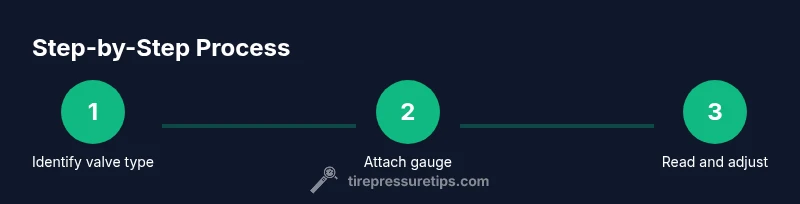
- 1
Identify valve type
Inspect the tire valve to determine if it’s Presta or Schrader, so you select the proper gauge head or adapter.
Tip: If unsure, assume Presta and use an adapter to be safe. - 2
Remove valve cap
Unscrew and set the cap aside to expose the valve stem before attaching the gauge.
Tip: Keep the cap nearby to protect the valve when finished. - 3
Attach gauge
Place the gauge head firmly on the valve and ensure a snug seal without cross-threading.
Tip: Hold the gauge steady to prevent air leaks during measurement. - 4
Read pressure
Read the psi from the gauge and compare it to the tire’s recommended range on the sidewall.
Tip: If needed, gently tap the gauge to settle the reading. - 5
Inflate to target pressure
If below target, add air in small bursts until you reach the middle of the recommended range.
Tip: Avoid over-inflation by inflating in 1–2 psi increments and rechecking. - 6
Re-check and seal
Re-check the pressure after a brief settling period and re-cap the valve.
Tip: Re-cap protects the valve stem from dust and moisture.
Frequently Asked Questions
What is a bike tire pressure gauge?
A bike tire pressure gauge measures the air pressure inside bicycle tires in psi or bar. It helps you verify the exact pressure and maintain the recommended range for safety and performance.
A bike tire pressure gauge measures your tire pressure so you can keep it in the right range for safe riding.
Why is my gauge reading different from others?
Gauge readings can differ due to calibration, valve type, and whether the gauge head is seated properly. Always compare against a second gauge if results seem off and calibrate regularly.
Different gauges can read differently; check calibration and reseat the gauge if readings seem off.
Can I use a car tire gauge on a bicycle?
Car gauges can measure bike tires but often lack the correct head or valve compatibility. Use a dedicated bike gauge or a portable adapter to ensure accuracy and a proper seal.
A car gauge isn’t ideal for bikes; use a bike gauge or adapter for accuracy.
How often should I check tire pressure?
Check tire pressure weekly or before long rides. Temperature changes and mileage can alter pressure, so regular checks help sustain performance and reduce flats.
Check weekly or before big rides to stay safe.
What is the ideal tire pressure for different bikes?
Ideal pressure depends on tire width, rider weight, and terrain. Refer to tire sidewall ranges and adjust toward the middle of the range for typical conditions.
Follow the tire's range and adjust around the middle for general use.
Watch Video
What to Remember
- Check tire pressure regularly to maintain safety and performance.
- Choose a gauge that matches your valve type and read accuracy.
- Inflate in small steps and verify readings after each adjustment.
- Calibrate and replace gauges as needed to avoid drift.
- Temperature and tire wear affect readings—adjust targets accordingly.