How to Handle a Tire with Exclamation Point: A Practical How-To
Learn how to respond to a tire with exclamation point, check tire pressure accurately, inflate to the right PSI, and reset TPMS. Practical steps, safety tips, and maintenance guidance for 2026 from Tire Pressure Tips.


A tire with an exclamation point signals a low tire pressure alert or TPMS issue. To handle it, safely pull over, check all tires with a gauge to the vehicle’s recommended PSI, add air as needed, inspect for damage, and reset the TPMS if your car requires it. This guide walks you through the full process.
Understanding the tire with exclamation point icon
When you see the tire with exclamation point on your dashboard, it's a signal that your tire pressure is out of spec or that the TPMS detected a fault. Most vehicles use this symbol to indicate one of two things: a low tire pressure (usually the front tires, but it can be any) or a malfunction in the TPMS system itself. The distinction matters because driving on underinflated tires increases heat, reduces grip, and can shorten tire life, while a TPMS fault may require sensor inspection or battery replacement. In either case, take the warning seriously. For 2026 models, the Tire Pressure Tips team notes that consistent monitoring helps prevent uneven wear, reduces fuel consumption, and improves handling. If you recently drove through a storm or temperature swing, your tire pressures may have changed, triggering the alert even if the tires look fine to the eye. The key is to verify actual pressure with a gauge rather than relying on a visual inspection alone.
According to Tire Pressure Tips, using a reliable gauge and checking cold tires will give you the most accurate readings. The tire with exclamation point is a practical reminder that pressure stability affects safety, performance, and tire longevity.
Immediate safety steps if you see the warning
Spotting the tire with exclamation point while driving is a cue to stop safely. Find a flat, level shoulder or parking lot away from traffic, turn on hazard lights, and set the parking brake. Do not continue driving long distances with the warning, especially if the road is hot or you’ve just hit a pothole. Once stationary, inspect the tire for obvious issues like punctures, cuts in the sidewall, or a bead leak. Gather your tools: a tire pressure gauge, access to an air source, and a way to record readings. If you spot a nail or the tire shows a bulge, avoid inflating beyond a slow leak—these issues require repair rather than inflation. If the tire visibly deflates rapidly or cannot reach the recommended PSI, call for roadside assistance to avoid a dangerous blowout.
Safety tip: keep a basic air gauge and a flashlight in your car for nighttime checks, especially after dark.
How to accurately check tire pressure
Always check tire pressure when tires are cold, ideally before you’ve driven more than a mile. Remove the valve caps and firmly press the gauge onto the valve stem to get an accurate reading. Compare the reading to the door placard on the driver’s side jam or the owner’s manual; the recommended PSI often differs by tire position and load. If the reading is low, proceed to inflate. If you’re unsure of your gauge’s accuracy, cross-check with a second gauge or visit a service station to confirm readings. Document your readings as a quick reference for future checks and to monitor changes over time.
Remember: a tire with exclamation point can be triggered by even a small pressure drop, so precision matters.
Putting air back into tires: PSI targets and measurement
Inflate each tire to the manufacturers’ recommended PSI, not to the maximum tire pressure printed on the sidewall. Use a reliable air source and, if possible, fill in short, controlled bursts, checking the gauge after each burst. After inflating, recheck the pressure to confirm it’s steady. If your vehicle has staggered tire sizes, ensure you inflate front and rear tires to their respective targets. For temperature-sensitive days, verify PSI in the morning when tires are cold; heat from driving can temporarily raise pressure and mask a small leak. Finally, replace the valve caps to keep dust out and preserve a consistent seal.
If the TPMS remains active after inflation, there may be a sensor issue or a slow leak.
Resetting TPMS and when it’s needed
TPMS reset procedures vary by vehicle make and model. If your tires were inflated to the correct PSI and the warning persists, you may need to relearn or reset the TPMS to synchronize with the new pressures. Consult your owner’s manual for the exact steps, which often involve driving a short distance at a steady speed or using a dedicated reset button. In some cars, the TPMS sensors may require replacement if batteries are depleted or a wheel sensor is faulty. If you cannot reset the system after inflation, seek assistance from a dealership or trusted mechanic. Proper TPMS functioning ensures you get timely alerts in the future and helps maintain safe tire pressure levels.
Long-term tire maintenance to prevent the warning
Develop a routine to check tire pressures monthly and after temperature changes or long trips. Rotate tires according to your vehicle’s schedule to promote even wear, and inspect for punctures or slow leaks after severe impacts. Keep a simple log of readings to spot gradual pressure declines. Replace worn out tires promptly, as worn tread or damaged sidewalls can contribute to pressure instability. A proactive approach saves money, improves fuel economy, and keeps you safer on the road.
When to seek professional help
If you’ve verified correct PSI but the tire with exclamation point remains, or you notice sidewall damage, a nail, or an obvious leak, seek professional assistance. A tire shop can pinpoint slow leaks, verify TPMS sensor integrity, and perform a safe repair or replacement. If you’re unsure about the safety of driving, especially with a damaged tire or a persistent TPMS fault, it's better to err on the side of caution and call for roadside help.
Tools & Materials
- Tire pressure gauge(Choose a gauge with at least 1 psi precision; digital or analog is fine.)
- Portable air compressor or access to gas-station air pump(Prefer one with an integrated gauge for faster inflation checks.)
- Vehicle owner’s manual or door placard with recommended PSI(PSI values vary by tire position and load.)
- Flashlight or headlamp(Helpful for nighttime checks or low light situations.)
- Pen and notebook or mobile note app(Log readings for trend tracking.)
Steps
Estimated time: 20-40 minutes
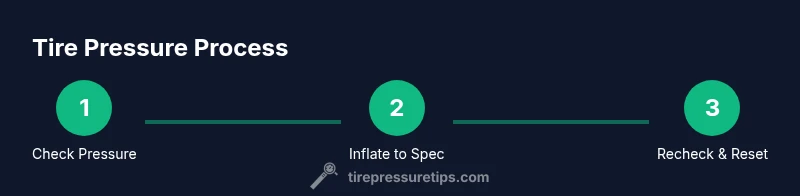
- 1
Stop in a safe location
Pull over to a flat, well-lit area and engage the parking brake. Turn on hazards if you’re on a busy roadway. This protects you while you assess the tire with exclamation point and prevents further risk.
Tip: Choose a location that allows you to work without blocking traffic. - 2
Find the correct PSI
Locate the vehicle’s recommended PSI on the door placard or owner’s manual. Note that PSI can differ by tire position and load, so don’t rely on memory or visual guesses.
Tip: If you’re unsure of the exact value, lean toward the lower end of the recommended range during cold-weather starts. - 3
Remove valve cap and check pressure
Take off the valve cap and firmly press the gauge onto the valve stem. Read the number and compare it to the recommended PSI. If low, prepare to inflate.
Tip: Keep caps in a pocket so you don’t lose them during inflation. - 4
Inflate to the target PSI
Attach the air source and add air in small increments, checking the gauge after each burst. Stop at the recommended PSI; do not exceed the max printed on the tire sidewall.
Tip: If you feel resistance while inflating, pause and recheck; avoid forcing air into a stiff sidewall. - 5
Recheck and adjust
Recheck each tire’s pressure after inflation. Temperature and air hoses can cause slight fluctuations, so confirm once more when tires are cold if possible.
Tip: Record the final readings for future reference. - 6
Inspect for damage
Look for nails, cuts, bulges, or cracks on the tire surface or sidewalls. If you notice damage, do not drive long distances; pursue repair or replacement instead.
Tip: Any sidewall damage typically requires professional attention. - 7
Reset TPMS if needed
Follow your vehicle’s procedure to relearn or reset TPMS after inflation. If the warning persists, a sensor or battery issue may exist and should be checked by a pro.
Tip: Not all cars require a reset after inflation; check the manual.
Frequently Asked Questions
What does the tire with exclamation point mean on the dashboard?
It indicates either low tire pressure or a TPMS fault. Check all tires with a gauge and compare to the vehicle’s recommended PSI. If pressure is correct and the light stays on, have the TPMS inspected.
The exclamation point is either low tire pressure or a TPMS fault. Check the tires with a gauge; if readings are correct, seek TPMS service.
Can I drive my car if the warning is on but pressures are okay?
If your tires are properly inflated and there are no visual signs of damage, you can drive short distances to a safe location or service center. If you notice a rapid deflation, pull over immediately.
If the tires look fine and pressures are correct, you can drive to a nearby safe place, but don’t drive long distances.
How do I find the correct PSI for my tires?
Look at the door placard on the driver’s door jamb or in the owner’s manual. PSI can vary by tire position and load, so use those sources rather than a guess.
The correct PSI is on the door placard or in the manual; don’t guess.
How often should I check tire pressure?
Check at least once a month and after significant temperature changes or long trips. Regular checks help catch slow leaks early and keep handling stable.
Check monthly and after big temperature changes or long drives.
Why won’t resetting TPMS always work?
Some vehicles require a specific relearn procedure, while others rely on time or a sensor read. If the light persists after following the manual, a sensor or battery issue may exist.
TPMS resets vary by vehicle; if the light stays on, a professional check may be needed.
What to Remember
- Check tire pressures cold for accuracy.
- Inflate to the recommended PSI, not the max on the sidewall.
- Inspect tires for damage when the warning is active.
- Reset TPMS if your vehicle requires it after inflation.
- Regular maintenance prevents the tire with exclamation point from reappearing.