Tire Pressure Off Road: Safe PSI Guide for Trail Driving
Learn practical methods to manage tire pressure off road, including safe PSI ranges, TPMS considerations, and maintenance tips for trail adventures. This guide from Tire Pressure Tips helps drivers stay safe and efficient on rough terrain.


To handle tire pressure off road, you’ll learn how to choose safe PSI ranges, deflate and reinflate correctly, and use portable inflators and gauges on the trail. This guide covers TPMS considerations, terrain-specific tips, and practical steps so you can maintain traction without damaging tires or rims while exploring rough terrain.
Why Tire Pressure Off Road Matters
For off-road driving, tire pressure off road directly influences traction, stability, and tire wear. According to Tire Pressure Tips, off-road conditions require adjusting pressure with care to balance grip and sidewall protection. Tire Pressure Tips analysis emphasizes a practical, test-and-learn approach: start with manufacturer guidance, monitor how the tire footprint changes, and adjust gradually as terrain demands. Traction improves when the tire can deform to the surface, but too low pressure risks bead unseating or rim damage. By planning ahead and carrying reliable gauges, drivers can reduce the chance of getting stuck or damaging wheels on rocky or sandy trails.
- Use a portable gauge to verify readings before and after changes.
- Document the target pressures for different terrains to reuse on future trips.
- Always re-check pressures after driving on rough surfaces, as heat and road chatter change results.
Pre-Trip Tools and Materials
Before you hit the trail, assemble a compact toolkit that focuses on accuracy and reliability. A high-quality portable tire pressure gauge (digital or analog) lets you read values clearly, while a portable inflator helps you adjust on the go. Keep a tire pressure chart or app handy to reference terrain-specific targets. Gloves protect your hands when handling hot tires, and a simple notebook helps you log pressure changes for different trails. By having the right tools, you’ll be ready to respond quickly to changes in grip and stability without delaying your adventure.
Understanding Off-Road PSI Ranges
There is no one-size-fits-all PSI for off-road driving; it depends on tire size, vehicle weight, load distribution, and terrain. The goal is to reduce resistance and increase the tire footprint for better grip while avoiding bead unaiming or rim damage. Start with the manufacturer’s off-road guidance, then test a small deflation increment while observing how the tire contacts the ground. Always prioritize safety: if the sidewall looks overly deformed or the bead looks suspicious, stop and reassess. Temperature and altitude can also shift readings, so plan for adjustments in varying environments.
Step-by-Step: Deflating and Re-Inflating Safely (On the Trail)
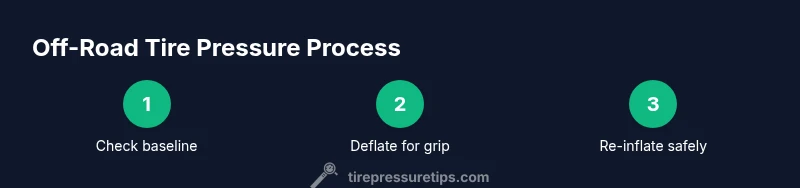
Deflating and inflating on the trail should be done methodically to maximize grip without compromising safety. The process below outlines concrete actions you can take in sequence for each tire, ensuring you maintain control and avoid bead failure. After each deflation, pause to observe the tire footprint and feel for improved traction before proceeding. This approach keeps you prepared for sudden terrain changes and reduces the risk of getting stuck or damaging rims.
Terrain-Specific Tips: Sand, Mud, and Rocks
Different terrains demand different pressure adjustments. On soft sand, slightly lower pressures can increase surface area and grip, while on hard-packed trails, you may need to increase pressure to prevent bead slippage. Mud requires careful deflation to maximize contact but beware of ove deflation when rocks or roots are present. In rocky environments, prioritize rim protection; maintain a balance so the tire can absorb shocks without bead separation. Always adjust based on the immediate surface feel and feedback from the tread.
TPMS and Pressure Readings on the Trail
TPMS provides a practical check, but it should not be your sole guide. On the trail, readings may fluctuate with temperature, wheel spin, and bouncing. Use a reliable gauge to corroborate TPMS values and confirm that each tire reads within your terrain-targeted range. After driving on rough sections, recheck pressures when tires have cooled to ensure accuracy and prevent over- or under-inflation as you resume travel.
Common Pitfalls and Safety Tips
Avoid aggressive deflation that leaves a fragile bead and risk of rim contact. Do not overinflate to compensate for grip loss, as this reduces traction on uneven surfaces. Keep deflation increments small, and measure repeatedly. Wear eye protection and gloves when manipulating tires, and never work under a vehicle without proper lifting equipment. If a tire is visibly damaged or showing unusual wear, abort the trail and assess repair options.
After-Drive Checks and Maintenance
Once you’re back from the trail, re-check and restore tires to the vehicle’s standard on-road pressures. Inspect tires for cuts, punctures, or bead damage that may have occurred during the off-road segment. Document any adjustments and the terrain type to help calibrate future trips. Regular maintenance, including checking TPMS sensors and ensuring the gauge is accurate, keeps you ready for the next adventure.
How Temperature Affects Off-Road Tire Pressure
Temperature shifts affect air density and tire pressure readings. A cold start can read lower than actual road conditions later in the day, so re-checks after warming up are essential. On ascent or descent where airflow changes, pressures may move. Plan for temperature variance by carrying a gauge and performing quick checks whenever you pause or stop for longer periods.
Tools & Materials
- Portable tire pressure gauge (digital or analog)(Choose a gauge with easy readability and a clear scale.)
- Portable air compressor or inflator(Capable of fine PSI adjustments for on-trail use.)
- Vehicle owner’s manual or TPMS reference sheet(Reference recommended ranges for your model.)
- Tire pressure chart or app(Have a terrain-specific target ready.)
- Gloves and tire-safe notebook(Protect hands and log pressures.)
Steps
Estimated time: 15-25 minutes
- 1
Check baseline pressures
Before you leave, verify all tires are within the vehicle’s standard on-road range and note any asymmetries.
Tip: Document baseline values in your log for future reference. - 2
Deflate to target for trail grip
Using the gauge, deflate each tire gradually until you achieve a feel for improved traction, staying away from low bead-seat risk.
Tip: Deflate in small increments and re-check the footprint. - 3
Test and confirm with the gauge
Take measurements after deflation and confirm readings align with terrain needs, not simply with old habits.
Tip: Compare readings from multiple gauges if possible. - 4
Inflate back for hazardous sections
When approaching rocky or sharp obstacles, reinflate enough to support sidewall protection while keeping grip.
Tip: Avoid over-inflation that reduces traction on rough surfaces. - 5
Re-check after cooling
After driving on rough terrain, re-check pressure once the tires cool to get accurate readings.
Tip: Heat affects reading; always re-check after driving for a while. - 6
Log and store your settings
Record the trail-adjusted PSI numbers and terrain types for easy recall on future trips.
Tip: Keep your log in a dedicated notebook or app.
Frequently Asked Questions
What is considered safe tire pressure off road?
Safe off-road pressures depend on terrain, tire size, and load. Start with manufacturer guidance, then test and adjust based on grip and bead integrity. Always avoid extreme deflation that risks rim damage.
On rough terrain, start with the manufacturer’s guidance and adjust by feel to gain grip while avoiding rim damage.
Should TPMS alerts influence off-road pressure changes?
TPMS alerts can indicate underinflation, but on rough trails you may need to temporarily adjust pressures. Re-inflate to the correct level once back on stable ground and after monitoring readings.
Yes, but recheck and restore proper pressure after you’re back on stable ground.
Can you deflate tires on rock trails?
Deflation can improve grip on soft surfaces, but avoid excessive deflation on rocky sections that risk bead damage or wheel contact. Deflate gradually and monitor the footprint.
Deflate gradually for traction, but don’t overdo it on rocky sections.
How do you re-inflate safely after off-road?
Re-inflate using a portable inflator, checking pressures with a trusted gauge until you reach the base street or manufacturer settings. Do not exceed recommended limits.
Use a gauge and inflator, returning to the recommended pressure.
What are risks of too low or too high pressure off road?
Too low can cause bead seating issues and rim damage; too high reduces traction and increases tire wear. Always adjust with terrain and load in mind.
Low pressure risks rim damage; high pressure reduces traction on uneven surfaces.
Do temperature changes affect off-road tire pressure?
Yes, temperature affects air density; cold mornings can lower readings. Re-check after warming up or cooling down to ensure accuracy.
Temperature changes can shift PSI; re-check readings after temperature shifts.
Watch Video
What to Remember
- Know off-road PSI matters for traction and protection
- Deflate in small steps and verify with a gauge
- Re-check after driving and cooling
- Document trail-specific pressures for future trips