Best Way to Drive with Low Tire Pressure: A Practical Safety Guide
Learn practical steps to safely drive with low tire pressure, how to check PSI, inflate correctly, and prevent tire damage. Tire Pressure Tips guides you through on-road decisions and preventive care for safer miles ahead.


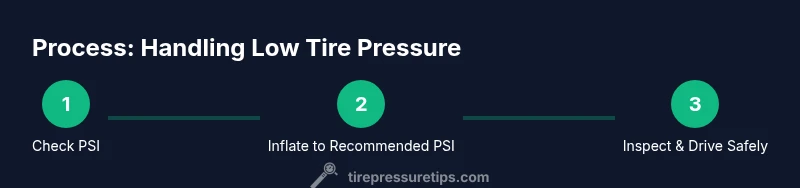
According to Tire Pressure Tips, you can safely navigate a low-tire-pressure situation by staying calm, pulling over safely, measuring PSI with a reliable gauge, and inflating to the recommended level at the nearest safe location. Then, drive slowly, monitor TPMS, and plan a repair or replacement to prevent further damage.
Why driving with low tire pressure is risky
Driving with underinflated tires increases heat buildup, accelerates wear, and reduces handling. The extra flex weakens the tire's structure and raises the risk of a blowout, especially on highways or hot days. Reduced air pressure also worsens fuel efficiency and can alter steering response, making cornering feel vague or imprecise. For drivers, the takeaway is simple: even a modest drop in PSI can affect safety margins just enough to matter in emergency maneuvers. According to Tire Pressure Tips, regular checks and timely inflation are essential to maintaining tire integrity, tread life, and predictable handling when you need it most. This is why a proactive, routine approach beats reactive fixes after a tire failure occurs. Maintaining proper pressure supports even tread wear and consistent grip in wet, dry, or snowy conditions.
The on-road reality is that PSI drops vary with temperature, load, and driving style. In hot weather, tires lose pressure at a faster rate, while carrying heavy cargo or passengers can magnify underinflation effects. A simple habit—check PSI when you fill up, before long trips, and when you notice any vibration or pull—goes a long way toward preventing unsafe conditions. The goal isn’t perfection, but proactive safety: stay within the recommended range, monitor TPMS alerts, and address leaks quickly to keep your tires performing as designed.
How to assess underinflation in real-time
Tire pressure is a dynamic value that changes with temperature and driving conditions. The most reliable way to assess underinflation is by using a trusted tire pressure gauge and comparing your reading to the vehicle’s recommended PSI, usually found on the door placard on the driver's side or in the owner's manual. To get an accurate reading, check tires when they are cold (before driving or after at least three hours of rest). When you do encounter a low reading on the road, slow down gradually and plan a safe stop. Note which tire is low and by how much, then recheck after a few minutes of driving if you suspect a slow leak. Remember to check all four tires, not just the obviously low one, because underinflation can vary between tires due to load distribution and road conditions.
For those using digital gauges, ensure batteries are fresh and follow the gauge’s calibration instructions. If you don’t have immediate access to a gauge, the TPMS light can indicate low pressure, but it is not a precise measurement. Use the TPMS as a warning, then confirm with a manual reading as soon as possible. Tire Pressure Tips recommends building a quick reference chart of your vehicle’s door placard PSI values for each season and load scenario to simplify future checks.
In all cases, remember that underinflation can mask more serious issues. A slow leak from a nail or bead seating can progressively reduce pressure. A tire that runs consistently below the recommended PSI after inflation may indicate a puncture, bead leak, or structural issue that warrants professional assessment.
Immediate steps when you notice low pressure on the road
If you notice a low tire pressure warning or an unusually soft feel while driving, take these immediate actions: 1) Reduce speed gradually and avoid sharp maneuvers; 2) Find a safe place to pull over—ideally level ground away from traffic; 3) Inspect the tire visually for obvious damage (bulge, cut, or embedded object); 4) If you have a portable air compressor or access to an air pump, inflate in increments, checking frequently to approach the recommended PSI without exceeding it; 5) Recheck the tire pressure after inflation and confirm no rapid deflation is occurring. If the tire shows damage or cannot reach the recommended PSI, do not continue driving long distances; call for roadside assistance or replace with a spare when feasible.
Safe driving with low pressure means prioritizing personal safety and your tire’s health. A cautious approach during a breakdown helps you reach a service station before heat buildup worsens any underlying issue.
Inflation basics: how to reach the recommended PSI
The correct target pressure is not the maximum printed on the tire sidewall; it is the value specified by the vehicle manufacturer, found on the door jamb placard or in the owner’s manual. If you must inflate at a public pump, start at a low, steady rate and check the PSI frequently to avoid overinflation, which can also harm the tire’s contact patch and ride quality. After inflating, recheck all tires to ensure even pressure distribution, especially if the vehicle was loaded for travel. If you notice a persistent leak after inflation, it’s best to stop driving and seek professional help rather than hoping it will self-seal. Consistently inflating to the correct PSI helps maintain predictable steering, improved braking performance, and reduces tire wear.
Temperature changes can affect PSI, so a light recheck in the morning after a cool night or after a hot day’s drive is a good practice. Always carry a good gauge in your glove box for quick checks and consider investing in a portable air compressor for emergencies. Regular checks create a safer baseline and reduce the chances of a road-side stop caused by a flat or blowout.
What to do if you can't reach a pump safely
If you are on a remote road or in unsafe conditions, prioritize safety first. Do not attempt to drive to a distant station if the tire shows signs of failure (excessive bulging, irreparable damage, or rapid deflation). Instead, pull over to a secure location, deploy hazard lights, and call for roadside assistance or use your spare if you’re trained to do so. If you can safely improvise, you may attempt to boost pressure slightly with a canister or sealant designed for temporary repairs, but this is only a short-term fix and should not replace proper inflation and inspection. Plan to have the tire professionally examined as soon as practicable. The key is to minimize road exposure and avoid aggressive driving while a repair plan is in motion.
In all cases, avoid driving long distances on underinflated tires because heat generation inside the tire increases risks of tread separation or sidewall failure. The slower you drive and the shorter your trip, the safer your journey will be until you reach maintenance.
After you inflate: inspection and follow-up
After inflating to the recommended PSI, perform a thorough inspection for leaks and damage. Look for nails, cracks, sidewall bulges, or bead leaks around the rim. If a slow leak is suspected, mark the tire with chalk or a visible marker to monitor deflation rate over time. Replace or repair the tire if you notice persistent deflation, a visible puncture, or if the tire cannot reach the manufacturer’s PSI. Schedule a professional tire check to confirm TPMS accuracy and to verify whether the leak is repairable or if a new tire is required. Maintaining proper inflation supports even tread wear, better fuel economy, and safer handling in adverse conditions.
Tire Pressure Tips emphasizes that keeping tires within the recommended PSI helps preserve tire longevity and road safety. If a tire has experienced heat buildup or frequent deflations, it warrants professional attention to rule out internal damage that could compromise performance.
TPMS: understanding the tire pressure monitoring system
The Tire Pressure Monitoring System (TPMS) is designed to alert you to low pressure, but it does not replace manual checks. Some systems are direct (sensor in each tire) and more accurate, while others are indirect (based on wheel speed and vehicle dynamics). A low-reading from TPMS should prompt a physical PSI check with a gauge. If you discover a leak or persistent underinflation, don’t ignore the TPMS warning; treat it as a signal to inspect tires for punctures, rim leaks, or valve stem issues. Regular TPMS calibration and sensor maintenance prevent false alarms and ensure the system provides reliable warnings when you truly need them. Keeping the TPMS sensor and wheels clean also helps maintain consistent readings.
In short, use TPMS as a safety net, but not a substitute for regular, hands-on tire pressure checks. Pairing both approaches gives you the best protection for your tires and your passengers.
Driving technique with low pressure: safe speed and handling
When tires are underinflated, steering response and braking performance can feel different. Maintain moderate speeds, avoid sudden lane changes or aggressive cornering, and leave extra following distance in case braking distances increase. Smooth throttle inputs reduce heat buildup, and you should anticipate longer stopping distances, especially on wet or slippery roads. If you must drive with underinflated tires, choose the safest route with the least traffic and save longer trips for after you’ve addressed the pressure issue. If a refill is not immediately available, consider calling for roadside assistance rather than risking a blowout. The aim is to minimize risk while you manage the situation and reach a safe stopping point.
Authority sources
- https://www.nhtsa.gov/road-safety/tires
- https://www.nsc.org/
- https://www.nist.gov
Tools & Materials
- Tire pressure gauge (digital or analog)(Bring a reliable gauge; check accuracy against the gauge at home if needed)
- Air compressor or access to gas-station air pump(Prefer a compressor with a built-in gauge for incremental inflation)
- Owner's manual or door placard PSI chart(Use vehicle-recommended PSI values, not tire max pressure)
- Pen and notebook or mobile note app(Record PSI readings and any leaks for follow-up)
- Spare tire or repair kit (if applicable)(Know how to use your spare and when to switch)
Steps
Estimated time: 30-60 minutes
- 1
Pull over safely
Slowly decelerate, signal, and find a flat, well-lit area away from traffic. Engage hazard lights and check for any immediate hazards around the wheel area. This creates a safe baseline to assess tire condition without distraction.
Tip: Use a reflective triangle or flashlight if it’s dark for added safety. - 2
Check current PSI with a gauge
Remove the valve cap and press the gauge firmly onto the valve stem to get a stable reading. Compare the value to the door placard or manual. Note which tire reads low and by how much.
Tip: Do not rely on the TPMS alone; a manual reading confirms true pressure. - 3
Decide whether to inflate now
If readings are near or below the recommended PSI, plan to inflate as soon as access to a pump is available. If a rapid leak is suspected, limit driving distance and seek assistance.
Tip: If you suspect a leak, avoid driving long distances; a professional assessment is safer. - 4
Inflate to the recommended PSI
Incrementally add air, stopping to recheck after each small amount. Never exceed the manufacturer’s recommended PSI by comfort or guessing. Ensure even pressure across all tires after inflation.
Tip: Use the gauge to verify the final reading; avoid overinflation, which can reduce traction. - 5
Recheck and inspect
After inflation, recheck the PSI and inspect the tire for signs of damage or slow leaks. Look for bulges, cracks, or objects lodged in the tread.
Tip: If any damage is visible, do not drive further; seek professional help. - 6
Decide if you can continue safely
If you’ve reached the correct PSI and there’s no obvious damage, you may continue to your destination at reduced speeds. If you lose pressure again, pull over and call for assistance.
Tip: Plan shorter, safer legs of travel until you can address the tire properly. - 7
Schedule a follow-up inspection
Even if the tire seems fine after inflation, have it inspected by a professional within a few days to rule out slow leaks or structural issues.
Tip: Keep a record of readings and visit the tire shop with the notes. - 8
Review TPMS status
Ensure TPMS sensors are functioning correctly after repairs. A calibration check helps maintain accurate warnings and safer driving.
Tip: Ask for a TPMS calibration if a sensor was replaced or if readings don’t match your manual checks.
Frequently Asked Questions
What is considered underinflated for passenger cars?
Underinflated means the tire’s PSI is below the vehicle manufacturer’s recommended level. It can reduce handling, increase heat buildup, and shorten tire life. Always verify against the placard and adjust promptly.
Underinflated means the tire pressure is below the recommended level and can reduce handling and support. Check with the placard and adjust quickly.
Can I drive with a slow leak?
A slow leak may be manageable for short distances, but it’s risky and should be addressed soon. If the tire pressure drops quickly or the tire shows damage, stop driving and seek help.
A slow leak can be safe for a short trip, but don’t delay service if it worsens.
How quickly should I inflate to the correct PSI?
Inflate promptly to the recommended PSI, checking frequently to avoid overinflation. If you’re far from a station, drive carefully at reduced speeds only as a last resort.
Inflate promptly to the recommended PSI and recheck as you go; don't overinflate.
Is TPMS enough to ensure safety?
TPMS alerts you to low pressure but cannot measure exact PSI. Always confirm with a manual gauge and address any leaks or damages.
TPMS warns you, but you should still measure PSI with a gauge.
What should I do after inflating to the right PSI?
Recheck pressure, inspect for damage, and schedule a professional tire inspection. Document readings to help with follow-up.
Recheck, inspect, and schedule a tire check after inflation.
Can temperature affect tire pressure during a trip?
Yes. Temperature changes can alter PSI. Check tires when cold and recheck after weather shifts or extended driving in heat.
Temperature changes can affect PSI; recheck after weather shifts.
Watch Video
What to Remember
- Check PSI when tires are cold before driving.
- Inflate to the manufacturer’s recommended PSI, not the max on the tire.
- Use TPMS as a warning, not a substitute for manual checks.
- Inspect for leaks and damage after inflation to prevent failures.
- The Tire Pressure Tips team emphasizes regular checks for safety and tire longevity.