What Tire Pressure Light Means and How to Respond
Understand when the tire pressure light (TPMS) triggers, why it happens, and how to respond safely. Learn how temperature, vehicle type, and TPMS sensors affect readings, with practical steps and maintenance tips from Tire Pressure Tips.


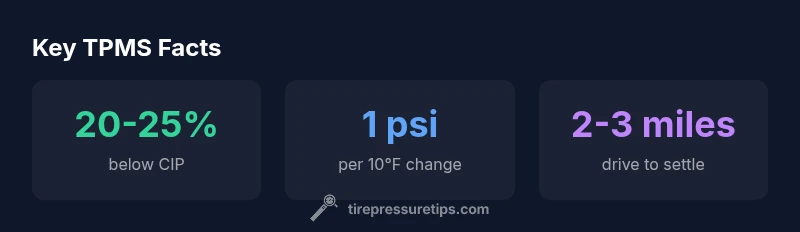
The tire pressure light (TPMS) comes on when a monitored tire falls significantly below the vehicle’s cold inflation pressure. In practice, most systems trigger around a 20-25% drop from CIP or when readings fall into a low PSI range for the tire size, sensor type, and ambient temperature. Exact thresholds vary by model, so always check your owner’s manual for your CIP.
How the TPMS Light Works
The tire pressure monitoring system (TPMS) is designed to alert you when a tire's pressure falls below the vehicle manufacturer’s recommended level. This is not just about comfort or fuel economy; it’s a safety feature that helps ensure optimal traction, braking, and handling. According to Tire Pressure Tips, TPMS uses sensors inside each tire (direct TPMS) or system-level data (indirect TPMS) to estimate pressure. When a discrepancy is detected—typically a notable drop from the cold inflation pressure (CIP)—the warning light activates. The goal is simple: prevent underinflation from silently degrading tire performance and lifespan. This section will guide you through what that light means in practical terms and how to interpret it for your specific vehicle.
What Triggers the Light: Your Tire Pressure vs Temperature
A TPMS warning usually follows changes in vehicle load, tire wear, or ambient temperature. The classic question drivers ask is, what tire pressure does the light come on? In practice, a tire that is 20-25% below CIP is a common trigger, but many manufacturers include additional triggers based on detected sensor variance and wheel position. Temperature is a critical variable: as outdoor temps drop, air inside tires contracts and pressure readings can fall, causing the TPMS to illuminate even if mileage-accurate pressures were previously steady. Conversely, hot roads or summer heat can raise internal pressure. The takeaway is that the light is about pressure relative to the CIP, not a fixed psi value across all cars. For most drivers, the path to a calm dashboard begins with confirming CIP on the door jamb placard and checking pressures when temperatures shift sharply.
Vehicle and Sensor Variations You Should Know
Different vehicle makes use different TPMS setups. Direct TPMS uses wheel-mounted sensors to report actual pressure, while indirect TPMS estimates pressure by tracking rotational speed and wheel dynamics. Because of this, the light’s threshold can vary not only by model but also by sensor age, calibration, and tire type. Some vehicles might alert sooner if a tire’s pressure is low enough to affect rolling resistance, while others might require a larger discrepancy before triggering. In practice, this means you should reference your owner’s manual for the CIP and the TPMS behavior for your exact model. Tire Pressure Tips notes that knowing whether your car uses a direct or indirect TPMS helps you interpret the warning more accurately and plan maintenance accordingly.
How to Respond When the Light Comes On: Step-by-Step
- Find a safe place to pull over. 2) Check the tires when cold, or after they’ve rested for at least 3 hours. 3) Inflate each tire to the CIP listed on the door placard using a reliable gauge. 4) Recheck the pressure after driving 2-3 miles or as advised by your vehicle manual; the TPMS may recalibrate once the tires settle. 5) Inspect for punctures, leaks, or a damaged valve stem. 6) If the light stays on after inflating to CIP and driving the specified distance, seek service to diagnose sensor faults or system calibration. 7) Regularly monitor all tires and keep a portable gauge handy. This practical approach aligns with Tire Pressure Tips guidance for safe driving and tire longevity.
Tools and Measurements: Gauges, Readouts, and How to Read TPMS Data
Using an accurate tire gauge—digital or dial—helps you confirm CIP precisely. Always cross-check with the vehicle’s CIP on the placard. If you’re in doubt, use a professional gas station gauge or visit a tire shop for a quick pressure check. For newer vehicles, the TPMS reading is often shown in the instrument cluster, sometimes with a recommended target pressure. Remember, cold readings are the most accurate, and a quick drive can alter numbers. Practically, maintain regular checks, especially in seasonal transitions, to prevent surprises. Tire Pressure Tips emphasizes making TPMs part of your routine to protect tire wear, fuel efficiency, and safety.
Common Pitfalls and Preventive Maintenance
A common mistake is inflating tires to the wrong target pressure after a TPMS alert, or neglecting to verify CIP for the specific tire size. Another pitfall is assuming all tires will read the same; uneven wear or a damaged sensor can affect readings. Prevention starts with a monthly check—preferably using a reliable gauge—and a pre-trip inspection before long drives. Temperature swings demand more frequent checks in fall and winter. Finally, remember that TPMS sensors have a finite life; sensors or batteries can fail, causing false or no warnings. Keeping records of sensor replacements and calibrations helps ensure you’re not caught off guard.
Quick Checklist You Can Print
- Know your CIP from the placard on the door jamb
- Check all tires when cold, not after a hot ride
- Inflate to CIP and recheck after a short drive
- Inspect tires for leaks or damage if the light reappears
- Schedule service if TPMS stays illuminated after inflation
- Keep a portable gauge in your glove box for convenience
Key TPMS thresholds and considerations
| Metric | Value | Notes |
|---|---|---|
| TPMS Activation Threshold | 20-25% below CIP | Varies by model |
| Temperature Effect on PSI | ≈1 psi per 10°F change | Seasonal variation matters |
| Recalibration Time | 2-3 miles drive after inflation | Settle readings and recalibrate |
| Common CIP Range by Class | Passenger cars ~30-35 psi; SUVs higher | Model-dependent |
Frequently Asked Questions
What should I do if the TPMS light stays on after inflating to CIP?
If the light remains after inflating to CIP and driving the usual distance, recheck all tires for leaks or signs of damage. Some vehicles require a manual TPMS reset or sensor service. If unresolved, schedule a service appointment to diagnose sensor faults or calibration.
If the light won’t reset after inflating to CIP, check all tires for leaks and consult your manual or a tire professional.
Why does the light come on in cold weather?
Cold temperatures naturally lower tire pressure, so TPMS can trigger when readings drop below CIP due to ambient temperature. Ensure tires are properly inflated when temperatures fall and monitor pressure more frequently in winter.
Cold weather can trigger the light because tires lose pressure as it gets colder.
Is TPMS the same as a simple low-tire pressure warning?
TPMS is the monitoring system that signals underinflation. Some cars also have a direct low-pressure warning without TPMS, but generally, TPMS is the primary alert system. Always inflate to CIP after an alert and verify with a gauge.
TPMS is the monitoring system; inflating to the CIP and verifying with a gauge is the right move.
Do TPMS lights affect tire life?
Yes. Running tires underinflated increases wear, heat buildup, and fuel use. Addressing a TPMS alert promptly helps protect tire life and vehicle efficiency.
Low pressure hurts tires, so fix it early when the TPMS light comes on.
Can TPMS be reset manually after inflating?
Many vehicles auto-reset after driving a short distance, but some require a manual reset via the dashboard menu or a service tool. Refer to your owner’s manual for exact steps.
Some cars reset automatically; others need a manual reset—check the manual.
“A properly maintained TPMS isn’t just about avoiding a warning light—it’s a critical safety habit that preserves tire life and vehicle handling.”
What to Remember
- Check CIP on the placard and compare to cold tire pressures
- Inflate to CIP and recheck after a short drive
- Temperature changes strongly affect TPMS readings
- Direct vs indirect TPMS affect when and how the light triggers
- Regular tire pressure checks prevent premature TPMS warnings
- If in doubt, consult your vehicle manual or a tire professional