How Low Does Tire Pressure Have to Be for Light to Come On? Understanding TPMS Thresholds
Learn the typical TPMS threshold for the low tire pressure warning, how factors like temperature and tire size affect it, and practical steps to verify and fix under-inflation. Insights from Tire Pressure Tips for safer driving.


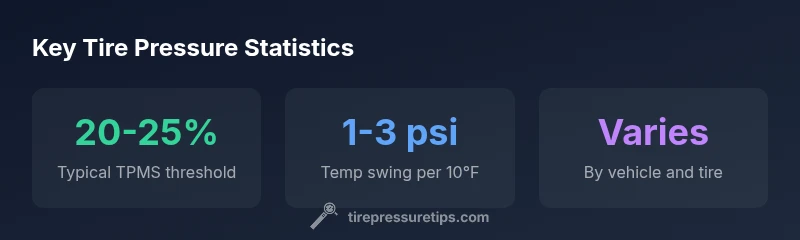
In most vehicles, the TPMS light activates when tire pressure falls about 20–25% below the manufacturer’s recommended cold pressure. Because sensors, tire size, and temperature vary, the exact threshold can range roughly 2–6 psi below the label. Always check with a reliable gauge when the light comes on and verify against the recommended cold pressure on the door sticker or in the manual.
Why TPMS lights exist and how to interpret them
According to Tire Pressure Tips, tire pressure sensors and the TPMS light are designed to alert you when inflation moves outside the safe operating window. When you ask how low does tire pressure have to be for light to come on, remember that there is no single universal psi threshold. In practice, most systems trigger when pressure falls roughly 20–25% below the vehicle’s recommended cold pressure, which is typically listed on the door jamb sticker or in the owner's manual. The exact point can vary by tire size, model year, load, and even temperature. The Tire Pressure Tips team emphasizes that a light is a warning to check the tires, not a precise measurement you should rely on for daily inflation targets. Use a reliable gauge to verify—do not guess based on feel or road noise alone. Consistent checks when the tires are cold (before driving) will give you the best baseline for comparison. If the light comes on after a known event (like a long trip or cold morning), re-check when the tires are cold to confirm a real pressure change.
How low is low? Decoding psi thresholds
In most cars, the TPMS threshold isn’t fixed to a single psi value; it’s a band that depends on the vehicle’s recommended cold pressure and tire type. A practical rule of thumb is that a light typically triggers when the tire sits about 20–25% below the labeled cold pressure. If your door sticker says 34 psi, that could mean a light appears around 26–27 psi when you consider variation. Some manufacturers also state a direct threshold of 2–6 psi below the label, reflecting sensor calibration and the tire's response to load. Because these numbers change with tire width, aspect ratio, and whether the tire is loaded, the best approach is to identify your exact target using the sticker and then verify with a gauge when the light comes on. The key takeaway is to treat the light as a warning, not a precise instruction manual of targeted psi.
Temperature and weather effects on TPMS readings
Air pressure changes with temperature; for every 10 degrees Fahrenheit drop, tire pressure can fall by about 1 psi. That means a cold morning can trigger a light that would not appear on a warmer afternoon, even if the tires are in good shape. Conversely, hot pavement and high-speed driving can temporarily raise psi, masking a slow leak until conditions revert. The Tire Pressure Tips team notes that this variability is why checking tires when they are cold yields the most reliable baseline. If you check after a long drive, subtract the impact of heat when evaluating whether there's a leak. Inconsistent readings are a sign to check again under cold conditions.
Practical steps when the light comes on
- Find a safe spot and turn off the engine if needed. 2) Check all tires when they are cold using a reliable gauge. 3) Compare the readings to the door-sticker cold pressure values; inflate any under-inflated tires to spec. 4) Look for visible signs of damage (nails, cuts, bulges) and check for slow leaks. 5) If one tire remains low, consult a tire professional to inspect for punctures or sealant issues. 6) After inflating, drive a short distance to allow the TPMS to recalibrate, then re-check to confirm stabilizing pressure.
Common misconceptions about tire pressure and TPMS
Many drivers assume the TPMS is a precise inflation target. In reality, it’s a warning system that accounts for sensor tolerances, temperature, and vehicle load. Believing that you must reach an exact psi number every time can lead to over- or under-inflation adjustments. The key is to inflate to the manufacturer’s cold-pressure spec and verify with a gauge, especially after weather changes or long drives. Regular checks are essential for safety.
Vehicle-specific variations in TPMS thresholds
Different vehicles use different sensor calibrations and may have slight variations in the trigger threshold. Some cars use direct TPMS with coil-and-sensor systems, while others use indirect methods based on wheel-speed data. As a result, two similar vehicles can have different psi thresholds for the warning light. Always start with the OEM sticker as your baseline and confirm with a gauge under cold conditions.
TPMS sensors: maintenance and replacement considerations
TPMS sensors can fail or drift over time due to battery degradation, corrosion, or physical damage from road hazards. If the light frequently flickers or stays on despite proper inflation, a sensor check is warranted. Professional inspection can determine whether the issue is sensor-related or caused by a slow leak in the tire itself. Replacing a faulty sensor or battery is common maintenance practice.
Resetting and recalibrating TPMS after inflation
Many vehicles automatically recalibrate once tires return to the specified cold pressure and the car has driven a short distance at normal load. Some models require a manual reset in the settings menu or a dealer visit. If the light stays on after inflating to spec, consult the owner's manual for the correct reset procedure, or have a tire technician inspect the system.
How proper tire pressure affects fuel economy, wear, and safety
Maintaining the correct tire pressure improves fuel economy, reduces uneven wear, and enhances handling and braking. Under-inflated tires create more rolling resistance, lowering efficiency and increasing heat buildup, which can shorten tire life and compromise safety. The Tire Pressure Tips Team stresses the value of regular cold checks as a simple, effective habit that protects both performance and savings.
Quick-start checklist and next steps
- Check the door-sticker cold pressure for each tire. - Use a reliable gauge to verify pressures when tires are cold. - Inflate to spec and re-check after a 5–10 minute drive. - Inspect tires for visible damage and consider professional TPMS inspection if the light persists.
Typical thresholds across common vehicle types
| Vehicle Type | Recommended Cold Pressure (psi) | Typical TPMS Trigger Threshold (psi below label) | Notes |
|---|---|---|---|
| Passenger Car (standard) | 32-34 | 2-6 | Varies by tire and model |
| SUV/Crossover | 33-36 | 2-6 | Higher load can shift threshold |
| Light Truck | 40-65 | 2-6 | Depends on tire size and axle |
Frequently Asked Questions
What PSI should I aim for to avoid triggering the TPMS light?
Always start with the manufacturer’s cold-pressure spec on the door sticker. Inflate each tire to that value when cold, then recheck after driving a short distance. If the light persists, there may be a leak or sensor issue and a professional inspection is advised.
Inflate to the door sticker spec when tires are cold, then recheck after a short drive.
Is a TPMS light the same as a low-tire pressure warning from the manual gauge?
Not exactly. TPMS is sensor-based and signals a pressure drop, while a manual gauge provides a specific psi reading. Use both: rely on the sticker as your target and confirm with a gauge.
TPMS warns you; a gauge confirms the exact pressure.
Does temperature affect when the light comes on?
Yes. Temperature changes can cause pressure to rise or fall by about 1 psi per 10°F. Check readings when tires are cold to get an accurate baseline.
Temps matter—check when cold to be sure.
What should I do if the light stays on after inflating to spec?
If the light remains on, there may be a slow leak or a faulty sensor. Check for punctures, re-inflate, then if it stays on, seek a professional TPMS inspection.
If it won’t go away after inflation, get it checked.
Should I delay maintenance until all tires show low pressure?
No. If one tire is under-inflated, address it promptly. Driving on under-inflated tires reduces fuel efficiency and increases wear and risk.
Don’t wait—fix under-inflation now for safety and savings.
“TPMS thresholds aren’t universal; they vary by vehicle and tire. Always verify a light with a cold-psi check and refer to the owner’s manual.”
What to Remember
- Know there is no universal psi threshold; expect a 20-25% drop below sticker.
- Check tires when cold to establish a reliable baseline.
- Temperature affects readings; recheck under cold conditions.
- Inflate to OEM spec and verify with a gauge; inspect for leaks or damage.
- Persistent lights warrant professional TPMS inspection and sensor checks.