Tire Pressure Light After Rotation: Fix TPMS Relearn and Pressures
Experiencing a tire pressure light after tire rotation? Learn fast checks, TPMS relearn steps, and safe fixes to reset readings quickly and prevent future issues.


The tire pressure light after rotation usually means TPMS relearn is needed or a tire is out of spec. Start by checking all four pressures with a good gauge and inflate to the vehicle’s door-placard spec. If the light remains, perform a TPMS relearn/relearn procedure or drive the car for 10-20 minutes at highway speed to retrain.
Why the tire pressure light came on after rotation
According to Tire Pressure Tips, the moment you rotate tires, the tire pressure light (TPMS) can come on if the system needs to relearn the new positions or if a pressure drift occurred during the service. Modern TPMS uses sensor data to map which tire sits where; when tires swap places, the control module expects all four tires to be within the prescribed range before accepting the new configuration. If one tire was underinflated or overinflated during rotation, the light can illuminate as the system flags abnormal readings. Temperature changes during and after service can also affect readings, especially if the vehicle sat for a while before the relearn. Understanding this helps you approach the problem calmly and safely, rather than guessing or risking unsafe pressures.
Quick checks you can perform before retraining
Tire Pressure Tips analysis shows that most post-rotation TPMS warnings are resolved by a straightforward pressure check and relearn. Start with cold tires (ideally after the vehicle has been parked for several hours). Use a reliable gauge and compare each tire’s pressure to the door placard on the driver’s side jamb. Inflate or deflate to the exact target, then recheck for consistency across all four tires. If the light persists, proceed to a manufacturer-approved relearn procedure or simply drive as directed by your owner’s manual to allow the system to relearn through normal driving. Document the pressures you set; a consistent baseline reduces return visits and ensures the system tracks tire position accurately after rotations.
How to retrain the TPMS after rotation
Retraining TPMS after tire rotation varies by vehicle make and model. In many vehicles, you’ll use the TPMS reset button or menu option to initiate a relearn, then drive at 50-60 mph for 10-20 minutes with minimal abrupt braking. Some cars require a tool or dealer scan tool, while others automatically relearn when all four pressures are within spec and the car detects four valid sensors. Always ensure tires are cold and within target pressure before starting relearn, and avoid overinflation or excessive underinflation during the process. If your car supports it, you may also find a dedicated TPMS relearn procedure in the owner's manual or service portal.
Inspect tires for other issues beyond pressure
While the TPMS light after rotation is often about relearn or pressure, don’t ignore other possibilities. A sensor that was damaged or displaced during rotation can trigger warnings. Look for fastener loss, damaged valve stems, or sensor corrosion around the wheels. Rotate wheels back and forth by hand to feel for loose sensors, and scan for any abnormal vibrations or air leaks. If you notice any tire damage, replace or repair before relying on the TPMS readings. Tire Pressure Tips emphasizes that sensor health is essential to accurate readings and safe driving.
Safety-first steps and quick prevention
Always prioritize safety when addressing TPMS warnings. Inflate to the recommended range printed on the door placard, then verify with a trusted gauge. If you can’t reset the system or the light remains after retraining, avoid long road trips and seek professional help. A technicians can inspect wheel sensors, confirm proper relearn, and verify valve stems and battery health. Remember: underinflated tires can compromise braking, handling, and fuel efficiency, while overinflated tires wear more quickly in the center tread. Regular checks keep you safe and extend tire life.
Long-term maintenance to prevent future TPMS issues
To minimize future TPMS-related annoyances after rotations, establish a routine: check tire pressures every 2-4 weeks and after long trips or temperature swings. Keep a digital gauge in your glove box for accuracy, and compare readings against the door placard. If you notice unusual pressure drift, inspect for slow leaks or sensor issues. The Tire Pressure Tips team recommends documenting your target pressures and relearn procedures for your specific vehicle, so you can quickly reset readings after each rotation and avoid needless trips to the shop.
Steps
Estimated time: 30-45 minutes
- 1
Check tire pressures to spec
Park on a level surface, wait for tires to cool, and use a reliable gauge to measure each tire. Compare readings to the door placard and inflate or deflate to the recommended target. Recheck all tires to ensure uniform readings before proceeding.
Tip: Always start with cold tires for the most accurate measurement. - 2
Initiate TPMS relearn
Refer to your vehicle manual for the exact relearn steps, which may involve pressing a reset button or selecting a menu option. Some cars relearn automatically after a short drive; others require a tool at a service bay.
Tip: Have the manual handy; steps vary by make and year. - 3
Drive to complete relearn
If the model supports a distance-based relearn, drive on a highway at 50-60 mph for 10-20 minutes with minimal hard braking. Avoid aggressive acceleration during the relearn window.
Tip: Plan a short test drive after reinitializing. - 4
Recheck pressures after relearn
After relearn, stop and recheck all four tires to confirm pressures are still at the target. A small drift can cause another light to appear; adjust if needed.
Tip: Keep a log of pressures for reference in future rotations. - 5
Inspect sensors if light remains
If the light stays on, inspect tire sensors for damage or a loose valve stem. A technician can perform a diagnostic scan to identify faulty sensors or battery issues.
Tip: Don’t ignore persistent warnings; sensor problems can affect safety. - 6
Seek professional assistance
When in doubt, consult a tire service professional. They can verify sensor calibration, battery status, and confirm the relearn procedure is correct for your vehicle.
Tip: Professional help provides peace of mind and prevents future warnings.
Diagnosis: TPMS light on after tire rotation
Possible Causes
- highTPMS relearn not completed
- highTire pressures not at spec after rotation
- lowDamaged or relocated TPMS sensor
- lowGauge error or user misread
Fixes
- easyPerform a proper TPMS relearn per manufacturer instructions
- easyCheck and adjust all four tire pressures to the door placard spec
- easyDrive at highway speed for relearn period (if applicable)
- mediumIf light persists, have TPMS sensor inspected by a technician
Frequently Asked Questions
Why does the TPMS light come on after rotating tires?
Rotating tires can swap sensor positions, triggering a relearn requirement. If pressures drifted during rotation, the TPMS may flag a warning until the system re-learns the new configuration.
Rotating tires changes sensor positions and can trigger a relearn. If pressures drifted, the TPMS may warn until it relearns.
Can I retrain TPMS myself?
Yes, many vehicles allow a DIY relearn using a button sequence or menu option. Some cars require a tool or dealer scan. Always consult your manual for the exact steps.
Many cars let you relearn TPMS yourself with the right steps; check your manual for exact instructions.
How long does TPMS relearn take?
Relearn times vary by vehicle but typically take a few minutes to about twenty minutes, including driving to complete the process.
Relearn usually takes a few minutes up to twenty minutes, depending on the car.
What if one tire is underinflated after rotation?
Inflate the tire to the spec on the door placard and recheck all tires. If the light remains, re-learn the TPMS after inflation corrections.
If a tire is underinflated after rotation, bring it to spec and then retry relearn.
When should I seek professional help?
If the TPMS light stays on after a full relearn and pressure check, or you suspect a faulty sensor or battery, consult a tire technician.
If the light won’t go away after relearn and pressure checks, see a professional.
Watch Video
What to Remember
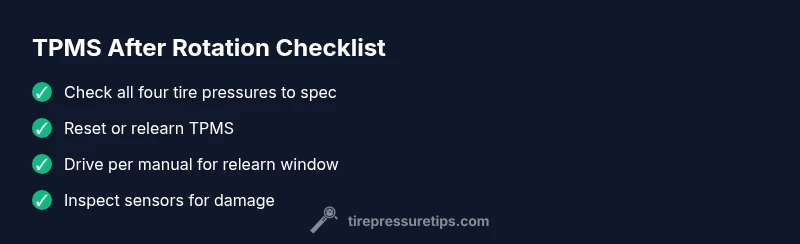
- Check pressures to spec first, cold.
- Relearn TPMS after rotation using proper steps.
- If light remains, inspect sensors for damage.
- Drive as needed to complete relearn and verify.
- Maintain regular checks to prevent future TPMS warnings.