If Tire Pressure Light Is Blinking: Troubleshooting Guide
Urgent, practical guide to diagnosing and fixing a blinking tire pressure light, with safe checks, TPMS relearn steps, and prevention tips.


Blinking tire pressure light usually signals a system or pressure issue. For a quick, safe follow-up, inflate to spec, check for leaks, and relearn TPMS if you’ve moved the tires. See our full step-by-step guide for details.
Why the Tire Pressure Light Blinks and Why It Matters
A blinking tire pressure light is not a decorative feature; it’s a signal that something in the tire pressure system needs attention. According to Tire Pressure Tips, a blinking TPMS indicator can indicate a rapid pressure change, a sensor fault, or an imminent loss of tire pressure. In modern vehicles, the light blinks to draw attention quickly and reduce the risk of driving on underinflated tires. Underinflated tires can compromise fuel efficiency, tire wear, steering response, and braking performance. If you notice the blinking light, your first goal is to verify tires are at or near the recommended pressure when cold, then rule out obvious issues such as a loose cap or wheel leak. Practically, you should also consider recent changes like new tires, a rotation, or tire services that could require a TPMS relearn. Early action preserves safety and reduces the chance of a tire-related breakdown.
Common Blinking Patterns and What They Indicate
Different blinking patterns have different meanings. A rapid, consistent blink often points to a sensor issue or a recent reset that didn’t take. A slow or intermittent blink can indicate a marginal loss of air, a slow leak, or external temperature effects. If the light blinks only when the car is stationary or only after staying in sunlight, you could be dealing with a pressure fluctuation rather than a flat. In any case, don’t assume the worst; start with basic checks—pressures in all tires when cold, inspect for nails or bulges, and verify valve stems aren’t damaged. If you recently changed tires or rims, you may need a TPMS relearn. For fleets or multi-vehicle homes, ensure all sensor IDs are correctly associated with each wheel.
Safety First: Do These Checks Safely
Safety is the top priority when you see a blinking tire pressure light. Park on a flat, level surface away from traffic, engage the parking brake, and turn off the engine before touching the tires. Wear gloves to prevent cuts from sharp rim edges. Use a quality tire pressure gauge to read cold tire pressures, and compare against the vehicle’s placard. If you identify a tire that is substantially low, do not drive far; locate the cause of the leak and address it. If you smell burning, see smoke, or notice a wet rim with a hissing sound, pull over immediately and call for roadside assistance. Never attempt to disable the TPMS or break the seal of a tire to test it; this can be dangerous and cause irreparable tire damage.
Diagnostic-Flow: How to Approach a Blinking TPMS Light
Symptom: Tire pressure light blinking on the dash typically indicates one of several scenarios—rapid pressure loss, a sensor fault, or a relearn requirement after a tire service. Start by checking cold tire pressures in all four tires and the spare. If all four readings are within the vehicle spec and the light still blinks, proceed to inspect for leaks and signs of sensor issues. Use soapy water to verify slow leaks from the valve stem or bead. If a tire shows a leak, repair or replace as needed and recheck. If nothing is found, move to TPMS relearn procedures or seek professional help to confirm sensor health.
Step-By-Step Fixes for the Most Likely Issues
- Verify all tires are inflated to the manufacturer’s spec when cold. 2. Inspect tires for obvious damage or slow leaks. 3. Check valve stems for damage; reseat or replace as necessary. 4. If you’ve had recent tire service, perform a TPMS relearn/reprogram according to the vehicle manual. 5. If the light remains after inflation and relearn, test with a TPMS tool or scan tool for fault codes. 6. Schedule professional inspection if the light persists. 7. Ensure wheel rims are clean and free of corrosion that could affect sensor readings. 8. Drive short distance to recheck after a proper relearn, then monitor.
Tools and Techniques: Gauges, Relearn, and Readouts
Equipping yourself with a reliable tire pressure gauge (dial or digital) is essential. Always read tires when cold and compare with the recommended pressures on the door placard or owner’s manual. For vehicles with TPMS, you may need to perform a relearn procedure after inflating or rotating tires. Some cars require a button press; others use the instrument cluster menu. A torque wrench is not necessary for everyday tire checks, but a tire iron is useful if you must inspect bead seals after a suspected leak. For complex cases, a professional scan can read TPMS fault codes.
When to Seek Professional Help: Safety First
If you observe rapid air loss, a visible nail or puncture, a hissing leak, or a damaged valve, seek professional help promptly. A blinking light that does not resolve after a full inflation and a TPMS relearn procedure may indicate a sensor fault or battery issue in the sensor itself. A professional can perform a factory-specific relearn, inspect sensors, and confirm tire integrity. Never ignore persistent blinking lights, especially if you notice changes in handling or tire performance. Regular maintenance visits can prevent sudden TPMS failures.
Prevention: Keep Your Tires and TPMS in Top Shape
Schedule regular tire inspections, keep tires inflated to the recommended pressures, and perform TPMS relearns after tire replacements or rotations. Maintain tire tread depth and stop by a professional for sensor calibration if the light blinks without a clear cause. Store a portable air compressor for emergencies, and keep a quality gauge in the vehicle. Ensure batteries in TPMS sensors are replaced as specified by the manufacturer.
Steps
Estimated time: 20-60 minutes
- 1
Park safely and power down
Park on a level surface, apply parking brake, power down the engine, and remove keys. This creates a stable environment for tire checks and prevents accidental movement while inspecting the tires.
Tip: Always use wheel chocks if the vehicle sits on a slope. - 2
Check cold tire pressures
Use a reliable gauge to measure all four tires when they are cold. Compare with the vehicle placard to ensure each tire is within the recommended range. Record readings for reference.
Tip: Take readings before driving 2–3 miles to avoid heat-related pressure rise. - 3
Inspect for visible issues
Look for nails, screws, cuts, bulges, or bead leaks around each tire. Check valve stems for cracks or damage. A slow leak may not be obvious but can cause the light to blink.
Tip: Use a flashlight and feel around the tire beads for tiny leaks. - 4
Inflate and relearn TPMS if needed
Inflate tires to spec. If you’ve recently rotated or replaced tires, perform the TPMS relearn/recalibration as described in your owner's manual. This often resolves a blinking light after service.
Tip: Some cars require a button press; others use the menu in the instrument cluster. - 5
Scan for fault codes (optional)
If you have access to a TPMS scan tool, read fault codes to identify sensor or battery issues. This can speed up diagnosing a faulty sensor.
Tip: A professional scanner may be required for some makes. - 6
Test drive and recheck
Drive for 5–10 minutes to allow the TPMS to refresh. Recheck the light; if it stays off after a normal drive, the issue is resolved.
Tip: If the light returns, don’t keep driving long; reassess or seek help.
Diagnosis: Tire pressure light blinking
Possible Causes
- highLoose wheel or TPMS relearn required after service
- highUnderinflated tire or rapid pressure loss
- mediumTPMS sensor fault or battery dying
- lowCold weather causing pressure fluctuations
- lowDamaged valve stem or wheel leak
Fixes
- easyTighten valve caps and ensure tires are inflated to vehicle spec
- easyCheck all tires for leaks and inflate to recommended pressure
- mediumIf TPMS sensor faulty, use TPMS relearn procedure or visit a professional
- easyIf light persists after inflation, perform slow-leak test with soapy water
- mediumIf in doubt, seek professional inspection
Frequently Asked Questions
Why is my tire pressure light blinking fast?
A fast blink usually points to a sensor fault or a recent relearn that didn’t take. Verify all tires are within spec and check for damaged sensors. If it remains, consult a professional.
A fast blink often means a sensor problem or an incomplete relearn. Check pressures and sensors, and call a pro if it doesn’t resolve.
Can I drive with a blinking TPMS light?
If a tire is clearly underinflated, reduce driving distance and address the leak. If you’re unsure, it’s safer to pull over and check the tires or call for roadside assistance.
Only drive short distances if you’re not sure the tires are safe. Otherwise, stop and check or get help.
How do I reset TPMS after tire changes?
Refer to your vehicle manual for the exact relearn procedure. It often involves a sequence on the instrument cluster or a dedicated button. If unsure, have it done by a technician.
Most cars require a specific relearn process in the menu or a button sequence. Check your manual or visit a shop.
What if I can’t locate a leak?
If no leak is visible but the light blinks, the issue could be a sensor fault or a slow, hidden leak. A professional inspection can confirm sensor health and leak status.
No obvious leak? It could be a sensor problem or a slow leak that needs special tools to detect.
Do cold temperatures affect the TPMS light?
Yes. Cold temperatures can reduce tire pressure. Recheck after a cold start and adjust to the recommended pressure if needed.
Cold can drop tire pressure; recheck and inflate to the proper level when tires are cold.
When should I seek professional help?
If the light returns after inflation and relearn, or you notice handling changes, consult a tire service professional for sensor or TPMS calibration.
If the light won’t clear or handling changes, get a professional check.
Watch Video
What to Remember
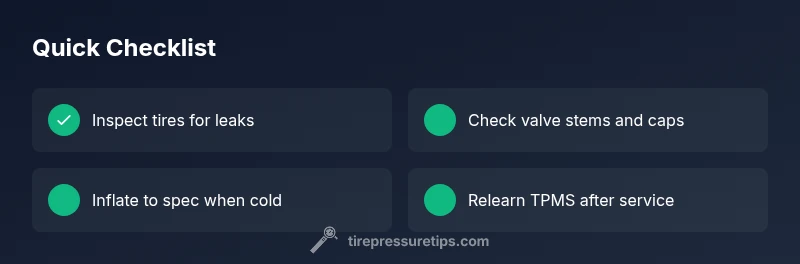
- Check all tires when cold and inflate to spec.
- Relearn TPMS after tire service or rotation.
- Inspect for visible leaks or damaged valves.
- Seek professional help if the light persists.