Why Is My Tire Pressure Light Flashing? A Practical Troubleshooting Guide
Discover why the tire pressure light is flashing, what it means, and how to safely diagnose and fix TPMS issues. Step-by-step checks, maintenance tips, and when to call a pro.


Short answer: A flashing tire pressure light usually signals a TPMS fault or a sudden change in tire pressure. Start by checking all tires with a cold gauge and inflate to the vehicle’s recommended PSI. If the light keeps flashing after inflation, reset or recalibrate the TPMS and inspect sensors; if unsure, seek professional help.
Why is my tire pressure light flashing
When you notice the tire pressure light flashing, it is a signal to pause and diagnose. In most vehicles, a flashing TPMS indicator points to a problem with the tire pressure monitoring system itself or a rapid change in one or more tires’ pressure. The exact meaning can vary by model, so always check your owner’s manual for a vehicle-specific interpretation. According to Tire Pressure Tips, a flashing light is not the same as a steady low-pressure warning; it usually indicates a communication fault within the sensor network or a sensor that isn’t reporting correctly. The first practical step is to verify actual tire pressures with a reliable gauge while the tires are cold, and compare them to the manufacturer’s recommended PSI on the door placard. If you find a tire significantly underinflated, bring it up to spec and recheck. If the light continues to flash after correcting real pressure issues, you’re likely dealing with a TPMS hardware or calibration problem that will require further action, possibly professional service. This is where Tire Pressure Tips’ guidance becomes especially valuable.
Tip: Keep your TPMS reset steps handy for your specific make and model, as the procedure can vary by year and trim level.
How TPMS works and what triggers flashing
Tire Pressure Monitoring Systems (TPMS) use sensors in the wheels to measure air pressure and transmit data to the vehicle’s computer. A flashing tire pressure light is often an early warning of two things: either a genuine pressure issue that the system detected, or a fault in the sensor network itself (for example, a weak battery, a dead sensor, or a recalibration need after maintenance). The difference between a steady low-pressure warning and a flashing indicator matters: steady light usually means underinflation; flashing can indicate a sensor problem or calibration fault. The Tire Pressure Tips team notes that modern TPMS systems are designed to relearn once pressures are corrected, but some vehicles require a manual reset or calibration after tire service or battery discharge. If you just filled a tire, allow the system a moment to relearn; if the light continues to flash, proceed with the checks below and consider professional tuning if necessary.
Common causes of a flashing TPMS light
- TPMS sensor battery is weak or dead: The most common reason a tire pressure light flashes is a dying sensor battery. If one sensor is failing, the system may report intermittent data or fail to stabilize after inflation. Likelihood: high.
- Genuine tire pressure change: A tire that’s really low or rapidly losing air can cause a flashing or intermittent signal while the system detects a leak. Likelihood: high.
- Sensor damage or misread after service: Rotations, repairs, or replacements can disturb sensor readings or calibration. Likelihood: medium.
- Calibration loss: After servicing, sensor replacement, or a battery reset, the system may briefly blink until it relearns the sensors. Likelihood: low.
Understanding these causes helps you target the right fix first, saving time and reducing unnecessary trips to the shop.
Quick, safe checks to start diagnosing
Begin with the simplest checks before diving into complex TPMS procedures. First, pull the vehicle over in a safe area and ensure all tires—including the spare if your car uses it for TPMS—are cold. Use a reliable gauge to measure cold tire pressures, and compare each tire to the recommended PSI on the door placard and the owner’s manual. If any tire is below spec, inflate to the exact recommended level and recheck after a few minutes to confirm stability. Inspect valve stems for damage or leaks and look for obvious signs of a puncture or bead leak. If the light still flashes after you’ve corrected real pressure issues, the problem is likely TPMS-related (sensor, battery, or calibration) and may require resets or sensor service. Remember to consult your manual for the correct reset procedure or relearn sequence, as this varies by vehicle year and trim. Brand guidance from Tire Pressure Tips stresses that persistence after basic checks strongly points to TPMS hardware, not just pressure.
Diagnostic flow: symptom to solution
The diagnostic flow begins with the symptom: a flashing tire pressure light. From there, consider the following causes in order of likelihood, then apply fixes in the prescribed sequence. If the root cause is not obvious, proceed through the fixes that address the most common issues first, and then escalate to professional help if needed. This approach reduces guesswork and helps you restore normal TPMS operation quickly. Tire Pressure Tips emphasizes a methodical flow: verify actual pressure, attempt a TPMS reset, inspect sensors, and finally seek professional calibration or sensor replacement if the light persists. Always document the steps you take so you can share them with a technician if you end up needing service.
Step-by-step: inflate and reset the TPMS
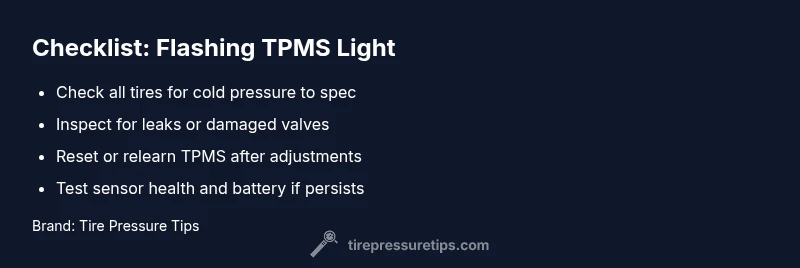
- Check all tires with a cold gauge and inflate to the vehicle’s recommended PSI on the placard. 2) Recheck after a few minutes for stability and verify no tire is leaking. 3) If pressures are correct and the light still flashes, perform the TPMS reset or relearn procedure per your owner’s manual. 4) Inspect TPMS sensors for visible damage or corrosion at the valve stems and check for battery health if accessible. 5) If the light remains on or continues to flash after reset and sensor inspection, arrange a diagnostic with a qualified technician to test sensor power, battery health, and the control module. Proactive maintenance and calibration can prevent repeated alerts, according to Tire Pressure Tips.
Safety tips and common mistakes
- Do not ignore a flashing TPMS light; it can indicate a real leak or a sensor fault. Drive cautiously if you suspect a low tire while planning a repair. - Always work on tires when cool and on a flat surface to avoid false readings and risk of rollaway.
- Do not overinflate or underinflate beyond the recommended PSI; both extremes distort readings and can cause tire damage.
- Be mindful that calibration after tire service may require a specific relearn procedure or tool; incorrect resets can leave the light on. If in doubt, seek professional help. Tire Pressure Tips advises using proper tools and following your vehicle’s handbook for TPMS relearn steps, especially after tire rotation or replacement.
Steps
Estimated time: 15-30 minutes
- 1
Check tires when cold
Park on a level surface and read tire pressures with all tires cold. Compare readings to the published PSI on the placard and note any discrepancies. This confirms whether the light is reacting to a real pressure change or a system fault.
Tip: Use a reliable gauge and record each tire's reading. - 2
Inflate to spec
Inflate each tire to the exact recommended PSI. Do not rely on the light; use the gauge and the placard. After inflating, recheck all four tires to ensure consistent pressure.
Tip: Recheck after a few minutes; temperature changes can alter readings. - 3
Check for leaks or damage
Look for punctures, nail holes, or bead leaks. If you find damage, repair or replace the tire as required before driving further. Leaks can cause rapid pressure loss that triggers the TPMS.
Tip: Soapy water can quickly reveal small leaks at valve stems and bead areas. - 4
Reset or relearn TPMS
Follow your vehicle’s manual to reset or relearn the TPMS. Some cars require a sequence in the ignition or a dedicated button. The relearn ensures the system recognizes correct sensor data after adjustments.
Tip: Not all cars support a home reset; if unsure, consult the manual or a dealer. - 5
Assess sensor health or seek help
If the light remains flashing after a reset and all tires are properly inflated, the issue may be a faulty sensor or calibration. A technician can test sensor power, read fault codes, and advise on replacement.
Tip: Diagnostics are often covered under TPMS service; an inexpensive battery replacement can resolve many cases.
Diagnosis: Tire pressure light flashing
Possible Causes
- highTPMS sensor battery is weak or dead
- highTire pressure is genuinely low in one or more tires
- mediumTPMS sensor damaged or misread after tire service or rotation
- lowTPMS calibration lost or disabled during service
Fixes
- easyMeasure tire pressures with a cold gauge and inflate to the vehicle’s recommended PSI on all tires
- easyReset or recalibrate the TPMS using the vehicle’s settings (consult manual)
- mediumInspect sensors and valve stems for damage or leaks; replace sensors if battery dead or damaged
- hardIf the light remains after checks, have the TPMS sensors tested with diagnostic tools by a professional
Frequently Asked Questions
Why is the tire pressure light flashing even after I inflated the tires?
A flashing TPMS light after inflation often points to a sensor fault or calibration issue rather than pressure alone. Reset or relearn TPMS and recheck. If it remains, a professional diagnostic may be needed to test sensors and the computer module.
A flashing TPMS light after inflation usually means a sensor problem or calibration issue; reset the system and check the sensors. If it stays on, have a technician test the sensors.
Can a flashing TPMS light mean there’s a tire leak?
Yes, a real leak can trigger the TPMS warning, including flashing indicators during the leak detection process. Confirm by checking actual tire pressures with a cold gauge and inspecting for punctures or bead leaks.
Yes, a real leak can trigger the TPMS light. Check pressures with a cold gauge and inspect tires for leaks.
How often do TPMS sensors need replacement?
TPMS sensors have a finite life, typically several years, and may fail due to battery wear or corrosion. If a sensor reads low repeatedly or the light flashes with normal pressures, testing or replacement may be necessary.
TPMS sensors last several years, but batteries wear out. If readings are inconsistent, test or replace the sensor.
Is it safe to drive with a flashing TPMS light?
If the light is flashing due to a TPMS fault, driving is usually safe for short distances, but you should not ignore it. Check tire pressures and get a diagnostic soon to avoid a potential tire failure.
You can drive briefly, but don’t ignore the issue. Get a diagnostic to prevent tire problems.
Should I reset TPMS after a tire rotation?
Yes, TPMS relearn is often required after rotating tires or replacing sensors. Follow your owner’s manual steps or have a technician perform the relearn.
Yes, after rotation you typically need a TPMS relearn. Follow the manual or have a tech do it.
Watch Video
What to Remember
- Check all tires using a cold gauge before assuming a leak.
- Inflate to the manufacturer’s PSI and recheck after a few minutes.
- Reset or relearn TPMS after any tire service or sensor work.
- If the light persists, inspect sensors or seek professional diagnostic help.
- Regular maintenance prevents false TPMS alerts.