Flashing vs Solid Tire Pressure Light: Meaning, Causes, and Fixes
Understand what flashing vs solid tire pressure light signals mean, how to diagnose TPMS issues, and practical steps to safely restore tire pressure and protect your vehicle with expert guidance from Tire Pressure Tips.


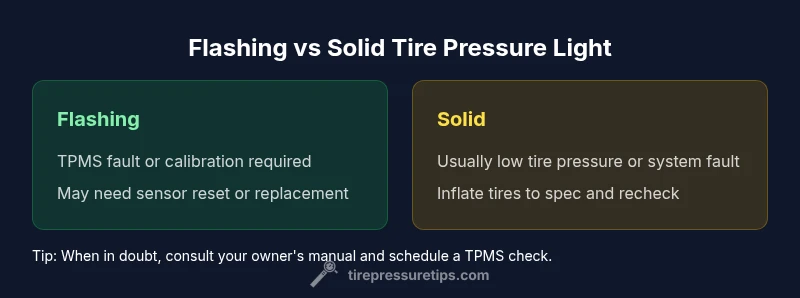
A flashing tire pressure light usually signals a TPMS fault or calibration issue, while a solid light generally indicates low tire pressure or a persistent system fault. Treat flashing as urgent and pull over safely to inspect sensors or seek service; a solid light often means you should check all tires and inflate to the manufacturer’s spec. For model-specific meanings, consult your owner's manual.
Understanding the flashing vs solid tire pressure light
When you glance at your instrument cluster and see a warning, you want to interpret it quickly. The phrase flashing vs solid tire pressure light describes two distinct signaling patterns used by modern TPMS when something needs your attention. According to Tire Pressure Tips, the difference is not just cosmetic: it signals different root causes and required actions. In practice, this knowledge helps drivers stay safe, prevent tire damage, and avoid unnecessary service calls. The contrast matters because the recommended responses diverge: flashing is more often tied to a sensor fault or calibration need, while a solid indicator more commonly points to a tire that actually needs air or a persistent system fault that may require service. Keeping this distinction in mind lowers the risk of driving with underinflated tires or neglecting a faulty monitoring system.
This article uses real-world scenarios and manufacturer guidance to unpack the signs, avoid common misinterpretations, and provide a practical, step-by-step approach to diagnose and resolve either condition. Tire Pressure Tips emphasizes that the right action depends on confirming the tire pressures with a reliable gauge, checking the placard value, and considering environmental factors like temperature changes that can trigger warning lights. The overarching goal is safety, fuel efficiency, and tire longevity. The guidance here applies to most passenger cars and light trucks, but always consult your vehicle’s manual for model-specific instructions.
What the indicators typically mean (solid vs flashing)
Signals for flashing and solid lights come from the same TPMS family, but their meanings are not interchangeable across makes or models. A solid tire pressure light generally indicates one of two things: either one or more tires are below the recommended inflation pressure, or the TPMS has detected a fault in the monitoring circuit that causes a persistent warning. In contrast, a flashing indicator is most often a sign that the TPMS is malfunctioning or undergoing calibration. Some vehicles flash briefly during startup as the system runs a self-check; if the light continues to flash after startup, it warrants further investigation. In both cases, the owner’s manual is the definitive guide for your specific vehicle, because manufacturers vary in how they implement TPMS warnings. The Tire Pressure Tips team recommends treating flashing as a potential fault that may require sensor replacement or reprogramming, while a solid light should prompt a tire-pressure check to determine if inflation is needed.
Causes of a flashing light
A flashing TPMS indicator is not a normal “go inflate now” signal. It is often tied to one or more of the following causes: a dead or dying TPMS sensor battery, a faulty sensor receiver, loose or corroded electrical connections, calibration flags after tire rotation or wheel change, or a sensor that is not reporting data correctly. Environmental conditions such as extreme heat or cold can briefly affect sensor readings, but a persistent flash usually points to a hardware or software fault. In many cars, flashing will appear until the system completes a fault diagnostic or a reset is performed after repairs. According to Tire Pressure Tips analysis, many drivers encounter a flashing light after a tire technician works on wheels or after sensor replacements, underscoring the need to reinitialize the system with the proper procedure.
Causes of a solid light
A solid warning is far more common for everyday tire maintenance: it typically means at least one tire is underinflated relative to the manufacturer’s specification, which is printed on the door placard or fuel-filler door. Temperature shifts can also lower tire pressure by a small amount, triggering a warning if you’re near the limit. Punctures, slow leaks, and damaged valve stems can produce a continued low-pressure signal without an obvious external cause. In some cases, a failed TPMS component or dead battery in a sensor can cause a solid warning even if pressures are acceptable. The key in all cases is to verify both tire pressure and the status of the TPMS hardware before driving far.
How to respond safely when you see each light
If you see a flashing light, you should treat the situation as potentially serious and proceed with caution. Find a safe place to stop, then perform a systematic check: verify tire pressures with a gauge, inspect tires for obvious damage, and attempt a TPMS reset if your vehicle supports it. If the light remains flashing after a reset or if you notice any tire damage, contact a technician. For a solid light, start with the basics: check the tire pressure on all four corners, including the spare if your vehicle’s system monitors it, and inflate to the recommended spec. If inflation brings the pressure into the target range but the light stays on, look for slow leaks or a malfunctioning TPMS sensor. In either case, if you don’t find a clear mechanical cause, seek professional diagnosis to prevent unsafe driving.
Diagnostic steps and verification
A reliable diagnostic begins with a tangible measurement: use a digital tire pressure gauge and record the readings. Compare them to the vehicle's door jamb placard and the tire sidewall rating. If pressures are within the recommended range yet the light remains, a TPMS fault is likely. Many vehicles offer a TPMS learn/reset procedure accessible via the ignition cycle, steering-wheel button, or a dedicated menu. If your readings are low, fill the tires to spec and recheck after driving a short distance, as the system often recalibrates with normal conditions. If you still see the warning, it’s time to have the system scanned with an OBD-II tool and inspected by a tire or TPMS technician.
When to service or replace TPMS components
TPMS sensors have a long service life, but their batteries do not last forever. Replacement is common after several years or if a sensor is physically damaged during a tire service. In many shop workflows, a failed sensor is replaced during new tire installation to ensure reliable monitoring. Valve stems and sensor housings can also corrode or leak, triggering false warnings. The decision to service or replace depends on the sensor’s age, the vehicle’s maintenance history, and the frequency of false warnings. For older vehicles, it is common to reprogram the TPMS after tire changes to ensure proper curb-to-vehicle alignment.
Maintenance and best practices to prevent false warnings
To reduce false TPMS warnings, practice regular tire pressure checks at least monthly and after temperature swings or long trips. Always reset or relearn the TPMS after rotating tires, changing tire sizes, or replacing sensors. Keep valve stems clean and free of debris that could affect seals. Use a high-quality gauge and ensure the repair shop resets the system after maintenance. Staying on top of these habits helps avoid unnecessary service calls and keeps you safer on the road. According to the Tire Pressure Tips team, routine maintenance and calibrated resets are the best defense against misleading warnings.
Comparison
| Feature | Flashing light | Solid light |
|---|---|---|
| Indication/Cause | TPMS fault or calibration required | Low tire pressure or system fault |
| Typical driver action | Run TPMS diagnostic, reset, or service sensor | Check all tires with gauge and inflate to spec |
| Time to act | Urgent; stop safely and diagnose promptly | Address soon; drive cautiously if near limit |
| Reliability | Can be unrelated to actual tire pressure | Directly tied to inflation status or sensor health |
| Best for | Tech-check and TPMS maintenance | Tire pressure management and safety |
Strengths
- Improved safety when interpreted correctly
- Early detection of tire issues and leaks
- Promotes regular tire maintenance
- Encourages TPMS calibration and sensor reliability
Drawbacks
- Misinterpretation can lead to unsafe driving
- Flashing lights may indicate sensor faults requiring service
- Solid lights can be caused by minor environmental changes
- Replacement parts and recalibration may incur cost
Solid light calls for immediate tire pressure verification; flashing light requires TPMS diagnostics
Solid usually signals low pressure; flashing signals a TPMS fault. Follow a systematic check and resets when applicable. When in doubt, seek professional TPMS service to ensure reliability.
Frequently Asked Questions
What does a flashing tire pressure light mean on most cars?
A flashing TPMS light usually signals a fault in the TPMS or a calibration requirement. It often needs reinitialization, sensor check, or professional diagnosis. Do not ignore it, especially if the light persists after a reset.
A flashing TPMS light usually means there’s a fault or calibration issue in the system, so you should check the sensors or have the system diagnosed.
What does a solid tire pressure light indicate?
A solid light typically points to one or more tires being underinflated or a persistent TPMS fault. Verify tire pressures with a gauge, inflate to the recommended level, and recheck. If the light stays on, get a diagnostic.
A solid light usually means your tires are underinflated or there’s a TPMS fault; check pressure and inflate to spec, then monitor.
Should I drive if the light is flashing?
If the light is flashing, pull over safely and inspect for obvious issues. Check pressures, look for damaged sensors, and consider a TPMS reset or professional inspection before continuing.
If the TPMS is flashing, pull over safely and check the tires and sensors before continuing.
Can I reset the TPMS myself?
Many vehicles support a DIY TPMS reset or relearn procedure after inflating tires or rotating wheels. Refer to the owner’s manual for the exact steps, and confirm the light behavior after the reset.
Some cars let you reset TPMS yourself after inflating tires; check your manual for the exact steps.
How long do TPMS sensors last?
TPMS sensors typically last several years, but batteries and seals can wear out. If a sensor fails or the signal becomes erratic, replacement may be necessary during tire service.
TPMS sensors usually last several years; if they fail, replacement during tire service is common.
What should I do after inflating tires to fix a solid light?
After inflating, drive a short distance to allow the TPMS to reassess. If the light remains solid, check for leaks or faulty sensors and seek professional service if needed.
Inflate, then drive a bit to recalibrate; if the light stays on, get a professional check.
What to Remember
- Check tire pressure promptly when a warning appears
- Solid light = inflate to spec and recheck
- Flashing light = TPMS fault likely; diagnose with reset or professional help
- Reset TPMS after maintenance to avoid false alarms
- Regular maintenance reduces false warnings