Can Your Tire Pressure Light Come On When It’s Cold? Quick Troubleshooting Guide
Why the tire pressure light may illuminate in cold weather and how to troubleshoot safely. Practical steps to check PSI, reset TPMS, and prevent false alerts, with expert tips from Tire Pressure Tips.


Yes. In cold weather, tire pressures drop and the TPMS can illuminate even if tires aren’t obviously low. Start with a cold check using a gauge, compare to the vehicle’s recommended PSI, and top off as needed. If the light stays on after a few miles, inspect sensors or seek professional help.
Can Cold Weather Trigger the Tire Pressure Light?
According to Tire Pressure Tips, can your tire pressure light come on when it's cold? Yes, it often does because cold air contracts and reduces tire pressure enough to trigger the TPMS on many vehicles. This isn't always a sign of a dangerous leak; it's a signal to verify pressures when tires are cold. Start with a cold check using a high-quality gauge, compare each tire to your vehicle’s recommended PSI from the door jamb sticker or owner's manual, and top off any that are low. If the TPMS light remains after you drive a few miles and the tires are confirmed at the right pressure, there may be a sensor issue or a calibration fault that warrants professional inspection.
How Temperature Affects Tire Pressure and TPMS
Temperature has a direct effect on tire pressure. As temperatures drop, air inside the tire contracts, causing the gauge reading to fall even though the tire surface appears fine. The Tire Pressure Tips team emphasizes that ambient conditions can produce temporary fluctuations, especially after overnight cold snaps or early morning starts. The TPMS is designed to alert you when a tire's pressure deviates significantly from the target, so cold-induced changes can set off the light even without a puncture. Remember that drivers often notice false alerts in winter due to sudden temperature swings between parking lots and road surfaces. Regular checks, a slow, deliberate inflation to the recommended PSI (when cold), and a timely TPMS reset can help prevent unnecessary warnings.
Quick Checks You Can Do Right Now
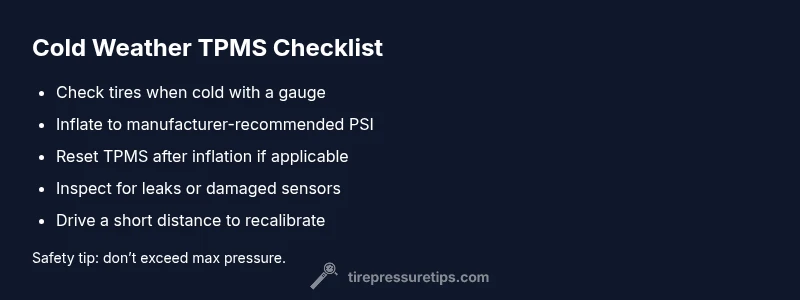
- Check all tires when cold with a reliable gauge and record readings.
- Compare each tire’s reading to the door placard value and identify the ones that are low.
- Inflate tires gradually to the recommended PSI, using the vehicle’s manual guidance.
- Inspect for obvious signs of damage, punctures, or a slow leak (sidewall bulges, nails, or cracks).
- Reset the TPMS if your vehicle supports an easy reset procedure after inflating to spec.
- Take note of ambient temperature; if readings swing widely, consider a professional check.
Diagnostic Considerations: Beyond Cold Weather
Cold weather is a common trigger, but several other factors can cause the TPMS light to illuminate. A weak or failing TPMS sensor battery, damaged sensor, or valve stem corrosion can mimic a cold-induced warning. A relative change in tire pressure after a tire replacement or rotation may require recalibration too. If you notice a tire visually low or the light persists after confirming proper inflation, the issue may lie with the sensor or calibration rather than air alone.
Steps
Estimated time: 15-25 minutes
- 1
Gather tools and prepare safely
Pull over on a flat, level surface. Gather a reliable tire pressure gauge, a flashlight, and your vehicle's manual. Ensure the engine is off and the tires are cold before checking pressure.
Tip: Use a cold-start check for the most accurate reading. - 2
Check all tires when cold
Remove valve caps and measure each tire’s pressure with the gauge. Record the readings and compare to the door placard values in the manual or on the driver’s door jamb. Do not rely on memory or prior hot readings.
Tip: Take notes so you don’t mix up readings between tires. - 3
Inflate to the recommended PSI
If any tire is below the recommended PSI, inflate slowly in short bursts. Recheck after each adjustment to avoid over-inflation. Remember, readings can vary slightly by tire, wheel, and temperature.
Tip: Stay within the vehicle manufacturer’s recommended range. - 4
Inspect for leaks or damage
Look for punctures, cracks, or signs of valve stem damage. If you see a nail, sidewall bulge, or rapid pressure drop, avoid driving long distances and seek professional help.
Tip: A visible issue usually warrants a professional inspection. - 5
Reset TPMS if your vehicle supports it
After inflating to spec, perform the TPMS reset as described in the manual. This helps the system recalibrate to the new pressure. Some vehicles auto-reset after a drive.
Tip: Check the owner’s manual for your exact reset steps. - 6
Take a short test drive and recheck
Drive 5–10 miles at a safe speed to allow the TPMS to recalibrate. Recheck all readings, and note if the light remains on or goes out.
Tip: If the light stays on, the issue may be sensor-related. - 7
Call a professional if needed
If the TPMS light persists despite proper inflation and recalibration, seek help from a tire or automotive technician. Persistent warnings may indicate sensor failures or calibration faults.
Tip: TPMS issues can be safety-critical; don’t delay professional evaluation.
Diagnosis: TPMS light on or flashing, especially after cold starts
Possible Causes
- highTire pressures are temporarily lower due to cold temperatures
- mediumTPMS sensor battery or fault
- lowSlow leak or puncture
Fixes
- easyCheck all tires when cold with a reliable gauge and inflate to the recommended PSI
- easyReset TPMS according to the vehicle manual after inflating to spec
- mediumInspect sensors for damage, corrosion, or battery issues; replace as needed
Frequently Asked Questions
Why does the TPMS light come on when it's cold outside?
Cold air reduces tire pressure, which can trigger the TPMS light even if the tires look fine. Verify with a cold PSI check before inflation.
Cold air can trigger the TPMS light; start with a cold PSI check to verify readings.
Should I drive with the TPMS light on?
If the light stays on after you’ve checked and corrected pressures, have the TPMS system checked by a professional. Driving long-term with a faulty TPMS can mask real issues.
Don’t ignore a persistent TPMS light; get it checked if it doesn’t reset after inflation.
How do I reset TPMS on most vehicles?
TPMS reset procedures vary by vehicle. Consult the owner’s manual for exact steps, which may involve turning the ignition off, inflating tires, and pressing a reset button or using a menu option.
Check the manual for your exact TPMS reset steps.
What if one tire won’t hold air?
A tire that won’t hold air may have a slow leak, a faulty valve stem, or wheel damage. Stop driving on it and seek a tire shop evaluation promptly.
If a tire won't hold air, stop driving on it and seek a professional check.
Can a slow leak trigger TPMS only in winter?
A slow leak can be more noticeable in cold weather because pressure drops more quickly when temperatures fall. Have the tire inspected for punctures or valve issues.
Cold weather can reveal a slow leak that’s otherwise hard to spot.
When should I worry and visit a shop?
If the TPMS light remains on after inflating to spec, if you hear a hissing sound, or see a visible tire issue, see a professional. Safety comes first.
If the light won’t reset or you notice damage, seek professional help.
Watch Video
What to Remember
- Check tires when cold to verify pressure.
- Cold weather often triggers TPMS alerts.
- Reset TPMS after inflating to spec.
- Inspect sensors if light persists after inflation.
- Consult a pro for persistent TPMS warnings.