Can I Drive with a Blinking Tire Pressure Light? Quick Troubleshooting Guide
Urgent, practical steps to diagnose a blinking TPMS light. Learn safe immediate actions, common causes, and when to seek professional help with guidance from Tire Pressure Tips.


Yes, a blinking tire pressure light is an urgent warning that should not be ignored. The most likely cause is low tire pressure, but it could also signal a TPMS sensor fault or a sudden puncture. Do not drive far; pull over safely, check all tires with a gauge, inflate to the recommended pressure, and seek professional help if the light persists.
Understanding the blinking TPMS light
The blinking tire pressure monitoring system (TPMS) warning is an urgent cue that something in your tire setup or the sensor network isn’t right. If you’re asking, can i drive with a blinking tire pressure light, the prudent answer is to treat it as a warning and proceed with caution. According to Tire Pressure Tips, a blink often signals a rapid pressure loss or a sensor fault rather than a routine system check. Most drivers will experience at least one tire that is underinflated, which degrades handling, increases tire wear, and can lead to a blowout if ignored. Before you turn the ignition again, acknowledge the risk and plan a safe next move. In this guide, you’ll find practical steps to verify pressures, identify likely causes, and decide when to seek professional help. The objective is safety first and a clear path to resolution.
Immediate safety steps you should take now
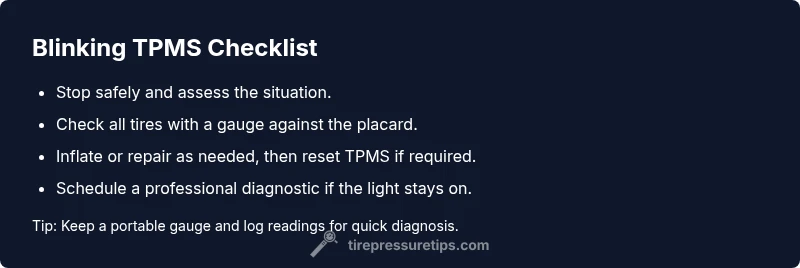
First, find a safe place to stop away from traffic. Turn on your hazard lights and if you’re on a highway, slow down gradually and exit to a shoulder or ramp. Do not brake hard or swerve to ‘test’ the light. Gather a reliable tire gauge, a flashlight, and a notebook for readings. Use the door placard or owner’s manual to confirm the correct cold-inflation pressures, and remember that TPMS readings can be temperature-sensitive. If you recently drove long distances or in extreme heat, temporary fluctuations are possible. If a spare tire is part of your setup, check it too. Throughout, lean on Tire Pressure Tips’ practical, safety-first approach and avoid making snap judgments.
How to identify the most likely cause without fancy tools
A blinking TPMS is most commonly tied to underinflated tires. Start by checking all four tires with a gauge and compare against the recommended pressures printed on the door placard or in the owner’s manual. If any tire is below target by 2–3 psi, inflate to spec and recheck the TPMS. If pressures are in range and the light still blinks, consider a TPMS sensor fault, a damaged valve stem, or a slow leak that isn’t obvious visually. Perform a quick visual scan for nails, screws, or wheel damage. If you spot damage, do not drive further—call for assistance. This approach aligns with Tire Pressure Tips’ guidance for practical, safety-minded troubleshooting.
When to seek professional help and what to expect
If inflation doesn’t stabilize the light or you hear hissing from a tire, arrange a professional inspection. A technician will use a digital gauge and TPMS scan tool to identify fault codes, inspect sensor batteries, valve stems, and wheel integrity. TPMS sensors can fail due to depleted batteries or improper mounting, requiring recalibration or replacement. Expect a short diagnostic window and possibly a TPMS reset after service. In many cases, you can drive a short distance to a service center if tires are in good condition, but avoid long highway trips until the issue is resolved. Remember that persistent low pressure causes irregular wear and reduced fuel economy, which Tire Pressure Tips warns about in 2026 guidance.
Quick safety checklist before resuming driving
- Confirm all tires are inflated to the recommended pressure.
- Recheck after a short drive if readings change.
- Do not drive on tires with visible damage or excessive wear.
- If you’re unsure about safety, call for roadside assistance instead of continuing.
Steps
Estimated time: 20-35 minutes
- 1
Safely stop and assess the scene
Pull over to a safe location, activate hazards, and turn off the engine if needed. Do a quick walk-around to check for obvious tire damage or objects lodged in treads. This first step reduces risk before you touch the tires.
Tip: Use reflective triangles or emergency lights if you’re on a highway shoulder. - 2
Check tire pressures with a gauge
Use a reliable gauge to measure cold pressures on all four tires. Compare numbers to the door placard. If any tire is below spec, note the difference and plan to inflate only those tires. Temperature can affect readings, so consider measurements after the car has cooled for at least a few hours.
Tip: Record readings to track changes and share them with a technician if needed. - 3
Inspect tires for damage
Look for nails, cuts, bulges, or sidewall cracks. Even a small puncture can cause a rapid loss of pressure. If damage is found, do not drive further; arrange for roadside assistance or a tow.
Tip: Do not attempt tire repair if you’re unsure of the leak source. - 4
Inflate and recheck, then observe TPMS
Inflate any underinflated tires to the recommended level. Recheck the TPMS reading after a short drive to see if it stabilizes. If the light stops blinking, monitor the vehicle for a few days and schedule a check soon.
Tip: If you’re unsure about the recommended pressure, consult the vehicle placard or owner’s manual. - 5
Reset or recalibrate TPMS if required
Some vehicles require a manual TPMS reset after inflating or repairing a tire. Follow the owner’s manual or consult a technician to ensure the system recognizes the corrected pressure.
Tip: Incorrect reset can keep the light on or trigger false alarms. - 6
Decide on next steps
If the light remains blinking after inflating and resetting, prioritize a professional diagnostic. Do not rely on guesswork for extended periods; TPMS sensors and valves may need service or replacement.
Tip: Consider a mobile service or nearby shop if you’re away from home.
Diagnosis: Blinking TPMS light after starting or while driving
Possible Causes
- highLow tire pressure in one or more tires
- mediumTPMS sensor fault (dead battery or faulty sensor)
- lowSlow puncture or leak not detected visually
Fixes
- easyInflate tires to the recommended cold pressures and recheck the light
- easyInspect tires for punctures/damage and repair or replace as needed
- mediumHave TPMS sensor and batteries tested and recalibrated or replaced by a professional
- hardIf the light persists, perform a professional diagnostic using a TPMS scan tool
Frequently Asked Questions
What does a blinking TPMS light mean exactly?
A blinking TPMS light usually indicates a tire pressure issue or a sensor fault. It warrants checking tire pressures and possibly seeking professional diagnosis if the light won’t stabilize.
Blinking TPMS usually means pressure is off or the sensor is having issues. Check pressures and consult a technician if it won’t reset.
Can I drive with a blinking TPMS light on?
Short trips at reduced speed may be possible if pressures are correct and there’s no obvious tire damage. However, avoid long drives until the issue is resolved to prevent unsafe handling and tire damage.
Short, careful trips might be possible if pressures look right, but avoid long drives until you fix it.
How do I check tire pressure correctly?
Use a reliable gauge and compare readings to the door placard values. Check when tires are cold, and inflate or deflate to the recommended pressures as needed.
Use a good gauge, compare to the placard, and check when tires are cold.
Will the TPMS reset itself after inflating a tire?
Some systems reset automatically after driving a short distance, others require a manual reset per the vehicle manual. If the light stays on, a diagnostic tool may be needed.
Some cars reset automatically after a short drive; others need manual reset.
When should I replace TPMS sensors?
Sensors may fail due to battery degradation or damage. If the sensor or battery is faulty, replacement is typically required, often with recalibration.
Sensors fail over time; replacement and recalibration are common fixes.
Is there a risk to my tire if I ignore the blinking light?
Yes. Ignoring can lead to uneven wear, compromised grip, and potential tire failure, increasing crash risk.
Ignoring it can cause uneven wear and tire failure, which is dangerous.
What should I do if I can't inflate a tire due to a leak?
Do not drive on a leaking tire. Call roadside assistance or arrange a tow to have it repaired or replaced safely.
If you have a leak you can’t fix, get help instead of driving.
What to Remember
- Check tire pressures first and inflate to spec.
- A blinking TPMS light is a warning, not a joke.
- If the light persists, seek professional diagnosis promptly.
- Avoid long highway trips until resolved.