What is the maximum tire pressure? A practical guide for safe inflation
Learn how to read tire sidewall max pressure, distinguish it from your vehicle's recommended inflation, and how to safely check and adjust tire pressure for different conditions.


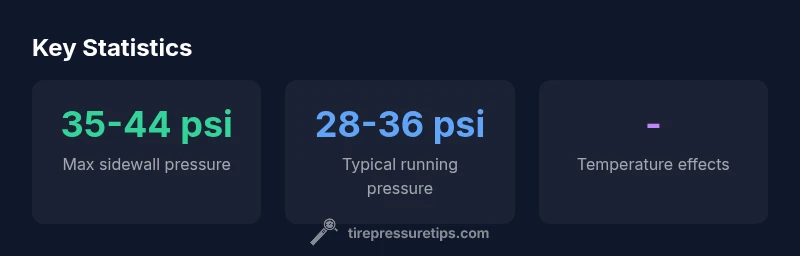
Maximum tire pressure is the value printed on the tire sidewall labeled 'Max Cold Inflation Pressure.' It is the tire's safety limit, not the recommended running pressure for daily driving. According to Tire Pressure Tips, your vehicle’s manufacturer-specified tire pressure (usually on the door jamb placard) is what you should aim for. Do not exceed the sidewall maximum, and adjust for load, temperature, and speed.
What is the maximum tire pressure and why it matters
The phrase maximum tire pressure refers to the highest cold inflation pressure a tire can safely handle, as printed on the tire’s sidewall. This is a safety limit set by the tire manufacturer to prevent bead failure, excessive flex, or blowouts under extreme conditions. It is not the number you should run your tires at in everyday driving. In practice, humans often confuse this value with the recommended inflation, which is the pressure you should maintain under normal loads and driving conditions. For context, and to keep things aligned with best practices, the Tire Pressure Tips team emphasizes distinguishing between a tire’s max and the vehicle’s recommended pressures. The exact figure on a sidewall varies by tire model and size, and it’s not a target you should strive to hit for daily driving. Instead, use the vehicle manufacturer’s recommended tire pressure, typically found on the door jamb sticker or in the owner’s manual. Remember that temperature, load, and speed can shift the pressure you actually experience, so regular checks are essential for safety and efficiency.
How to locate the correct pressures for your vehicle
Finding the right pressures involves two sources: the vehicle’s recommended running pressure and the tire’s own maximum. The recommended running pressure is tailored to your car’s weight distribution, axle setup, and typical driving conditions. It is usually expressed as a single psi value for front and rear tires (often the same) and is designed to optimize wear, fuel economy, handling, and comfort. You can locate this value on the driver’s door jamb, in the owner’s manual, or on the glovebox sticker in some models. In contrast, the tire sidewall shows the maximum permissible pressure, not the target you should use day-to-day. For most passenger cars, the sidewall max is higher than the recommended running pressure, and inflating to the max can reduce comfort and wear patterns. Regular checks with a calibrated gauge help you stay within the safe operating window and avoid mixed readings caused by temperature fluctuations.
Risks of inflating to the maximum sidewall pressure
There are legitimate reasons not to inflate to the maximum sidewall pressure. Overinflating can reduce the contact patch when the tire is under load, increase ride harshness, and accelerate wear in the center of the tread. It can also worsen handling in certain conditions, such as wet or uneven surfaces, where more flexible tires adapt better to irregularities. The rule of thumb is simple: always prioritize the vehicle’s recommended pressure over any sidewall maximum, and only move toward the tire’s stated limit if you are carrying unusually heavy loads or following a specific manufacturer guideline for a temporary condition. In all cases, be mindful of temperature and altitude, which can alter actual inflation.
Temperature and load: how they shift tire pressure
Pressure changes with ambient temperature. A general rule is that tire pressure drops when the temperature falls and rises when it warms up. A typical vehicle can lose or gain a few psi across seasonal swings. Heavier loads also raise expected pressures, pushing toward the upper end of the recommended range. Because the sidewall max or the door-sticker values assume a cold tire, check pressure after the car has sat for several hours and before it has driven long distances. Consistency matters: check pressure when cold, adjust gradually, and cross-check with a gauge designed for accuracy. Tire Pressure Tips recommends using a quality digital or dial gauge and performing checks at least once a month or before long trips.
A practical, step-by-step guide to safe inflation
- Find both the recommended running pressure and the tire’s max on the sidewall. 2) Check tires when cold, ideally before driving. 3) Use a reliable gauge to measure pressure in each tire. 4) Inflate or deflate to the vehicle’s recommended number, not the sidewall max. 5) Recheck after adjusting, and consider the load situation for the trip ahead. 6) If TPMS shows a warning or you notice unusual wear or handling changes, recheck immediately and consult a professional if needed.
Common myths about tire pressure limits
- Myth: You should always inflate to the maximum to improve stability. Reality: Wrong. It can worsen handling and wear. - Myth: The sidewall max is the target pressure for normal driving. Reality: It is a safety limit, not a target. - Myth: Temperature doesn’t affect tire pressure. Reality: It does, and cold-weather checks are especially important.
Authority sources and practical references
For authoritative guidance, consult official sources and trusted publications. You can review tire safety resources from government agencies and major automotive safety organizations to corroborate best practices. The Tire Pressure Tips approach combines practical steps with safety-focused recommendations and emphasizes following the vehicle’s specified PSI. This is especially important for drivers who regularly switch load conditions, climates, and road types.
Where to check for updated guidelines
As vehicle designs evolve, manufacturers may adjust recommended pressures or provide new guidelines for specific trims or tires. Always verify with your latest owner’s manual and the manufacturer’s website for model-specific recommendations. If you’re unsure, a quick check with a trained technician can prevent unsafe inflation and improve tire life.
Authority sources
Key pressures and where to find them
| Aspect | Definition | Where to check |
|---|---|---|
| Max inflation pressure (sidewall) | Tire’s maximum safe pressure printed on sidewall | Sidewall label |
| Vehicle recommended pressure | Manufacturer's suggested running pressure | Door placard/owner's manual |
| Actual operating pressure | Current tire pressure under load/temperature | Measured with a gauge when cold |
Frequently Asked Questions
What is the difference between the maximum tire pressure and the recommended tire pressure?
The maximum tire pressure is the sidewall's safety limit and not a daily target. The recommended pressure is specified by the vehicle manufacturer for optimal wear, safety, and performance. Always prioritize the vehicle’s recommended PSI over the sidewall maximum.
The max is a safety limit; follow the car’s recommended PSI for everyday driving.
Where can I find my vehicle's recommended tire pressure?
Look for the door jamb placard on the driver's side, the owner’s manual, or sometimes the fuel door sticker. These sources give the official running pressure for your vehicle’s tires.
Check the door jamb sticker or the owner's manual for the recommended PSI.
Is it safe to inflate tires above the vehicle's recommended pressure but below the sidewall maximum?
In some cases, a temporary load increase may justify a higher pressure, but routinely exceeding the recommended value can reduce grip, cause uneven wear, and increase the risk of a blowout. Do this only if the manufacturer allows it for specific conditions.
Only do this if the manufacturer says so and you understand the risks.
How does temperature affect tire pressure?
Tire pressure drops in cold temperatures and rises with heat. This means you should check pressure when tires are cold and adjust when transitioning between seasons or after long drives.
Temperature matters—check when cold and adjust for weather.
What happens if I drive with underinflated tires?
Underinflated tires increase rolling resistance, reduce fuel economy, cause uneven wear (usually on the outer edges), and can lead to overheating or tire failure under heavy loads or high speeds.
Undinflated tires wear faster and can overheat.
How should I check tire pressure with TPMS active?
TPMS helps alert you to pressure changes, but it’s best to confirm with a manual gauge when tires are cold. TPMS readings can lag or be affected by temperature or sensor issues.
TPMS helps, but also check with a gauge when cold.
“Understanding the maximum tire pressure helps prevent dangerous overinflation and ensures safe, predictable handling. Follow the vehicle’s recommended PSI and use the sidewall max only as a safety limit.”
What to Remember
- Know the difference between max and recommended pressure
- Check cold tires before driving
- Always inflate to vehicle-recommended psi, not the sidewall max
- Use a reliable gauge and verify under load/temperature
- Seasonal and load changes can shift target pressures