What Are Good Tire Pressures? A Practical Guide for Drivers
Learn what good tire pressures are, how to check them cold, and how to adjust for load and weather. Practical guidance to boost safety, fuel economy, and tire life.


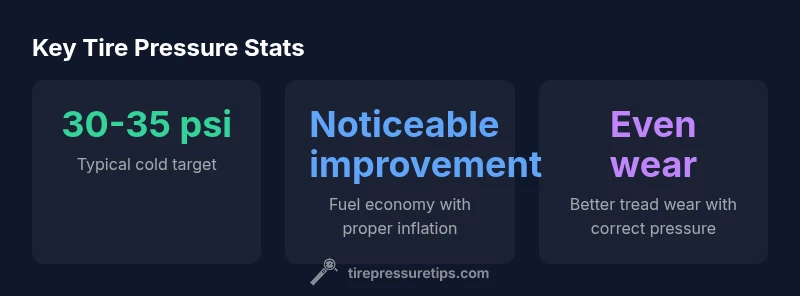
Good tire pressures depend on your vehicle and tires, but a practical starting point for most passenger cars is around 30-35 psi per tire when cold. Always verify targets on the door jamb sticker or in the owner's manual. Inflate with a reliable gauge, then recheck after driving a short distance. Adjust within the vehicle’s recommended range to accommodate loads, speed, and weather.
Why accurate tire pressures matter
According to Tire Pressure Tips, maintaining correct tire pressures is one of the simplest, most impactful ways to improve safety, efficiency, and tire life. When tires are underinflated, they generate more heat and wear; handling becomes sluggish, braking distances can lengthen, and fuel economy suffers due to higher rolling resistance. Overinflation, while less common, reduces contact patch with the road, which can degrade grip and accelerate wear in the center of the tread. For most drivers, starting with the manufacturer’s cold-inflation specification is the best path. Remember that temperatures, driving style, and payload all influence the actual pressure you should run. The goal is to stay within the vehicle’s recommended band, checked when tires are cold, to ensure consistent performance. In practice, even small deviations—say within a few psi—can subtly alter steering response, ride comfort, and tire wear patterns over time. Therefore, know your targets, check regularly, and adjust as needed.
What are good tire pressures? Understanding the target range
The question 'what are good tire pressures?' doesn't have a single universal answer because it depends on the vehicle and tire size. For most everyday sedans and compact cars, the common starting point is around 30-35 psi per tire when cold. Some vehicles with higher-performance tires or heavier payloads require higher numbers, while smaller or lighter vehicles may fall at the lower end of that band. Always verify with the label on the door jamb or the owner's manual, which provides the exact front and rear targets. If you can't see the sticker due to wear or aftermarket tires, consult the tire manufacturer specifications and the vehicle’s service documentation. The key is to stay inside the recommended range for your model and adjust for load, speed, and weather. If you travel with heavy cargo or passengers, you might notice a need for slightly higher pressure within the approved band to maintain handling and tire wear. As you build this habit, you'll have fewer pinch flats and better overall performance.
Reading the official targets: door labels, manuals, and sidewalls
Your vehicle’s official targets live where you’d expect: on the door jamb sticker, usually on the driver's side. This label lists cold inflation values for front and rear tires; it may also show a maximum tire pressure. If the car has a different tire size, the label will still reflect the appropriate values for the new tires. When the sticker is worn or missing, consult the owner’s manual or the tire manufacturer’s specification sheet. Never rely on a single number from a different vehicle or a guess. The tire sidewall shows the maximum pressure the tire can safely hold, but you should never inflate to that maximum; it’s a limit, not a target. Follow the label’s numbers, and adjust for your load and the conditions. The more you align with the manufacturer’s targets, the more consistent your handling and wear will be.
Checking and adjusting pressure: step-by-step guide
Preparation: Do this when tires are cold or have cooled for at least three hours. You’ll need a reliable tire pressure gauge and a source of air. Step 1: Remove the valve cap and place the gauge on the valve stem; read the current pressure. Step 2: Compare with the target value on the label. Step 3: If low, add air until you reach the target; if high, release air in small increments and recheck. Step 4: Replace the valve cap, wipe away any moisture, and retest after driving a short distance to settle the tire. Tip: Always inflate with the vehicle’s target range, not a fixed number; check both front and rear tires. Regular checks prevent surprises on the road and improve safety and efficiency.
Common myths and pitfalls
A common myth is that TPMS provides an exact tire pressure reading; TPMS indicates underinflation or overinflation and is not a precise gauge. Relying on 'check only before trips' misses the cumulative effects of daily wear. Another pitfall is assuming all tires on a vehicle require the same pressure; some cars specify different pressures for front and rear axles. Finally, inflating tires to a higher number for better fuel economy can backfire: it can reduce grip, increase wear in the center of the tread, and create a harsher ride. Instead, treat the label as your authority and use a gauge to verify that you’re staying within the recommended band.
Special cases: weather, load, and tire wear
Seasonal temperature changes have a real effect on tire pressure: cold air reduces pressure and warm road conditions can increase it. When you haul heavy loads, you should check and possibly adjust pressure to support the extra weight; otherwise, underinflation and uneven wear can occur. If you use winter tires or start with a different tire size, re-check the pressures after installation. Regular, careful checks help prevent fast wear, improve steering feel, and maintain safe braking distances. Remember that TPMS can alert you to a problem, but you should still verify pressures with a gauge.
Long-term tire pressure maintenance routine
Make tire pressure checks a monthly habit and before long trips. Keep a portable gauge in the glove box or your toolkit. Use the door label as your anchor, and record any deviations you observe so you can detect slow leaks early. If you notice repeated loss of pressure, inspect valves, rims, and tires for leaks or damage; slow leaks can be caused by small punctures, curb damage, or a degraded seal. Consider seasonal adjustments: in winter, check more often due to colder temperatures; in hot conditions, monitor for overinflation that could harm ride quality and tire wear. A consistent routine saves money, reduces risk, and reflects responsible vehicle maintenance.
Quickstart checklist for drivers
Whether you’re new to tire maintenance or refreshing your routine, this quickstart helps you stay within the optimal range. Start by locating the label on the driver's door jamb and noting the front and rear targets. Use a reliable gauge to measure the tires when cold, refill to the target values, and recheck after a short drive to confirm stable readings. Keep a portable gauge in the glove box and a small notebook to log measurements over time; this makes it easier to spot slow leaks or sudden changes. Regularly inspect valve stems, rims, and sidewalls for damage, and replace damaged sensors or tires as needed. In extreme weather, check more frequently and adjust within the recommended band rather than chasing a single number. By adopting this routine, you’ll preserve fuel economy, improve handling, and extend tire life, all while reducing the risk of wave-like handling or blowouts on the road.
Tire pressure guidance by vehicle type
| Aspect | Typical Guidance | Notes |
|---|---|---|
| Passenger Car (sedan/coupe) | 30-35 psi | Check label; adjust for load and climate |
| Compact SUV/Truck | 32-38 psi | Higher payload requires more pressure within range |
| Performance/low-profile tires | 32-42 psi | Follow manufacturer guidance for performance tires |
| Max pressure reference | Maximum on sidewall | Do not inflate to this value; it’s a limit, not a target |
Frequently Asked Questions
Where can I find the recommended tire pressure for my car?
Look at the door jamb sticker on the driver's side, which lists cold inflation targets for front and rear tires. If the sticker is missing, consult the owner's manual or the tire manufacturer’s specifications. Always confirm with a gauge after inflating.
Check the door jamb label or owner's manual to get your exact numbers, then measure with a gauge.
Is TPMS the same as the exact tire pressure?
No. TPMS warns you when a tire is underinflated or overinflated, but it does not provide an exact psi reading. Use a reliable tire gauge to verify the actual pressure.
TPMS tells you something’s off; you still need to measure with a gauge.
Do winter temperatures require adjusting tire pressures?
Cold weather lowers tire pressure, so check and inflate to the label when tires are cold. Re-check after temperature changes or driving to ensure you stay within the recommended range.
Yes—colder temps lower pressure. Check when tires are cold and adjust as needed.
What if my tires require different pressures front vs rear?
Some vehicles specify different pressures for front and rear axles. Always follow the label for each axle rather than a single number.
Follow the car’s label for each axle.
How often should I check tire pressure?
Check at least once a month and before long trips. Weather changes and seasonal shifts can affect pressure, so adjust within the recommended band as needed.
Check your tires at least monthly, and before long trips.
“Correct tire pressures are a foundational safety measure—small deviations can affect braking, handling, and fuel economy. Stay within the labeled range and check regularly.”
What to Remember
- Check tires when cold and within the label range
- Always follow the vehicle label for targets
- Use a reliable gauge and verify with the sticker
- Avoid underinflation and overinflation
- Make tire pressure checks part of your routine