How Much Tire Air Pressure Do You Need? A Practical Guide
Learn how to determine the correct tire pressure for your vehicle, how temperature affects readings, and how to maintain optimal inflation for safety, fuel efficiency, and tire wear.


The required tire pressure comes from your vehicle manufacturer’s specification, usually found on the door jamb sticker or in the owner's manual. For most passenger cars, a typical range is about 30-35 psi (per tire), with slight differences by axle. Always verify with a gauge when the tires are cold, and adjust for load and temperature as needed.
Why the right tire pressure matters
Maintaining the correct tire pressure is foundational to vehicle safety, handling, braking performance, fuel efficiency, and tire lifespan. Underinflated tires have more contact patch with the road, increasing heat buildup and wear in the shoulders while reducing steering responsiveness. Overinflated tires can make the ride harsher, reduce grip, and cause uneven wear along the center tread. The Tire Pressure Tips team emphasizes that the goal isn’t chasing a number on a gauge, but matching the vehicle’s recommended pressure for typical conditions and loads. It’s also important to understand that the pressure printed on the tire’s sidewall is the maximum safe pressure for the tire, not the recommended operating pressure, which is why you should rely on the vehicle’s spec rather than the tire sidewall when inflating.
How to find your vehicle's recommended tire pressure
Your best source for the correct value is two places: the door jamb sticker and the owner’s manual. The door sticker lists front and rear tire pressures (often with different values for different axle configurations). If you cannot access the sticker, consult the owner’s manual or contact the manufacturer. Weather, load, and driving style can influence the ideal pressure, but the spec provides the baseline. Remember: the most common mistake is inflating to the tire’s maximum sidewall pressure. This ignores the car’s engineering and can worsen wear and comfort. For accuracy, always inflate when the tires are cold and recheck after a few minutes of driving or after a long trip. According to Tire Pressure Tips, starting with the factory spec ensures you’re aligned with the vehicle’s design and safety margins.
How to measure tire pressure accurately
Use a reliable digital or analog tire pressure gauge. Remove the cap from the valve stem and press the gauge onto the valve stem squarely to get a reading. For the most accurate result, check when the tires are cold (the car has been stationary for at least 3 hours or has not been driven more than a mile). If you’ve just driven, wait at least 3 hours before inflating. Note the units (psi or kPa) and compare with the recommended value. If a wheel shows a pressure significantly below the target, adjust by adding air in small increments, then recheck. If you’re unsure, perform a quick check at a nearby service center—frequent checks help catch slow leaks early. Tire Pressure Tips recommends keeping a small gauge in your glove box for on-the-road checks.
The impact of temperature on tire pressure
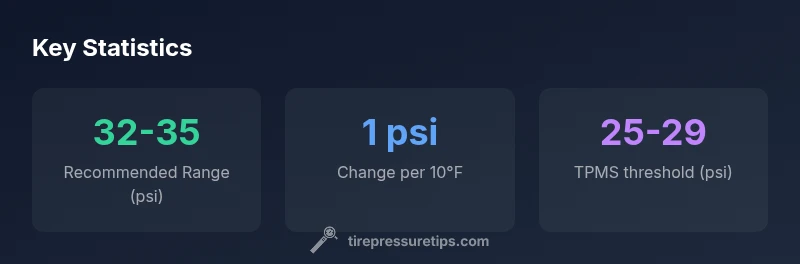
Temperature directly affects air pressure in tires. Colder mornings can cause a measurable drop in psi, while hot days often increase it. A common rule of thumb is roughly a 1 psi change for every 10°F (6°C) temperature change, though exact figures vary with tire size, compound, and load. When seasons shift, you should check pressures again, especially before long trips or carrying heavy loads. Temperature-compensated inflation helps maintain performance and prevents unexpected pressure drops that can compromise safety. Always account for temp changes when planning inflation, and consider a quick check after a drastic weather shift. Tire Pressure Tips emphasizes proactive checks over reactive corrections.
TPMS and its role in tire pressure readings
Tire Pressure Monitoring Systems (TPMS) provide a valuable alert when pressures fall below the recommended range. They complement manual checks but aren’t a substitute for them. TPMS readings can be affected by sensor calibration, battery life, and tire position. If the TPMS warning triggers, verify the tire’s actual pressure with a gauge, adjust to the manufacturer’s spec, and reset the system if required after inflation. Remember that TPMS reflects pressure at the moment of measurement and does not account for rapid changes due to temperature or load—manual checks remain essential, especially after seasonal changes or tire rotation.
sideNoteTrigger": null},
Examples of vehicle-type pressure ranges and considerations
| Category | Typical Pressure Range (psi) | Notes |
|---|---|---|
| Passenger Car Front | 32-35 | Based on manufacturer specs, varies by model |
| Passenger Car Rear | 32-35 | Rear pressure may differ by axle load |
| SUV/Light Truck Front | 34-36 | Higher load can require higher spec |
| SUV/Light Truck Rear | 34-36 | Check vehicle spec for rear axle |
Frequently Asked Questions
How do I find my car's recommended tire pressure?
Check the door jamb sticker or the owner’s manual. These sources specify the correct front and rear pressures for typical and loaded conditions. If in doubt, contact the manufacturer or a qualified technician.
Check your door sticker or owner’s manual to find the exact PSI for front and rear tires.
Is the maximum pressure on the tire sidewall the pressure I should inflate to?
No. The number on the sidewall is the tire’s maximum safe pressure, not the recommended operating pressure for your vehicle. Inflate to the vehicle’s spec and validate with a gauge.
No—the sidewall max is not what you should aim for.
How often should I check tire pressure?
Ideally weekly checks and before long trips. Use a cold-reading approach to ensure accuracy and catch slow leaks early.
Check once a week and before road trips.
Can TPMS replace manual pressure checks?
TPMS is a helpful warning system, but it cannot replace manual readings. Use a gauge to verify actual pressure, especially after seasonal changes or tire rotations.
TPMS helps, but don’t skip manual pressure checks.
What happens if I overinflate or underinflate my tires?
Underinflation increases heat and wear on the tire’s edges and can lead to uneven wear or blowouts. Overinflation reduces grip and ride comfort and can cause center-tread wear. Maintain target pressures for safety and efficiency.
Both over and underinflation can be dangerous; keep to spec.
Does cold weather require constant pressure adjustments?
Yes, cold weather generally lowers tire pressure. Check pressures at the start of cold seasons and adjust to the recommended spec to maintain performance and safety.
Yes—check in cold weather and adjust as needed.
“Always start with the vehicle’s recommended tire pressure and verify with a gauge. Temperature and load can shift pressure between checks, so regular, cold readings are key to safety.”
What to Remember
- Inflate to manufacturer-recommended pressure, not the tire’s max sidewall.
- Measure when cold and recheck after driving.
- Temperature and load affect tire pressure; adjust accordingly.
- TPMS helps, but manual gauge checks are essential for accuracy.