UTV Tire Pressure Guide: Safety, TPMS & Maintenance
A practical, step-by-step guide to checking, adjusting, and maintaining UTV tire pressure for safety, traction, and tire longevity. Learn how to read manufacturer specs, use TPMS and gauges, and perform routine upkeep.


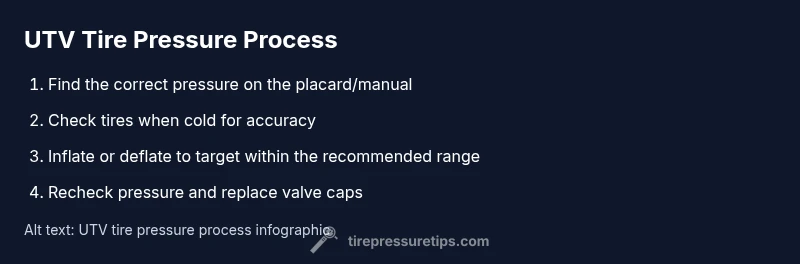
UTV tire pressure should follow the manufacturer’s recommended range for your model and use case. Check cold, account for load and terrain, and verify with a calibrated gauge and TPMS readings before riding. Use the owner's manual or tire placard as the final authority for your setup. Keep monitoring after long rides and adjust as needed.
Why Accurate UTV Tire Pressure Matters
Maintaining the correct tire pressure on a UTV is essential for safe handling, predictable steering, and even tire wear. When tires are underinflated, the beading area flexes more and overheats on rough terrain, which can shorten tire life and reduce grip. Overinflated tires, conversely, create a harsher ride, increase the risk of damage from road hazards, and reduce traction by shrinking the contact patch.
According to Tire Pressure Tips, following the manufacturer’s recommended pressure range for your model and use case helps maintain stable handling and protects tires from uneven wear. The right pressure also supports better load distribution when you carry equipment or passengers. Always consider the terrain you’ll tackle—mud, sand, rocky trails, or steep grades all influence how pressures feel in practice. While it’s tempting to adjust for a softer ride, staying within the prescribed range is the safest path. Start every ride by confirming pressures when the tires are cold, and recheck after a long run or after changing load. A small, deliberate adjustment within the manufacturer’s range can yield noticeable improvements in steering response and braking grip.
In this guide you’ll learn how to locate the correct pressures, measure accurately with TPMS and gauges, adjust as needed, and maintain consistent tire pressure as part of routine UTV maintenance. Keeping tire pressure in the right range is a cornerstone of safe off-road operation and can extend tire life and fuel efficiency over time.
Tools & Materials
- Digital tire pressure gauge(Calibrated; reads in psi and kPa)
- Air compressor or portable inflator(Prefer one with a regulator to avoid over-inflation)
- Owner’s manual or tire placard(Used to locate exact recommended pressures)
- Tire pressure gauge backup (analog)(Useful as a cross-check)
- Valve caps and stem brush(Keep stems clean and caps on)
Steps
Estimated time: 10-20 minutes
- 1
Locate the official pressure specification
Find the exact front and rear tire pressures for your UTV model and load scenario in the owner’s manual or on the tire placard. This baseline tells you the target range for normal riding and helps you plan any adjustments for terrain or equipment.
Tip: If you can’t find it, contact the manufacturer or your dealer for the correct numbers. - 2
Prepare the vehicle and tires
Park on level ground and ensure the tires are cool before measuring. Remove any dirt from the valve stems and keep a clean working area so readings aren’t affected by debris or heat.
Tip: Make this a consistent pre-ride habit for reliable comparisons. - 3
Check current tire pressures with a gauge
Attach your gauge to each valve stem, read the pressure, and record the values for front, rear, and spare if you carry one. Compare the readings to the manufacturer spec and note any deviations.
Tip: Use the valve stem as the reference point; read at eye level for accuracy. - 4
Inflate or deflate to target within the range
If a tire is below spec, add air in small increments and recheck after each adjustment. If it’s above spec, release air slowly and recheck. Repeat until both tires meet the target range for their axle.
Tip: Avoid large jumps; small adjustments yield more consistent results. - 5
Recheck all tires after adjustment
Confirm that front and rear tires (and the spare, if applicable) are within spec. Ensure valve caps are reinstalled to protect the stems from dirt and moisture.
Tip: A quick second check helps catch any leaks or slips in the gauge. - 6
Verify TPMS status and calibration
If your UTV uses TPMS, ensure sensors read within the target range. If readings seem off, perform a TPMS reset per the manual or consult the dealer for calibration.
Tip: TPMS is a helpful guide, but always confirm with a physical gauge. - 7
Document settings for future reference
Record the exact pressures and the date of measurement. This simplifies future maintenance, especially if you swap tires or carry different loads.
Tip: Keep a simple log in your toolkit or vehicle manual. - 8
Test ride and re-evaluate
Take a short, controlled ride on terrain similar to your typical use. Stop to recheck pressures if you notice handling changes or after a long ride.
Tip: Road feel and grip will reveal subtle pressure shifts.
Frequently Asked Questions
What is the recommended tire pressure for UTVs?
The recommended pressure depends on your specific UTV model and load. Always refer to the owner’s manual or tire placard to get the exact range for front and rear tires.
Check the manual or placard for the exact front and rear pressures for your model.
Should I inflate to the maximum sidewall pressure for rough terrain?
No. Do not inflate to the maximum printed on the sidewall. Stay within the manufacturer’s recommended range for safe handling and tire life.
Don’t inflate to the max—stick to the manufacturer’s range.
How do I reset TPMS on a UTV?
Consult your UTV’s manual for the exact TPMS reset procedure. Some models require a button sequence or a diagnostic tool to recalibrate sensors.
Refer to the manual for the exact TPMS reset steps.
What happens if I run a tire with too low pressure?
Underinflated tires can overheat and wear unevenly, reducing traction and increasing the likelihood of bead or sidewall damage on rough terrain.
Low pressure can cause overheating and wear, reducing grip.
Is cold-weather tire pressure different for UTVs?
Yes, temperature affects pressure. In colder conditions, pressures drop, so you’ll need to recheck and adjust after temperature changes.
Cold weather lowers tire pressure, so recheck after temperature changes.
Do I need to check pressure after riding on rough terrain?
Yes. Rough terrain can alter pressure, so recheck and adjust as needed to return to spec before the next ride.
After rough terrain, recheck to maintain proper pressure.
Watch Video
What to Remember
- Follow manufacturer specs for UTV tire pressure.
- Check cold, measure with gauge and TPMS readings.
- Adjust gradually and recheck after changes.
- Document settings to simplify maintenance.