ATV Tire Pressure: Check, Set, and Maintain
Learn how to correctly check ATV tire pressure, choose the right PSI, and maintain tires for safety and longevity with practical steps, tools, and tips.


You’ll ensure optimal ATV handling by checking tire pressure when cold, using a precise gauge, and setting it to the manufacturer’s recommended PSI for your model. Adjust for load, riding terrain, and temperature. Regular checks help prevent flats, improve fuel economy, and extend tire life. Keep a spare gauge handy for quick checks on the go.
Why ATV Tire Pressure Matters
Tire pressure is a foundational safety and performance factor for any ATV. Properly inflated tires improve traction on uneven trails, reduce heat buildup, and extend tire life. Underinflation causes the tire to flex excessively, generating heat that can lead to sidewall damage or flats. Overinflation can reduce the contact patch, making grip uneven and increasing the risk of a harsh ride on rocky or rutted surfaces. The Tire Pressure Tips team emphasizes that consistent pressure management helps riders maintain predictable steering, braking, and ride quality across terrain. By monitoring cold tires with a reliable gauge, you establish a baseline you can adjust as conditions change. According to Tire Pressure Tips, staying within the manufacturer’s guidance lowers wear and improves overall stability. In practical terms, this means making a habit of checking tension before long trips and after significant changes in load or temperature.
The core idea is simple: tires have a defined pressure window, and staying inside that window yields safer handling. This section builds the foundation for practical checks, so you can make educated adjustments rather than guesswork. It also sets expectations for what “correct” means in different contexts, from mud trails to pavement-style rides.
How to Find the Right PSI for Your ATV
The correct tire pressure for your ATV depends on the model, load, and terrain. Start by locating the manufacturer-recommended PSI, which is usually listed on a tire placard near the rider seat, under the hood, on the frame, or in the owner’s manual. If you cannot find a placard, consult the manual or the manufacturer’s official website. Remember that front and rear tires can require different pressures, and spare tires/tires of different sizes may have separate specs. Never rely on a single number without verifying for your specific setup. The key is to use the exact spec for cold tires, then adjust gradually for load and terrain. For a stable baseline, set your tires to the printed values when the tires are cold and the vehicle has been parked for several hours. For reference, some riders maintain a small record of the PSI corresponding to different loads and riding styles, so you can reproduce preferred settings quickly. The Tire Pressure Tips team recommends documenting these values to reduce guesswork on future rides.
Factors That Influence Tire Pressure on ATV
Tire pressure is not static. Several factors can shift the ideal PSI between rides. Temperature is a major driver: cold mornings require different readings than after a hot day on the trail. Heat from riding heats the air inside the tires, raising the pressure; always measure when tires are cold for accuracy. Load matters too: more weight (rider + cargo) increases the required PSI to maintain the intended contact patch. Terrain and riding style also influence pressure decisions: soft surfaces (sand, mud) may benefit from slightly lower pressures for better traction, while hard-packed trails or asphalt may call for higher pressures to prevent pinch flats. Finally, tire wear and age can alter how tires respond to inflation, so frequent checks help you catch drift and compensate accordingly. The key message is to treat pressure as a dynamic parameter, not a fixed constant. The best practice is to use the manufacturer’s spec as a baseline and adjust with controlled increments, monitoring how the bike feels after each change.
Tools and Methods for Measuring Tire Pressure
Accurate measurement starts with a good gauge. A digital tire pressure gauge is often preferred for readability, but a high-quality pencil gauge or dial gauge also works well if you know how to read it. Before measuring, remove the valve cap and inspect the stem for damage. Attach the gauge firmly and read the pressure with the tires cold; repeat on all tires to confirm consistency. If readings are off or fluctuate between checks, inspect the valve stems and TPMS sensors if equipped. Always zero-out the gauge after use and log readings for future reference. Besides the gauge, you’ll need access to an air source, such as a portable air compressor or a service station air pump. For on-trail maintenance, a compact pump and a small repair kit can save you from getting stranded. Documentation, including your ideal PSI range for front and rear tires, helps with quick adjustments on future rides.
Adjusting for Load, Terrain, and Temperature
Start with the cold-tire baseline from the manufacturer’s spec. If you’re carrying a heavy load or riding steep, rocky terrain, you may need to increase tire pressure slightly to preserve the intended feel and protect the tire from pinch flats. Conversely, on soft surfaces like sand or mud, lowering pressure a bit can improve traction by increasing the contact patch. For temperature shifts, allow tires to cool after a ride before rechecking; the heat from riding inflates tires and can skew readings. When making adjustments, do so in small increments (1–2 psi at a time) and test the ride after each change. If you share your ATV with others or consistently vary load, consider maintaining a few preset settings for common scenarios. The Tire Pressure Tips team suggests labeling these presets on the vehicle or in a quick reference notebook for consistency.
Common Mistakes and How to Avoid Them
Common mistakes include inflating or deflating based on feel rather than a gauge, measuring hot tires, and neglecting the spare tire. Overreliance on TPMS readings can be misleading, as sensors react to ambient and wheel temperature, not just static air pressure. Another pitfall is not rechecking after adjusting; pressure can drift as you ride, especially on extreme terrains. Also, avoid mixing tire types or sizes with different pressure needs without rechecking both front and rear specs. The Tire Pressure Tips team recommends developing a routine: check cold tires before every major ride, record readings, and compare against your baseline. Regularly inspecting valve stems, rims, and TPMS sensors helps prevent slow leaks that may go unnoticed until a critical moment on the trail.
Routine Tire Pressure Maintenance Schedule
A practical maintenance rhythm includes a weekly check during peak riding season and a monthly check during the off-season. Before long trips, check pressures again and reset to the recommended values for the given load. Seasonal changes may warrant adjustments—slightly higher pressures in hot weather to compensate for air expansion, or lower pressures in cold weather to preserve traction. Keeping a simple log of PSI by tire, load, and terrain makes trend analysis easier and reduces uncertainty during cross-country trips. The Tire Pressure Tips team stresses that consistent checks and documentation are the best defense against underinflation, overinflation, and unexpected flats on rugged trails.
Tools & Materials
- Digital tire pressure gauge(Preferred for readability and quick checks)
- Portable air compressor or air pump(Ensure it can reach the tire's required PSI range)
- Owner's manual or manufacturer PSI chart(Baseline reference for front vs rear and load conditions)
- Notebook or app for logging readings(Helpful for tracking changes over time)
- Valve core tool and spare valve caps(Useful for valve or TPMS maintenance)
Steps
Estimated time: 20-30 minutes
- 1
Park and let tires cool
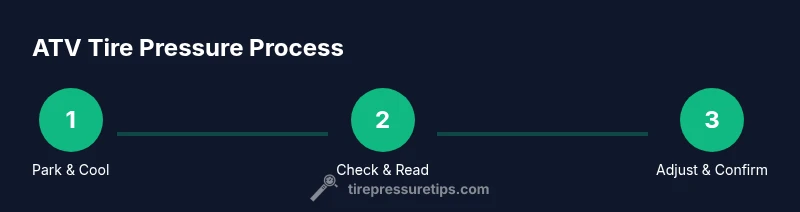
Find level ground and switch off the ATV. Allow tires to cool for at least 15 minutes if the vehicle has been in use, because heat inflates air and skews readings.
Tip: Cold tires give the most accurate baseline measurement. - 2
Find the target PSI
Consult the owner’s manual or a tire placard for the exact PSI for each tire. Front and rear pressures may differ and can change with load.
Tip: If the placard is missing, use the manufacturer’s website or contact support. - 3
Remove valve caps and attach gauge
Carefully remove the valve caps and place the gauge on the valve stem. Press firmly to prevent air leaks and read the pressure.
Tip: Do not over-tighten the valve cap; replace it snugly after measurement. - 4
Read and compare
Compare the reading with the target PSI. If it’s low, add air in small increments; if high, release air until you reach the target.
Tip: Read twice to confirm accuracy before adjusting again. - 5
Recheck after adjusting
After inflating or deflating, recheck all four tires to ensure uniform pressure. Uneven readings can indicate a leak or a faulty gauge.
Tip: Check the spare tire as well if your ATV uses one. - 6
Document and reset
Record the final PSI for each tire and note the load and terrain for future trips. This helps you recreate the setup when conditions change.
Tip: Keep a small log in your phone or a pocket notebook. - 7
Close up and test ride
Reinstall valve caps, take a short test ride, and listen for changes in handling or vibrations. If anything feels off, re-check pressures again.
Tip: If the ride feels pogo-like or overly stiff, re-check readings and consider a minor adjustment.
Frequently Asked Questions
How often should you check ATV tire pressure?
Check tire pressure before every long ride and at least weekly during regular use. Temperature changes and load variation can affect pressure, so frequent checks help maintain safety and performance.
Check tires before long rides and at least weekly; temperature and load can change pressure, so regular checks keep you safe.
Can ATV tires be overinflated?
Yes. Overinflation reduces the contact patch and can cause a harsh ride, increased wear on the center of the tread, and a higher risk of punctures on uneven terrain.
Overinflation narrows the contact area and can make for a harsher ride and more wear in the tire center.
How does temperature affect ATV tire pressure?
Temperature changes expand or contract air inside the tire. Measure when tires are cold and be prepared to adjust after a ride or in extreme weather.
Temp changes expand or contract air; measure cold and adjust after rides or in extreme weather.
Should you rely on TPMS for ATVs?
TPMS is a helpful warning, but it isn’t a substitute for regular manual checks. Rely on a gauge and manual readings to verify tire pressures.
TPMS warns you, but always verify with a hand gauge and manual readings for accuracy.
What gauge is best for ATV tires?
A high-quality digital gauge or a good dial/pencil gauge works well. Choose one that reads clearly and stores readings for quick checks.
Choose a reliable gauge that reads clearly and lets you log measurements.
How can I adjust tire pressure for heavy loads or mud riding?
Begin with the base spec and increase PSI slightly for heavy loads, or decrease a little for soft terrain like mud to maximize traction without risking pinch flats.
Start at the base spec, tweak a bit for weight or mud to balance traction and safety.
Watch Video
What to Remember
- Check cold tires before rides
- Use manufacturer PSI as baseline
- Adjust in small increments
- Document PSI for future trips