Can-Am Tire Pressure Guide: Check, Adjust, and Maintain
Learn how to check and maintain Can-Am tire pressure for ATVs and UTVs, with model-specific guidance, TPMS tips, and safety checks to enhance handling and tire life.


Learn how to check, adjust, and maintain Can-Am tire pressure for ATVs and UTVs. This quick guide covers model-specific PSI ranges, how to use a reliable tire gauge, and how to factor load, temperature, and TPMS so your Can-Am vehicle maintains safe handling and longer tire life.
Can-Am tire pressure basics
Understanding tire pressure for Can-Am vehicles is essential for safety and performance. According to Tire Pressure Tips, maintaining correct tire pressure improves handling, tire wear, and fuel efficiency across ATVs and UTVs. Can-Am models vary by tire size and load capacity, so you should start with the vehicle's manual and the tire sidewall data. In practice, the correct PSI depends on your exact model, terrain, and whether you're riding solo or with a passenger and gear. Always check pressures when tires are cold and on a level surface, and never rely on riding pressure alone after a trip. We'll cover how to read data, interpret differences between front and rear tires, and how temperature affects readings.
Reading the recommended PSI for Can-Am vehicles
The official recommended pressures come from Can-Am's service manuals and tire sidewall information. If you don't have the exact figure memorized, use these steps: locate the model-year and tire size on your vehicle; find the corresponding chart in the owner’s manual; compare to the tire's sidewall maximum PSI. Note that front and rear tires often have different targets, and extra loading (cargo, passengers, accessories) can raise or lower the ideal pressure. Temperature matters: cold tires reflect true psi, while hot tires can read higher. Use the gauge immediately after a cold soak, before you drive. If in doubt, start with the lower end of the recommended range and adjust after a short test drive.
Tools and gear for accurate measurement
To ensure accurate readings and reliable adjustments, you’ll need a few key tools. A digital tire pressure gauge with a ±1 psi accuracy is ideal, paired with a portable air compressor or pump capable of reaching Can-Am target pressures. Have Can-Am’s tire size and model information handy, and keep a log of readings for each session. Protect yourself with basic safety gear (gloves, eye protection) and work on a level, shaded area if possible. A chart from the owner manual or a printed quick-reference sheet helps prevent accidental overinflation or underinflation.
Step-by-step: check and adjust tire pressure (overview)
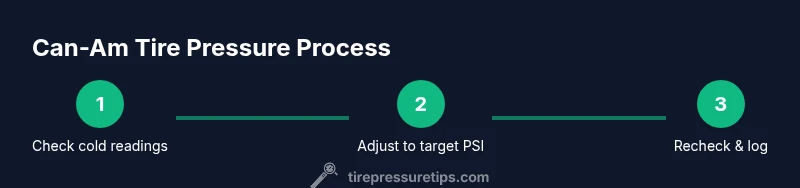
This section provides context for the formal STEP-BY-STEP block later. Start on level ground with cold tires, verify front and rear pressures separately, and consider how load changes affect targets. If TPMS warnings appear after inflation, recheck both tires and ensure sensors aren’t stuck or damaged. Small changes in pressure can significantly alter ride quality and tire wear over time.
TPMS and Can-Am sensors: what to know
Can-Am vehicles use TPMS to alert you when tire pressure drops below a safe threshold. Familiarize yourself with sensor locations (front/rear) and typical battery life, which can affect alarm behavior. If a TPMS warning persists after adjusting pressures, inspect valve stems for leaks, ensure seals are intact, and consider resetting the system per the owner’s manual. Regular checks help you catch slow leaks before they become a problem.
Common mistakes and troubleshooting
Common errors include inflating to the maximum tire sidewall pressure instead of the model-recommended target, using car-type gauges that are not calibrated for ATV/UTV tires, and ignoring TPMS alerts. Seasonal temperature shifts can also hide underinflation if you only check after a ride. Keep a log of readings, reference the manual, and recheck after a short ride to confirm stability.
Temperature effects and seasonal adjustments
Tire pressure is sensitive to temperature. Warmer days increase internal pressure, while cold nights decrease it. When transitioning between seasons or riding in variable climates, recheck pressures and adjust toward the recommended range using cold readings as the baseline. This habit preserves tire shape, traction, and tire life across Can-Am adventures.
Maintenance tips for ongoing tire pressure health
Create a simple monthly routine: (1) inspect valve stems for cracking or damage, (2) measure cold pressures with a calibrated gauge, (3) adjust to model-predicted targets, and (4) log changes and any leaks. For heavy loads or performance riding, consult Can-Am’s guidance and consider a professional inspection if you notice persistent pressure changes.
Real-world scenarios and model variations
Different Can-Am models (ATVs vs UTVs, different tire sizes) require different targets. Always consult the owner’s manual or Can-Am support for your specific model. If you’re using aftermarket tires or changing tire sizes, recheck the recommended PSI and adjust accordingly. Context matters: terrain, load, and riding style all influence the ideal pressure.
Tools & Materials
- Digital tire pressure gauge(Choose ±1 psi accuracy and a range that covers expected values (e.g., 0-50 psi).)
- Portable air compressor or pump(Prefer 12V or battery-powered; ensure compatible hose adapters.)
- Owner's manual or Can-Am tire pressure chart(Model- and tire-size-specific values.)
- Safety gear (gloves, eye protection)(Basic protection when working around tires.)
- Tire pressure log or notebook(Record readings and changes for trend tracking.)
- Spare valve caps and deflator tool(Helps with resealing and quick checks.)
Steps
Estimated time: 30-45 minutes
- 1
Park on level ground and cool tires
Find a flat surface and wait for the tires to cool if the vehicle was recently driven. Cold readings reflect true psi and prevent overinflation during measurement.
Tip: If you’ve just finished a ride, wait 30-60 minutes for tires to cool. - 2
Locate the recommended PSI for your model
Refer to the Can-Am owner's manual or tire sidewall data for the target PSI by tire position (front/rear) and load. Do not guess based on other vehicles.
Tip: Record your model's recommended front and rear targets for quick checks. - 3
Check current tire pressures with gauge
Attach the gauge evenly to the valve stem and read the pressure without twisting the stem. Remove the gauge straight for an accurate reading.
Tip: Use the same gauge each time to avoid cross-instrument variance. - 4
Inflate to the recommended PSI
If below target, add air in small increments (1-2 psi) and recheck. If above, release air gradually until you reach the target.
Tip: Avoid inflating to the maximum on the sidewall; use model-recommended numbers. - 5
Recheck both front and rear tires
After adjusting, recheck both tires to confirm they match the target pressures. Minor adjustments may be needed after the first ride.
Tip: Check for leaks around valve stems during recheck. - 6
Check the spare or secondary tires if applicable
Some Can-Am models carry a spare that may have its own pressure target. Verify and adjust if needed.
Tip: Always verify spare pressure before long trips. - 7
Inspect TPMS indicators
If TPMS warnings persist after adjustment, inspect sensors, seals, and wiring. Some warnings indicate leaks or damaged sensors.
Tip: Consult manual to reset TPMS after correct inflation. - 8
Document readings
Log the date, tire position, and psi target to track changes over time and seasonal shifts.
Tip: A simple chart helps spot gradual leaks. - 9
Test ride and re-verify
Take a short ride, then recheck pressures to ensure stability under real driving conditions.
Tip: Unexpected changes after a test ride may indicate a slow leak. - 10
Safety wrap-up
If any tire shows damage, persistent leaks, or TPMS faults, stop using the vehicle and seek professional service.
Tip: Always prioritize safety over timing. - 11
Schedule regular checks
Make tire-pressure checks part of your maintenance routine, especially before long trips or off-road adventures.
Tip: Set a monthly reminder and stick to it.
Frequently Asked Questions
How often should I check Can-Am tire pressure?
Check tire pressure at least monthly and before long trips. Inspect after any rough off-road usage, and recheck following temperature changes or tire repairs.
Check tires at least once a month and before trips; recheck after off-road use or weather changes.
What is the recommended tire pressure for Can-Am ATV/UTV?
Recommended PSI varies by model and tire size. Always refer to the owner’s manual or tire sidewall data for your specific vehicle, and adjust for load and terrain.
PSI depends on your Can-Am model and tire size. Check the manual for exact numbers and adjust for load and terrain.
How do I reset TPMS on a Can-Am?
Reset procedures depend on the model. After inflating to the correct pressure, follow the Can-Am service manual steps to reset the system. If warnings persist, inspect sensors and seals.
After inflating correctly, follow the Can-Am manual to reset TPMS; check sensors if warnings stay.
Can cold weather affect Can-Am tire pressure?
Yes. Cold temperatures lower psi; warm days raise it. Recheck pressures when temperatures change seasonally to maintain targets.
Cold weather lowers tire pressure; check and adjust as seasons change to stay within targets.
What should I do if I find a slow leak?
Locate the source of the leak, inspect the valve stem and tire bead, and repair or replace the tire as needed. If in doubt, consult a professional.
Find the leak source, inspect the valve and bead, repair or replace as needed, and seek professional help if unsure.
Watch Video
What to Remember
- Check pressures cold using model targets
- Use a calibrated gauge and record readings
- Account for load and terrain in targets
- Monitor TPMS and leaks regularly
- Maintain a monthly pressure-check routine