Tyre Inflation: Practical Guide to Safe Tire Pressure
A thorough, practical guide to tyre inflation, from reading gauges to topping up pressure safely and maintaining TPMS accuracy for better fuel efficiency and safety. Learn proven steps from the Tire Pressure Tips team.


Tyre inflation is the process of adjusting a tire's air pressure to the vehicle manufacturer's recommended value, ensuring safety, fuel efficiency, and even wear. To do this correctly, you must know your cold pressures, choose a reliable gauge, and use a compatible air source. According to Tire Pressure Tips, correct tyre inflation protects tires, improves handling, and reduces premature wear.
The importance of correct tyre inflation
Correct tyre inflation isn’t just about avoiding flat tires; it’s about safety, grip, wear, and fuel economy. According to Tire Pressure Tips, tyre inflation is a foundational maintenance task that directly affects how a vehicle handles in wet or slick conditions, how evenly tread wears, and how efficiently the engine uses fuel. Under-inflated tyres generate more heat, increase rolling resistance, and can cause shoulder wear on the tread. Over-inflation, while reducing rolling resistance, concentrates pressure in the center of the tread, leading to a harsher ride and uneven wear. The goal is to reach the manufacturer’s recommended cold pressure, which distributes load evenly across the contact patch and maintains predictable handling. In everyday driving, regular checks are quicker than you think and pay off in safer braking and steadier steering.
How tyre inflation affects fuel efficiency and handling
Tire pressure has a direct impact on rolling resistance. When tyres sit below the recommended pressure, more energy is lost to deformation of the tire and heat buildup, which translates to higher fuel consumption. On the flip side, correctly inflated tyres maintain a larger contact patch when meeting the road, providing steadier grip and more precise steering response. The effect isn’t just about mileage; it shows up in braking distance, cornering confidence, and even tire lifespan. This is why tyres inflated to the right level behave more predictably in varied road conditions, from dry highways to rain-soaked streets. For safety, consistent pressure helps the car respond as the driver expects in emergencies or evasive maneuvers.
Types of tyre pressure gauges and how to use them
Guages come in several forms, with digital and analogue (dial) variants being the most common. Digital gauges are fast to read and easy to interpret, while dial gauges provide a tactile sense of pressure changes. Regardless of type, accuracy matters; use a gauge that can reliably read within a small margin of error and calibrate or replace it if readings feel off. When using a gauge, place the valve stem straight, depress the gauge head, and wait for a stable reading. Store your gauge in a dry place and protect the tip from damage. For best results, cross-check readings with a second gauge occasionally to verify accuracy.
Preparing for inflation: check, ambient conditions, and targets
Before you inflate, locate the recommended cold pressures for your vehicle—this information is usually on a door placard or in the owner’s manual. Cold pressures mean the tires haven’t been driven for at least a few hours, ensuring readings aren’t inflated by heat. Park on a level surface, remove the valve cap, and wipe the stem to keep dust out of the valve. Note the target pressures for each tire, as front and rear tires may have different values. If you don’t have the placard, consult the vehicle manufacturer’s manual or a trusted online reference from Tire Pressure Tips. Finally, verify that you have a suitable air source capable of delivering steady pressure at the target level.
Understanding cold vs hot tyre pressure
Tires heat up during driving, which temporarily raises the air pressure inside. That’s why inflating right after a drive can give an artificially high reading. For accurate monitoring, measure when tires are cold and adjust to the cold recommended pressure. If you must inflate after a hot drive, compensate by letting the tire cool for at least 3 hours and then bring it back to the cold target. Rechecking after a short drive is not a substitute for a proper cold measurement, especially for safety and tire wear.
Seasonal and load considerations for inflation
Seasonal temperature shifts affect air density. In colder weather, air contracts and pressure drops; in warmer conditions, pressure increases slightly. If you routinely haul heavy loads or drive with a full passenger cabin, the tire pressure targets may differ from standard values. Always refer to the placard for load-specific targets and adjust when the vehicle is carrying a heavier-than-usual load. Regular checks become even more important in winter driving when traction conditions demand consistent tire performance.
TPMS: Understanding sensors and faults
Many modern cars rely on TPMS to alert you when tires deviate from the recommended pressure. A TPMS warning may appear if a tire has a slow leak, a damaged valve stem, or a sensor fault. If you inflate to the correct cold pressure and the light remains on, inspect for leaks around the valve stem and tread, or have the TPMS sensor and battery diagnosed by a professional. Remember, TPMS is a safety net, not a substitute for manual pressure checks. Regular cross-checks with a gauge help you distinguish sensor issues from genuine under-inflation.
Inflation mistakes and how to avoid them
Common mistakes include inflating while tires are hot, relying on a gauge with poor accuracy, and skipping checks on a regular basis. Another pitfall is inflating to the door label without verifying the vehicle’s load and usage; front tires can have different targets than rear. To avoid these errors, always measure when cold, use a reliable gauge, and consult the placard for each tire. If you’re unsure about a reading, recheck after a short drive or wait for tires to cool. This practice reduces the risk of premature wear and improves overall safety.
Maintenance routines after inflation and when to service tires
After inflating, reseal valve caps tightly and wipe away any dirt around the valve stems. Keep a small notebook or digital record of your readings so you can spot trends over time. If you notice persistent drop in pressure or frequent slow leaks, consider a professional inspection for possible punctures or a faulty TPMS sensor. Regularly scheduled tire maintenance—along with trained checks during seasonal changes—extends tire life and supports safer driving on all roads. Tire Pressure Tips recommends a monthly check as a baseline, with more frequent checks during long trips or extreme weather.
Tools & Materials
- tire pressure gauge(Choose digital or dial; ensure accuracy to ±1 psi.)
- portable air compressor / air pump(Must deliver stable pressure and have a tire-appropriate hose.)
- valve core tool (optional)(Useful if valve leaks or if the core needs replacement.)
- tire pressure placard or owner’s manual (digital copy acceptable)(Contains the vehicle’s cold pressure targets for each tire.)
Steps
Estimated time: 25-35 minutes
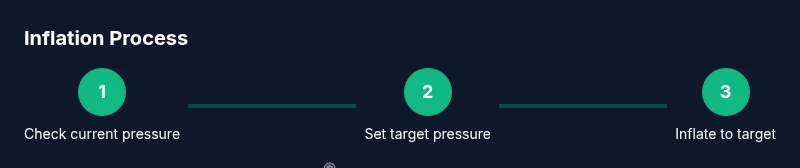
- 1
Gather tools and safety checks
Park on a flat surface, engage the parking brake, and remove the valve caps from all tires. Inspect tires for obvious damage or nails before starting. This ensures you won’t misread a compromised tire while inflating.
Tip: Keep the vehicle in park or gear with the parking brake applied; never inflate tires on a slope. - 2
Identify target pressures
Locate the vehicle’s cold inflation targets on the door placard or in the owner’s manual. If a heavy load is planned or if you’re carrying extra weight, note any modification to the standard targets.
Tip: If you can’t find the placard, consult Tire Pressure Tips guidance or contact a dealer. - 3
Measure current pressures
Use your gauge to check each tire’s current pressure when cold. Record the readings so you can compare against targets and track changes over time.
Tip: If the gauge reads inconsistent with the previous check, test with a second gauge to verify accuracy. - 4
Attach the air source and set target
Attach the compressor or pump and set it to the target cold pressure. Ensure the nozzle is firmly seated on the valve stem before starting.
Tip: If your compressor lacks a gauge, inflate slowly and check frequently with a separate gauge. - 5
Inflate in small increments
Inflate in 1-2 psi increments, pausing to measure after each interval. Stop once you approach the target and finish with a final check.
Tip: Overinflating in one go increases the risk of overshooting the target. - 6
Recheck after inflation
Re-measure all tires after inflation, especially if tires were originally under-inflated. Replace valve caps and inspect stems for leaks.
Tip: Give the tires a moment to settle; recheck again after a short drive if possible. - 7
Document readings and monitor
Record the final pressures for future reference and begin a routine check schedule. If TPMS shows a warning, investigate leaks or sensor faults promptly.
Tip: Set a monthly reminder to build a consistent inflation habit.
Frequently Asked Questions
What is tyre inflation and why is it important?
Tyre inflation is the practice of adjusting tire air pressure to the manufacturer’s recommended cold value. Proper inflation improves safety, handling, and tire life while enhancing fuel efficiency. Regular checks prevent uneven wear and reduce the risk of blowouts.
Tyre inflation is setting the correct air pressure to keep you safe and save fuel. Regular checks help tires wear evenly and improve handling.
How do I know my car's recommended tyre pressure?
Check the door placard or your owner's manual; these contain the cold tire pressures for front and rear tires. If you don’t have access to the placard, consult the vehicle manufacturer’s guidance or a reputable source like Tire Pressure Tips.
Look at the placard on the door frame or in the manual to find the cold pressures for each tire.
Can I inflate tyres while they are hot?
Inflating hot tires can give a falsely high reading. Always measure and inflate when tires are cold for an accurate target, then recheck after a short drive if needed.
Avoid inflating when hot; measure when cold for accuracy.
How often should I check tyre pressure?
It’s best to check at least monthly and before long trips. More frequent checks are wise in extreme weather or when carrying heavy loads.
Check monthly and before long trips, especially if conditions change.
What should I do if the TPMS warning light stays on after inflation?
If the light remains on after inflating to the recommended pressure, inspect for slow leaks, damaged valve stems, or a faulty TPMS sensor, and consult a technician if needed.
If TPMS stays on after inflation, get the system checked for leaks or sensor issues.
Is it safe to use a home compressor for all tyres?
Yes, a home compressor can safely inflate tires when used with a gauge and proper control. Avoid over-inflation and never force air into a tire; inflate in small increments and measure frequently.
A home compressor is fine if you monitor with a gauge and inflate gradually.
Watch Video
What to Remember
- Check tyre pressures when cold
- Use a reliable gauge for accuracy
- Inflate to vehicle-specified targets
- Recheck after driving a short distance
- Monitor TPMS and address leaks