Tire Pressure vs Load Index: A Practical Comparison
An analytical comparison of tire pressure and load index, explaining how proper inflation aligns with load capacity to maximize safety, efficiency, and tire life.


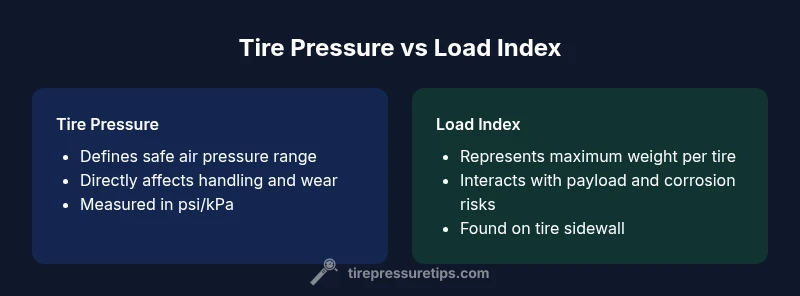
Tire pressure and load index measure different things but work together to shape safety, handling, and wear. Tire pressure refers to the recommended internal air pressure for your tires, while load index indicates the maximum weight each tire can support. In practice, you should inflate to the vehicle’s placard guidance and ensure tires with the right load index for your typical loads, then consider how load affects pressure needs under heavy use. This quick comparison helps you understand the relationship and make safer, smarter choices.
Understanding the Relationship Between Tire Pressure and Load Index
According to Tire Pressure Tips, tire pressure and load index operate on different axes of tire performance. Tire pressure is the air inside the tire that determines the contact patch with the road, ride comfort, braking, and fuel efficiency. Load index is a numeric rating indicating how much weight a tire can carry safely at a given inflation. Both factors must be understood together because the ideal pressure depends on the load the tire is carrying. Using the wrong pressure for the load can lead to uneven wear, poorer handling, and increased risk during cornering or emergency maneuvers. This section lays the groundwork for a practical approach to pairing inflation with load considerations, avoiding common misinterpretations that can undermine safety and reliability.
- The placard on the door jamb, owner’s manual, and tire sidewall collectively guide the recommended pressure. - The load index interacts with the tire’s construction and size to determine safe carrying capacity. - A higher load on a given tire typically requires appropriate adjustments in pressure, but these adjustments must stay within the manufacturer’s recommended range.
How Load Index is Defined and Tested
Load index is a standardized numeric code that represents the maximum load a tire can safely carry when inflated to the specified pressure. It is determined through controlled testing that simulates real-world conditions, including cornering, braking, and sustained highway speeds. The index does not tell you how to inflate your tires; instead, it helps you pair tires with the vehicle’s weight and expected payload. When choosing replacement tires, the load index should meet or exceed the vehicle’s original specification. Understanding this distinction helps prevent scenarios where a tire may be correctly inflated but under-rated for the load, or conversely, a tire with a high load index pressured beyond the vehicle’s recommended range.
- Load index is listed on the tire sidewall alongside the tire size. - The vehicle’s rating often corresponds to a specific range of inflation pressures. - Oversizing the load index without adjusting inflation can still impair handling and wear.
How Tire Pressure Affects Handling and Safety
Tire pressure directly influences the size and shape of the contact patch—the path the tire meets the road. Underinflation tends to increase the tire’s contact area at the shoulders, leading to excessive heat buildup and faster wear on the outer edges. Overinflation reduces the contact patch to the center, resulting in a harsher ride, reduced grip, and uneven wear along the tread’s center. Both conditions can degrade braking performance and steering feedback, especially in emergency maneuvers or inclement weather. The most critical takeaway is that maintaining the vehicle’s recommended pressure, in line with its load needs, keeps the tire’s footprint optimal for traction and stability, improving overall safety.
- Braking response and steering precision depend on correct pressure within the tire’s design tolerance. - Temperature changes can shift tire pressure; regular checks help maintain consistency.
Interplay Between Tire Pressure and Load Rating
The interaction between tire pressure and load rating is not a one-size-fits-all formula. For light loads, the standard recommended pressure is typically sufficient, but as payload increases, motorists may need to adjust within the manufacturer’s allowed range to preserve handling and tire wear. However, the load index sets a ceiling—exceeding it can cause structural failure risk under dynamic loads, even if the pressure sits within the nominal range. In practice, you should prioritize the vehicle placard value for inflation and verify that the tires’ load rating is compatible with your typical weight and usage. Do not assume that higher load capacity allows for consistently lower pressure; the two are related but not interchangeable.
- Always cross-check the placard with tire sidewall specifications. - Heavier loads can amplify the effects of underinflation or overinflation on wear and heat.
How to Find the Right Inflation for Your Load
To determine the correct inflation for varying loads, start with the vehicle manufacturer’s placard, then consider any added weight from passengers, gear, or towing. If you often drive with heavy payloads, verify your tires’ load index rating against those payloads and adjust within the recommended range as necessary. Practical steps include checking tire pressures when tires are cold, keeping a simple gauge in the vehicle, and never inflating beyond the maximum pressure listed on the tire sidewall. For many drivers, the key is consistency—keeping within the same acceptable range ensures predictable handling and even wear, even as loads shift over a trip or season.
- Record your typical loads and compare them to the baseline recommended pressure. - Use the same gauge and a consistent time of day for checks.
How to Read Manufacturer Specifications (Placards and Sidewalls)
Placards on the driver’s door jamb indicate the recommended pressure for cold tires and normal loads. Tire sidewalls show the tire size, load index, and maximum inflation pressure. While the maximum inflation pressure is important, it is not a target for everyday inflation; it is a safety ceiling. The load index helps you determine if a tire can carry your maximum payload without exceeding its design. When selecting tires, ensure the load index and speed rating meet the vehicle’s requirements and that inflation aligns with the placard guidance. Understanding these data points helps avoid mismatches that could compromise performance or safety.
- The placard is your primary reference for inflation. - The sidewall provides critical data for load and speed. - Inconsistent inflation can lead to unequal wear and handling changes.
TPMS: What It Alerts You To and What It Doesn’t
Tire Pressure Monitoring Systems (TPMS) warn when a tire’s pressure deviates beyond a small threshold from the recommended level. TPMS is a proactive safety feature that helps prevent underinflation, but it does not measure load index or confirm that the tire’s load capacity matches a given payload. Rely on the placard and load index for those checks, and use TPMS to catch gradual changes due to leaks or slow leaks. In practice, combine TPMS with regular manual checks and a quick visual inspection to ensure your tires operate within the intended pressure-load envelope.
- TPMS indicates pressure deviation beyond a safe range. - It does not validate load index compatibility. - Regular manual checks complement TPMS by catching slow leaks.
Practical Scenarios: Daily Driving vs Heavy Loads
For daily commuting with a typical passenger load,Inflation within the placard range generally suffices. For families with frequent passengers or gear, or for vehicles used to tow or haul heavy loads, adjustments within the recommended range can improve handling and reduce wear. In commercial or high-demand settings, clinicians and technicians often verify both load index and pressure across tire sets to ensure safety margins are preserved during peak loads. The practical takeaway is to tailor inflation to your actual load while staying within manufacturer guidelines, rather than relying on one metric alone.
- Light daily use usually requires standard inflation within placard ranges. - Heavy or variable loads may necessitate adjustments within safe limits. - Regular checks are essential when payloads change.
Calibration Methods: Tools and Techniques
Accurate tire pressure measurement relies on a reliable gauge and a cold-tire condition. Use a high-quality gauge and check pressures before driving, ideally in the morning when tires are cold. Calibrate or replace gauges periodically to avoid drift. If you notice pressure loss after a load change, recheck as soon as possible and adjust within the recommended range. For consistent results, adopt a routine: inspect monthly, adjust whenever payloads change, and re-check after long trips or temperature swings. This approach helps ensure that pressure remains aligned with load and driving conditions.
- Use a dependable gauge and measure cold tires. - Recheck after payload changes or significant temperature shifts.
Common Misconceptions About Pressure and Load
A common misconception is that load index can compensate for incorrect inflation or that higher load capacity tires can always run at lower pressures. In reality, load index reflects maximum capacity, not everyday performance. Another misunderstanding is assuming that TPMS readings prove the load is appropriate; TPMS focuses on pressure, not weight. Finally, some drivers believe more pressure always improves fuel economy; excessive inflation can worsen wear and reduce grip. The key is to respect the balance between load, inflation, and vehicle dynamics.
- Load index is not a substitute for correct inflation. - TPMS monitors pressure, not load.
Impact on Tire Wear, Fuel Economy, and Safety
Correct tire pressure contributes to even tread wear, which in turn affects longevity and fuel economy. Underinflation increases rolling resistance and heat, accelerating wear on the shoulders; overinflation concentrates wear toward the center and can cause a harsher ride. The load index helps determine the tire’s capability to bear weight, but without correct pressure, even tires with an appropriate load rating may wear unevenly or degrade performance. Maintaining inflation within the manufacturer’s suggested range and ensuring the load index matches your typical payload provides a baseline for safer, more efficient operation.
- Proper inflation supports even wear and better fuel efficiency. - Load index ensures weight-carrying capacity but must be paired with correct pressure. - Routine checks prevent gradual degradation of performance.
Step-by-Step Guide: Aligning Pressure and Load for Your Vehicle
- Find the placard values for cold tires and confirm your load requirements. 2) Check the tire sidewalls for load index ratings and ensure compatibility with your wheel/tender load. 3) Use a quality gauge to measure pressure when tires are cold and adjust within the placard range. 4) After loading changes, recheck pressure and verify no abnormal wear. 5) If you tow or carry heavy payloads, consider having the tire shop verify both inflation and load pairing for safety. 6) Document changes and re-check periodically to maintain consistent performance.
- Follow a simple, repeatable routine to stay aligned with load and inflation.
When to Check and Recheck: Routine Maintenance Schedule
A practical maintenance habit is to check tire pressure monthly and before long trips, especially when carrying heavy loads or experiences temperature swings. Temperature changes can affect pressure, so checks at consistent times help reduce variability. Additionally, whenever you replace tires, reassess both the load index and the inflation setpoints to ensure ongoing alignment with vehicle usage. A proactive approach to checking pressure and load reduces risk, extends tire life, and supports better overall vehicle safety.
- Monthly checks and pre-trip checks are recommended. - Temperature shifts warrant additional checks.
Final Notes on Alignment of Pressure and Load for Safety and Longevity
The key takeaway is balancing two metrics—tire pressure and load index—within the vehicle manufacturer’s guidelines. This alignment affects safety, handling, wear, and efficiency. While the load index sets endurance limits, inflation controls the actual performance under expected payloads. By focusing on the placard guidance and validating the tire’s load rating for your use case, you create a safer, more dependable driving experience. The Tire Pressure Tips team emphasizes consistent checks and a nuanced approach to inflation when payloads vary across trips and seasons.
- Consistency and adherence to placard guidance matter most. - Regular checks mitigate wear and safety risks.
Comparison
| Feature | Tire Pressure | Load Index |
|---|---|---|
| Definition | Internal air pressure recommended for performance/safety | Numeric code indicating maximum load per tire |
| Measurement and Units | Measured in psi or kPa, depending on region | Numeric code (e.g., 91, 95) on tire sidewall |
| Impact on Safety | Incorrect pressure affects traction, braking, and heat | Load index affects safe payload capacity |
| Wear and Longevity | Underinflation increases shoulder wear; overinflation centers wear | Mismatched load index can cause accelerated wear under heavy loads |
| Fuel Economy and Handling | Correct pressure improves rolling resistance and efficiency | Load index primarily governs capacity, not steady-state economy |
| Guidance Source | Vehicle placard and tire sidewall guidance | Tire load index listed with size and performance data |
| TPMS Relevance | TPMS alerts on pressure deviations | Load index not monitored by TPMS |
Strengths
- Clarifies how pressure and load interact for safer driving
- Helps avoid underinflation and overinflation with real-world context
- Supports longer tire life through balanced wear
- Improves fuel economy by maintaining optimal rolling resistance
- Promotes adherence to manufacturer guidelines for safety
Drawbacks
- Can be complex for beginners to apply correctly
- Requires cross-referencing placards, sidewalls, and load needs
- Misinterpretation of load index could lead to mismatches if not checked
Align tire pressure with the vehicle’s load requirements and the tire’s load index for optimal safety and wear.
Correct inflation within the placard guidance, matched to the tire’s load rating, yields safer handling and longer tire life. The load index informs capacity, while inflation determines real-world performance; both must be considered together.
Frequently Asked Questions
What is the difference between tire pressure and load index?
Tire pressure is the nominal air pressure inside the tire used to optimize traction, braking, and wear. Load index is a rating that defines the maximum load a tire can safely carry. The two metrics are related but not interchangeable; correct pressure must be used in conjunction with a tire rated for your payload.
Tire pressure is about the air inside the tire, while load index is about how much weight a tire can carry. They work together, not separately.
How do they interact on a day-to-day basis?
In daily use, you inflate to the vehicle’s placard value and ensure the tire’s load index meets or exceeds your payload. Heavier loads may require adjusting within the recommended range, but never exceed the placard or the tire’s maximum pressure. The interaction matters for safe handling and even wear.
Inflate to the placard and match the tires to your load; don’t exceed the recommended pressure.
Can I run higher load rating tires at the same pressure as lower rating tires?
Yes, provided the inflation remains within the vehicle’s recommended range and the load index is compatible with your payload. Do not exceed the placard or the tire’s maximum pressure, as that can reduce grip and ride comfort.
Only if the inflation stays within the recommended range and the load rating is appropriate.
How do I determine the correct pressure for a given load?
Start with the vehicle placard for cold tire pressure and verify the load index on the tire sidewall. If payload changes significantly, adjust within the allowed range and recheck when tires are cold to avoid heat-related pressure changes.
Begin with the placard pressure and adjust if your load changes, then recheck when cold.
Do TPMS readings reflect load index?
No. TPMS detects pressure deviations but does not measure load or verify its compatibility with the tire. Use load index data from the tire and placard values to assess payload suitability.
TPMS checks pressure, not load index. Check both placard guidance and load ratings.
What to Remember
- Follow the vehicle placard for cold tire pressure
- Verify load index matches typical payloads
- Check TPMS readings and perform manual checks
- Regularly inspect tires for wear and pressure consistency
- Reassess inflation after load changes or temperature shifts